Your search for Podersdorf am See gave 335 results.

The Neusiedl lake region formed part of the western frontier landscape of Roman Pannonia.
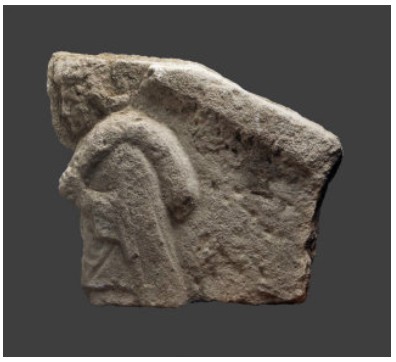
Fragment of a relief from Potz Neusiedl near Stix-Neusiedl, Pannonia Superior, brought to Eisenstadt in 1926, depicting part of a Mithraic bull-slaying scene.
Illmitz is a market town in the district of Neusiedl am See in Burgenland in Austria.
Beihingen occupied a position within the Neckar frontier communications zone.
Nida was an ancient Roman town in the area today occupied by the northwestern suburbs of Frankfurt am Main, Germany, specifically Frankfurt-Heddernheim, on the edge of the Wetterau region.
The Celts are the first known to have settled in this place, which they called Binge, meaning rift. Roman troops stationed here in the first century AD rendered the local name as Bingium in Latin.
Solicinium occupied an important position within the frontier region of southwestern Germania.
The Saalburg is a Roman fort located on the main ridge of the Taunus, northwest of Bad Homburg, Hesse, Germany.
The settlement of Bingerbrück formed part of the Rhine crossing zone opposite the lower Nahe valley.
Stockstadt am Main is a market municipality in the Aschaffenburg district in the Regierungsbezirk of Lower Franconia in Bavaria, Germany.
Stein am Rhein occupied a strategic position near the western limits of the Danubian frontier system.
Bingen occupied a strategic position at the confluence of the Rhine and Nahe rivers.

A coarse-grained yellowish-white marble tauroctony relief fragment found walled in at San Zeno am Nonsberg in the Trentino in 1911, now in the Museum Ferdinandeum at Innsbruck, showing part of Mithras slaying the bull and Cautes raising a flaming torch.
Small altar preserved in the castle of Freudenberg at St. Thomas am Zeiselberg, Noricum, recording a dedication to Hermes invicto Mitrae — an unusual conflation of Hermes and the invincible Mithras.
Life-sized sandstone head with long curly hair and Phrygian cap, found at the foot of the Hohenklingen near Stein am Rhein, Raetia; probably belonging to a statue of Cautes or Cautopates.
Sandstone altar found together with the Vocco altar at Rottenburg am Neckar, ancient Solicinium, bearing a fragmentary dedication and decorated with trees on its lateral faces.

The present volume reconstructs the history of the mithraea of Güglingen. In addition, rich finds provide insight into hitherto unknown areas of the liturgical practice of the cult of Mithras.

Bedaium occupied a position near the Chiemsee lake region within the northern Alpine frontier zone.
