

People attested in Bingium


Inscriptions from Bingium
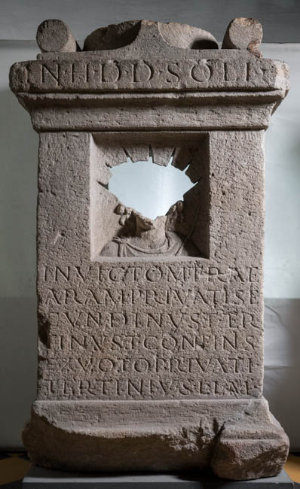
Mithraic Sol altar with backlight of Bingen
In h[onorem] d[omus] d[ivinae] Soli / invicto Mitrae [sic!] / aram Privati Se/cundinus et Ter/tinus et Confinis / ex voto Privati / Tertini v[otum] s[olverunt] l[aeti] l[ibentes] m[erito]
In honour of the divine house, to Sol Invictus Mithras [sic!], Privatus Secundinus and Tertinus and Confinis set up an altar as the fulfilment of Privatus’ vow; Tertinus’ vow they willingly, gladly, and deservedly fulfilled.
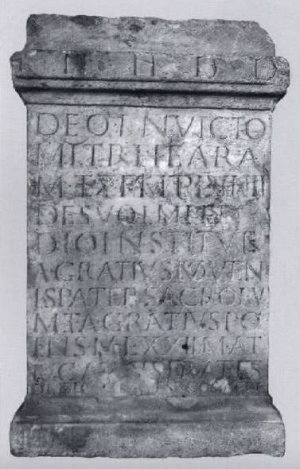
Altar with inscription of Bingen
In h[onorem] d[omus] d[ivinae] / deo invicto / Mytrhe [sic!] ara/m ex voto dei / de suo impen/dio instituer[unt] / A[ulus] Gratius Iuven/is pater sacroru/m et A[ulus] Gratius Po/tens m[iles] l[egionis] XXII mat/rica[ri]us fratres / dedic[aver]unt co[n]s[ule] Afri[cano].
In honour of the divine house, to the invincible god Mithras, the altar, following a vow to the god, at their own expense, Aulus Gratius Iuvenis, Fathers of the Rites, and Aulus Gratius Potens, soldier of the XXII legion, fire officer, erected it. The brothers dedicated it when [Marcus Pupienus] Africanus was consul.
References
- G. Behrens. Ein Mithräum in Bingen
