Your search Podersdorf am See gave 2325 results.

Limestone tauroctony relief from the Mithraeum at Sárkeszi, Pannonia Inferior, depicting Mithras killing the bull with a broad belt, dog, serpent, raven, and torchbearers; the grotto is indicated by rough soil.
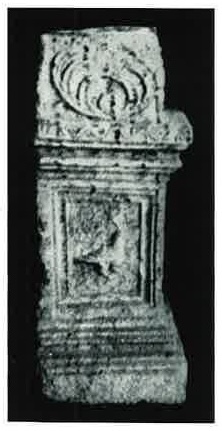
Inscription from Aquincum, Pannonia Inferior, dedicated to Deo invicto Mithrae by Caelius Anicetus with his son.

Third Mithraic sanctuary at Aquincum, Pannonia Inferior, between the Amphitheatre and the Krempelmühle, attested by five altars and a decorated mosaic; the building itself is not fully known.
Altar from Aquincum, Pannonia Inferior, dedicated to Sol deo sacrum by Caius Iulius Primus, decorated between two rosettes with a bunch of grapes.
Altar from Brigetio, Pannonia Superior, dedicated to the Transitus — the Mithraic transit ritual — paralleled at Carnuntum and Poetovio.
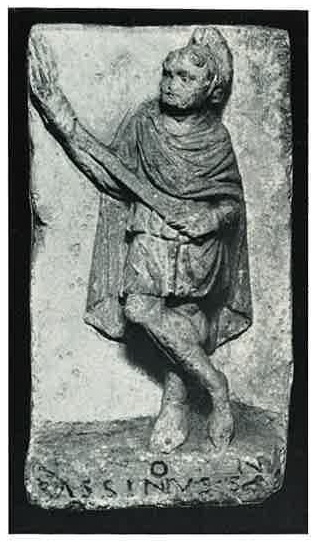
Inscription from Brigetio, Pannonia Superior, dedicated by Nonius Bassinus; possibly a sacerdos inscription though the reading is uncertain.
Minor finds from Mithraeum III at Carnuntum, Pannonia Superior, including lamps, bricks, pottery, and serpent-vase fragments; a coin of Macrinus (AD 217) from the entrance may provide a terminus, and the sanctuary is attested as restored in AD 307.
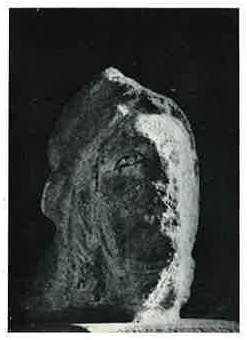
Two sandstone fragments from Mithraeum III at Carnuntum, Pannonia Superior, belonging to a torchbearer statue probably of Cautes, comprising a Phrygian-capped head with painted eyes and a body fragment; the statues probably stood at the beginning of the benches…
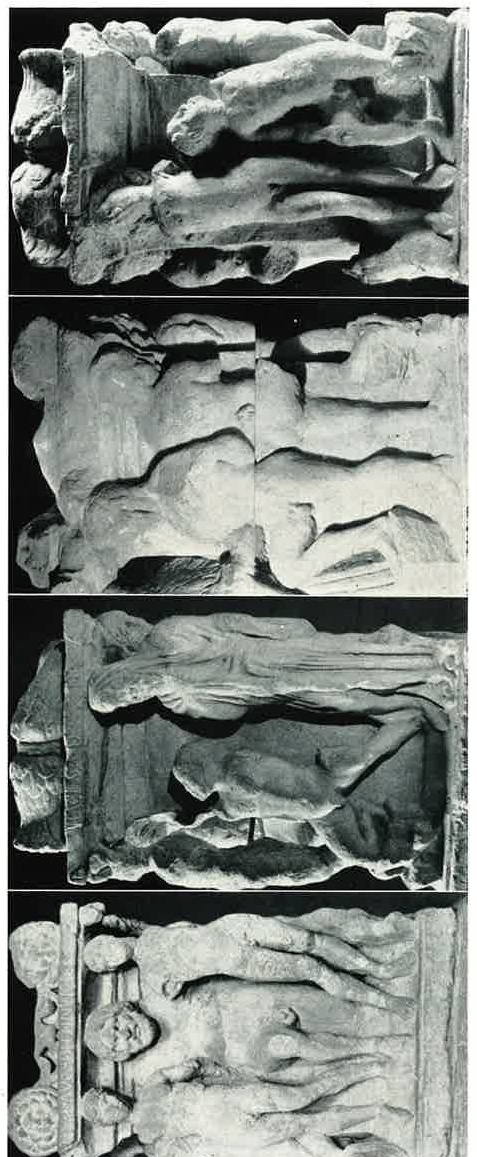
Large stone altar from Mithraeum III at Carnuntum, Pannonia Superior, decorated on all four sides with nine figures supporting the upper voluted section and bearing faces on the front of the volutes; a distinctive sculptural type within the Mithraic repertoire…
Minor finds from Mithraeum I at Carnuntum, Pannonia Superior, comprising legionary brick stamps, burnt coal and wood, ash with ox, sheep, and goat bones, and fragments of serpent-vases; the coin evidence points to a terminus ante quem in the early third century…
Sandstone statue from Mithraeum I at Carnuntum, Pannonia Superior, depicting a lying lion with a bull's head before its forefeet; a large opening at the back of the head communicated with a channel below, suggesting use as a cult water outlet.
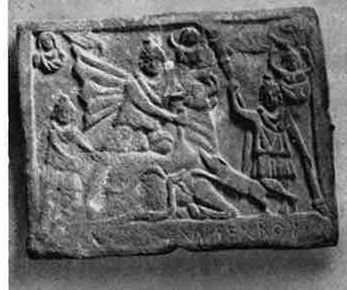
White marble tauroctony relief from Stix-Neusiedl, Pannonia Superior, depicting Mithras killing the bull with the raven perched on the rim of the god's flying cloak — an unusual detail placing the raven on the cloak rather than on the grotto border…
Marble altar from Mithraeum III at Ptuj, ancient Poetovio, dedicated in honour of the Domus Divina to Deo invicto Mithrae by Ulpius Valerianus, veteran of Legio XIII Gemina.
Marble altar from Mithraeum III at Ptuj, ancient Poetovio, dedicated to Deo Soli invicto Mithrae for the welfare of Emperor Marcus Aurelius Severus Alexander and the Domus Divina by Aelius Aurelianus; dated AD 222–235.
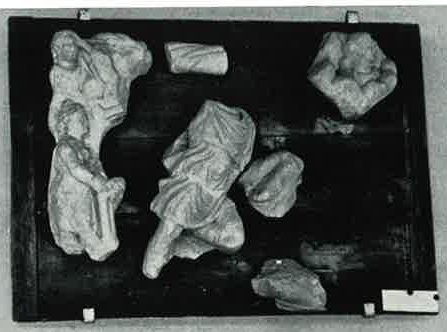
Marble tauroctony relief from Mithraeum III at Ptuj, ancient Poetovio, preserving Mithras killing the bull — head and most of the flying cloak lost — flanked by Cautopates holding the torch downward.
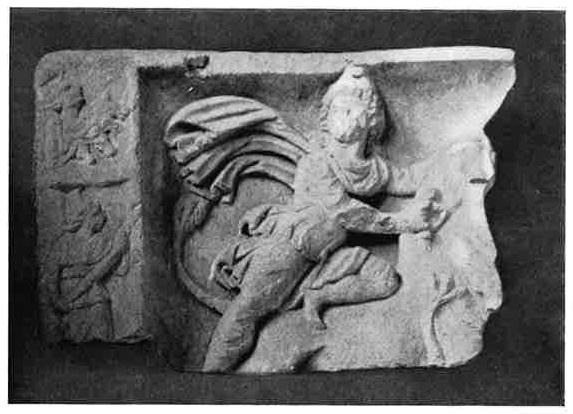
Marble tauroctony relief fragment from Mithraeum III at Ptuj, ancient Poetovio, notable for a three-headed serpent and a dog attempting to lick the blood; the bull's tail ends in three corn-ears.
Damaged marble relief from Mithraeum III at Ptuj, ancient Poetovio, preserving Cautopates with torch downward on the right and the outline of a standing Cautes on the other side, with a fragmentary inscription in the lower border.
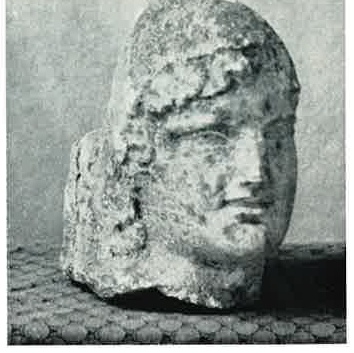
Small marble head from Mithraeum II at Ptuj, ancient Poetovio, depicting a smiling Mithras in Phrygian cap with a profiled reverse — one of the most expressive Mithraic heads from the Danubian provinces.
Upper portion of a marble plate from Mithraeum II at Ptuj, ancient Poetovio, decorated with a central stem flanked by leaf motifs and a small twig — a purely decorative element from the sanctuary.
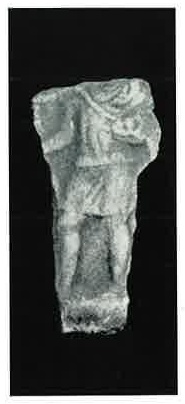
Marble relief fragment from Mithraeum II at Ptuj, ancient Poetovio, depicting a person in Oriental dress with outstretched right arm holding a small fruit basket in his left hand — probably a fragment of the sacred repast scene.
