Your search Podersdorf am See gave 2325 results.
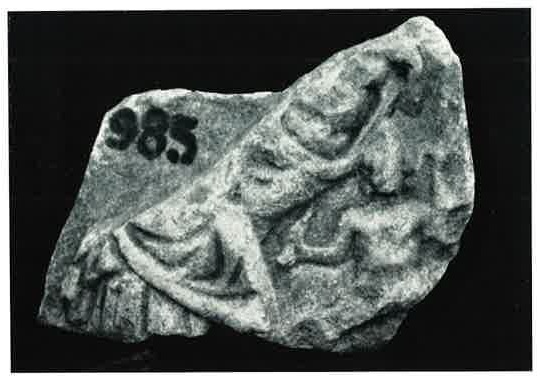
Limestone tauroctony relief fragment of unknown provenance, preserving the upper part of the right torchbearer of a bull-slaying scene.
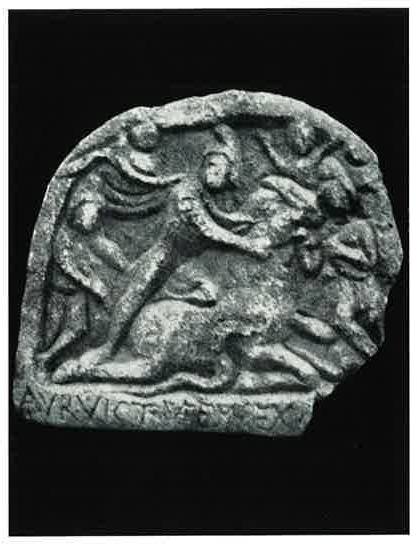
Arched white marble tauroctony relief of unknown provenance, depicting the standard bull-slaying in the usual attitude with dog and serpent.
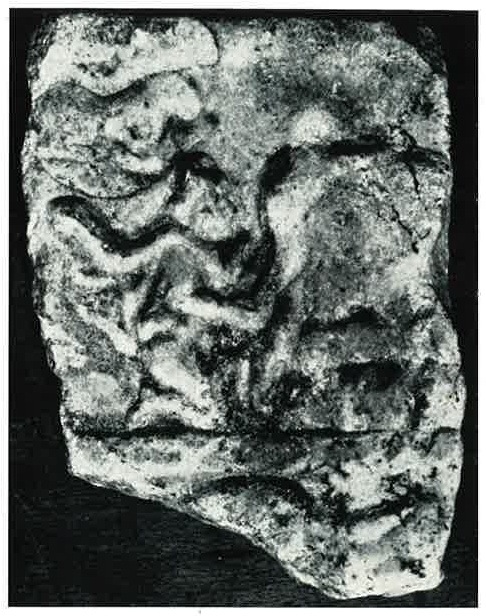
Marble tauroctony relief fragment from Dacia, preserved in Bucharest, with only Mithras's head and part of his flying cloak visible; above this a water-miracle scene and above that the bull in a small boat.

The Roman remains of Benifaió, or Benifayó in Spanish, are located on the outskirts of the city. Of particular interest is a rustic villa inhabited between the 1st and 4th centuries according to the numismatic and ceramic remains found.
Tomis became one of the principal urban and maritime centres of the western Black Sea coast.
Thessalonike became one of the principal urban centres of the Balkans and the Via Egnatia corridor.
Teurnia became an important late Roman urban centre in the province of Noricum.
Tabernae became an important settlement and production centre in the Rhine frontier region.
Scarabantia became one of the principal urban centres of western Pannonia near the Amber Road.
Ratiaria became one of the principal military and urban centres of the upper Danube frontier.
Philippi became an important Roman colony in eastern Macedonia along the Via Egnatia.
Pautalia became an important urban and thermal centre in the southwestern Balkans.
Pausilypum, modern Posillipo, overlooked the Bay of Naples and became renowned for its elite villas and coastal setting.
The city of Narona occupied a prominent position in the Neretva valley and became one of the principal centres of Roman Dalmatia.
Mursa became one of the principal urban centres of Roman Pannonia along the Drava river.
Lezoux became an important centre of Gallo-Roman ceramic production renowned throughout the western provinces.
Kabyle became one of the principal urban centres of inland Thrace during the Roman period.
Iria Flavia became an important settlement in northwestern Hispania and later evolved into the modern town of Padrón.
Iconium, modern Konya, became one of the principal urban centres of Lycaonia and an important crossroads of central Anatolia.
Flavia Solva became one of the principal urban centres of southern Noricum.
