Your search Podersdorf am See gave 2324 results.

Epigraphic testimony catalogued in the Année Épigraphique and Lugli’s Fontes for ancient Rome.
Rock inscription of Sagarios, strategus of Ariaramneia, recording a Mithraic ceremony near Farasha (ancient Ariaramneia), Cappadocia, likely 1st century A.D.
Stone from Durrës, ancient Dyrrachium in Macedonia, dedicated to Soli aeterno by Marcus Laelius Aquila, sacerdos; the name Aquila may correspond to a Mithraic grade.
Inscription from Dionysopolis, Moesia Inferior, dedicated to Invicto Mithrae by Quintus Samacius Serenus, architectus salariarius of Legio XI Claudia.
Inscription from Lopata, Moesia Superior, recording that Apollonides, imperial slave and scrutator of the statio Lamud, restored a Mithraic temple that had collapsed through age at his own expense; dated to the consulship of Gentianus and Bassus, AD 211.
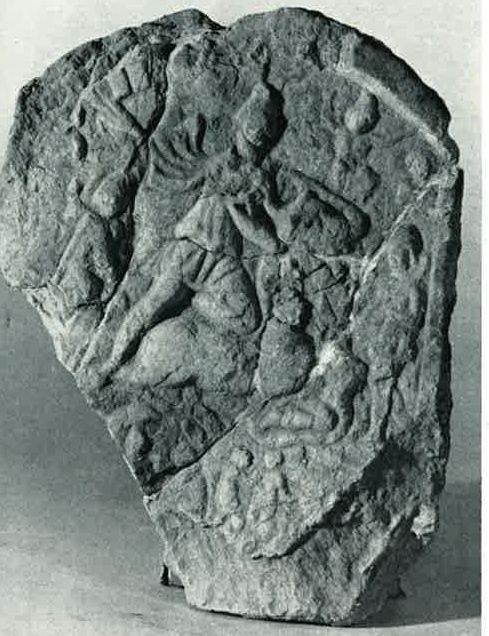
Marble tauroctony relief from the Roman camp at Sucidava, Dacia, found near tower C, depicting the standard bull-slaying with the full iconographic programme.
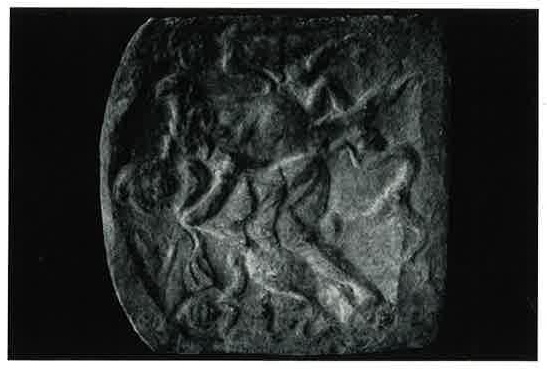
Reddish-white marble tauroctony relief from Slăveni-Romanați, Dacia, depicting the standard bull-slaying with the full iconographic programme.
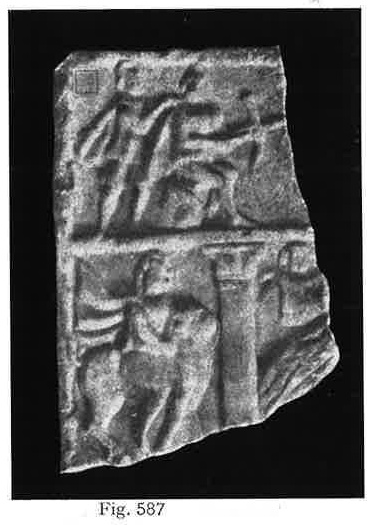
Left upper corner of a white marble tauroctony relief from the Roman camp at Drubeta, Dacia, found in 1896–99, preserving the grotto border and, outside it, Sol in his quadriga with cracking whip.
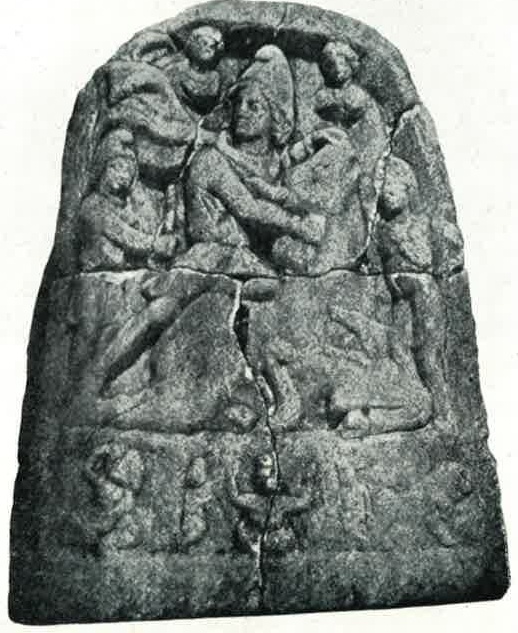
White marble tauroctony relief in five fragments from Dupljane near Călan, ancient Aquae in Dacia, found in 1900, depicting the bull-slaying with the standard iconographic programme.
Fragment of a Mithras relief from Zsámbék near Aquincum, Pannonia Inferior, showing seven altars alternated with trees — a processional or decorative border rather than a main tauroctony scene.
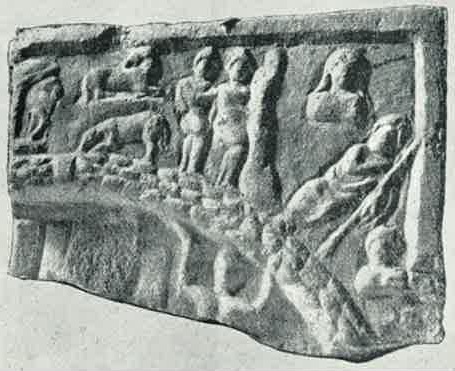
White marble statuette from Budapest, ancient Aquincum or vicinity, depicting a badly damaged Mithras killing the bull with dog and serpent; the god's head is lost.
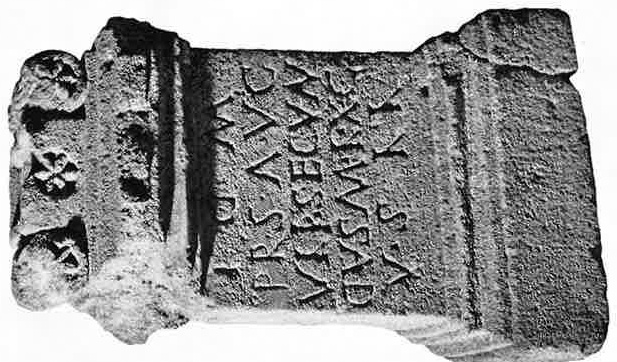
Limestone altar from Vienna, ancient Vindobona in Pannonia Superior, found in 1896 together with two terracotta lamps; the dedicant and full text are not known from the summary description.
Small altar preserved in the castle of Freudenberg at St. Thomas am Zeiselberg, Noricum, recording a dedication to Hermes invicto Mitrae — an unusual conflation of Hermes and the invincible Mithras.
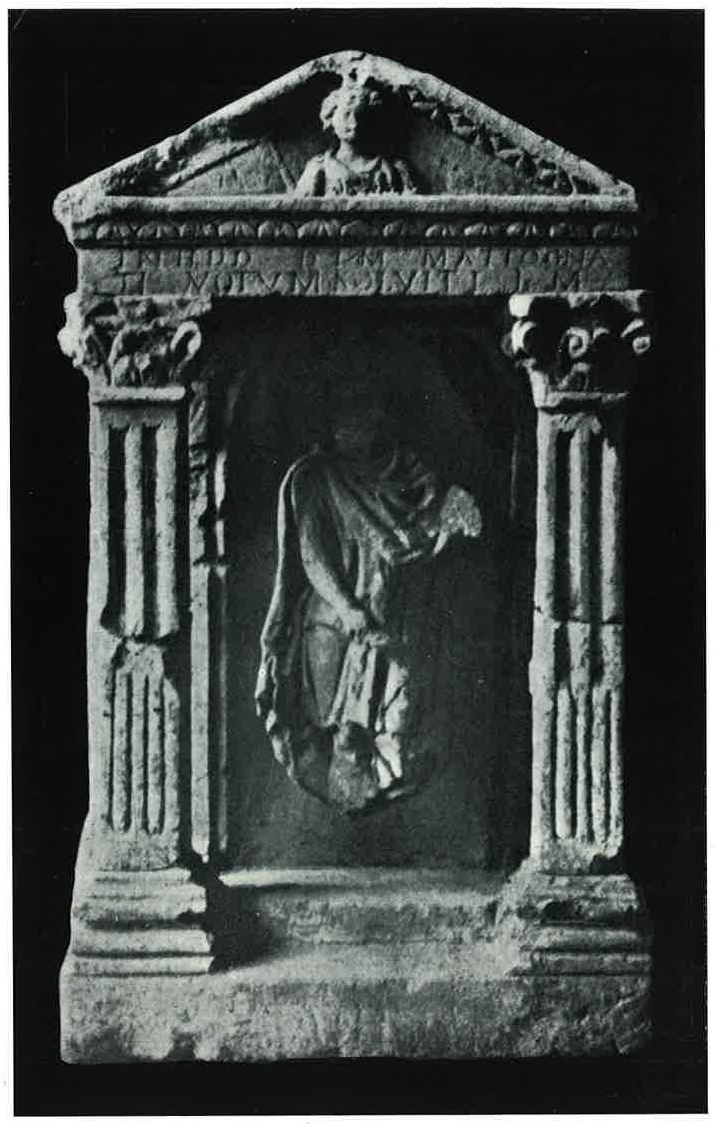
Sandstone monument in the form of a temple façade from the Mithraeum at Königshoffen, accessible by a step and framed by two Corinthian columns; the pediment is decorated with the bust of Luna, and the architrave carries an inscription.
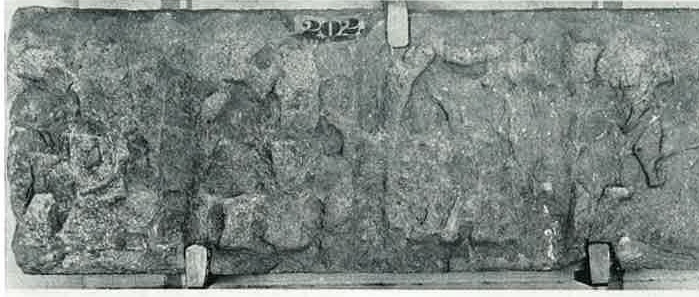
Badly damaged red sandstone relief from Hölzern, Germania Superior, depicting the standard bull-slaying scene; possibly forming part of the border zone of a larger composition.
Unusual sculptural representation of stylised flames mounted on a pedestal.
Decorated ceramic vessel showing Mithras slaying the bull together with torchbearers, zodiacal motifs and figures of abundance.
An earthen lamp bearing the name of C. Dessi along with two coins of Constantine and one of Gratianus, found in the Mithraeum at Spoleto in Umbria.
Marble altar in the Museo Capitolino, Rome, bearing a bust of Sol and a dedication by P. Aelius Amandus, a soldier of the equites singulares Augusti, in fulfilment of a vow on receiving his honourable discharge, dated to 158 A.D.
Relief of bluish marble in the Casino of the Villa Doria Pamphili showing Mithras slaying the bull with the usual animals, cross-legged torchbearers, and Sol in a quadriga and Luna in a biga in the upper corners.
