This site uses cookies to offer you a better browsing experience.
Find out more on how we use cookies in our privacy policy.

 
Quaere

The New Mithraeum Database

Find news, articles, monuments, persons, books and videos related to the Cult of Mithras

Your search Pseudo-Callisthenes gave 12 results.

 
Textum

Alexander Romance

Late antique legendary biography of Alexander the Great (c. AD 300), where history, myth, and imperial ideology merge around figures of divine kingship and solar power.

 
Textum

De fluviis

Pseudo-Plutarch, De fluviis. Goodwin, Ed. Plutarch. Plutarch’s Morals. Translated from the Greek by several hands. Corrected and revised by. William W. Goodwin, PH. D. Boston. Little, Brown, and Company. Cambridge. Press of John Wilson and son.
 
Textum

Carmen ad Antonium

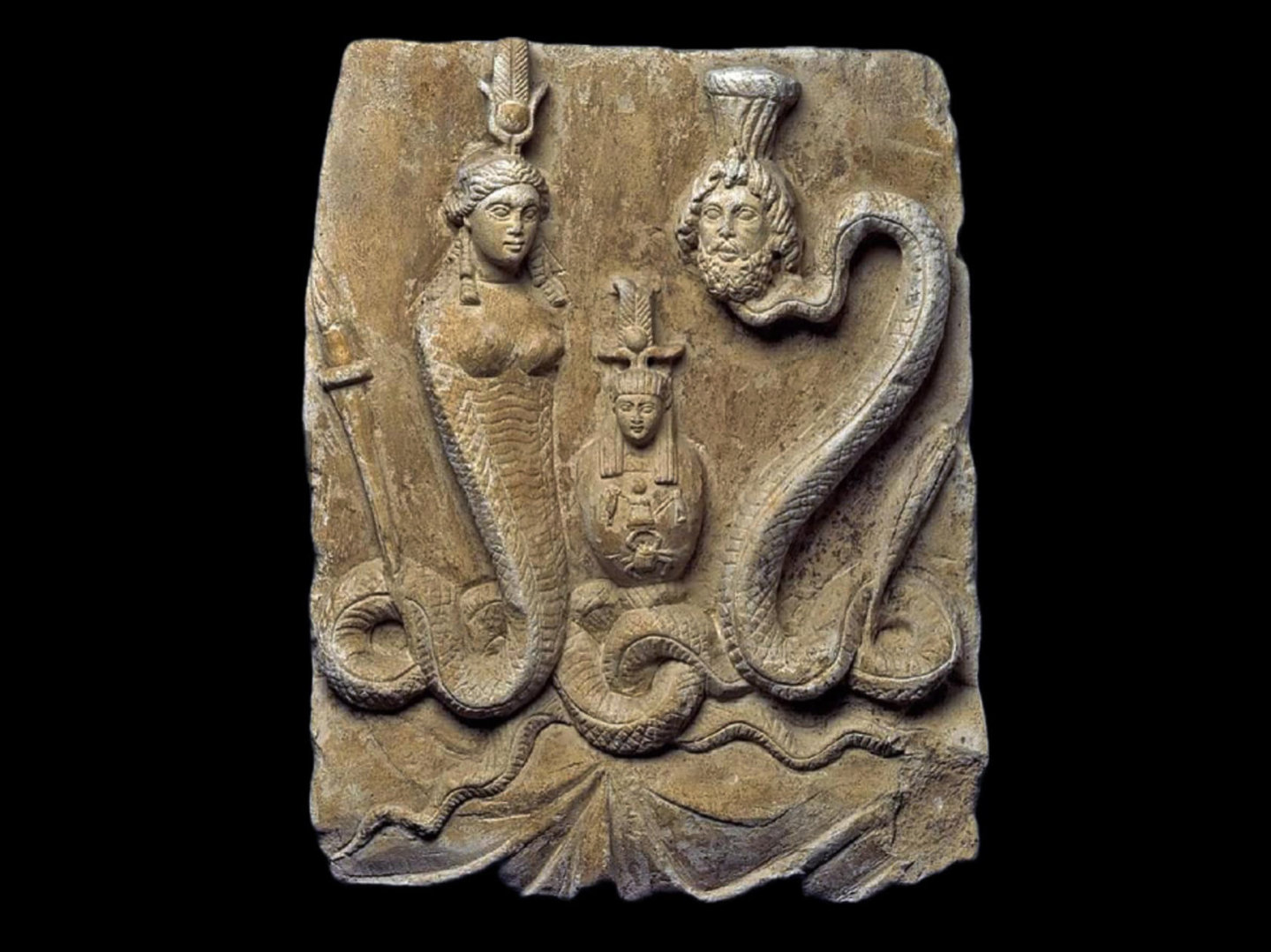
An anonymous late-antique Christian poem, traditionally attributed to Pseudo-Paulinus of Nola (Poema 32, vv. 109–111), that ridicules pagan cults and presents Mithras, Isis, and Serapis as gods of concealment, contradiction, and unstable forms rather than light…

 
Textum

Nonnus Abbas on Gregory of Nazianzus

Commentaries by Pseudo-Nonnus, also known as Nonnus the Abbot, on Gregory Nazianzen’s In Julianum Imperatorem Invectivae Duae and In Sancta Lumina.

 
Notitia

De fluviis

Pseudo-Plutarch, De fluviis. Goodwin, Ed. Plutarch. Plutarch’s Morals. Translated from the Greek by several hands. Corrected and revised by. William W. Goodwin, PH. D. Boston. Little, Brown, and Company. Cambridge. Press of John Wilson and son.

 
Monumentum

Fresco scene from Mitreo of Santa Maria Capua Vetere

Fresco showing a scene of initiation into the mysteries of Mithras in the Mithraeum of Santa Maria Capua Vetere.

 
Notitia

The Mirror of Mithras

Over the last century or so, a great deal has been said about the god Mithras and his mysteries, which became known to the European world mainly through his Roman cultus during the Imperial Period.

 
Monumentum

Mithraeum of Colchester

One of the rooms in a sustantive masonry building in Hollytrees Meadow was considered to be a Mithreum, a theory that has now been discarded.

 
Notitia

The Father of Mithras

It is well known that Mithras was born from a rock. However, less has been written about the father of the solar god, and especially about how he conceived him.

 
Notitia

Porphyry’s Cave of Nymphs and the Cult of Mithras

Between the 1st and 4th centuries, Mithraism developed throughout the Roman world. Much material exists, but textual evidence is scarce. The only ancient work that fills this gap is Porphyry’s intense and complex essay.

Back to Top