Your search Rohr im Kremstal gave 1036 results.

Circular limestone water-basin from the entrance area of the Mithraeum at Königshoffen, equipped with a spout and two handles; traces of red paint survive on the interior.
Grey sandstone slab from the Mithraeum at Königshoffen, a companion piece to the preceding, recording the same act of repainting a cult image by Caius Celsinius Matutinus, veteran of Legio VIII Augusta Alexandriana.
Two-fragment limestone altar from the Mithraeum at Königshoffen, dedicated in honour of the Domus Divina to Deo Atti by Cantinius Capella; one of the rare Mithraic dedications to Attis from Germania.
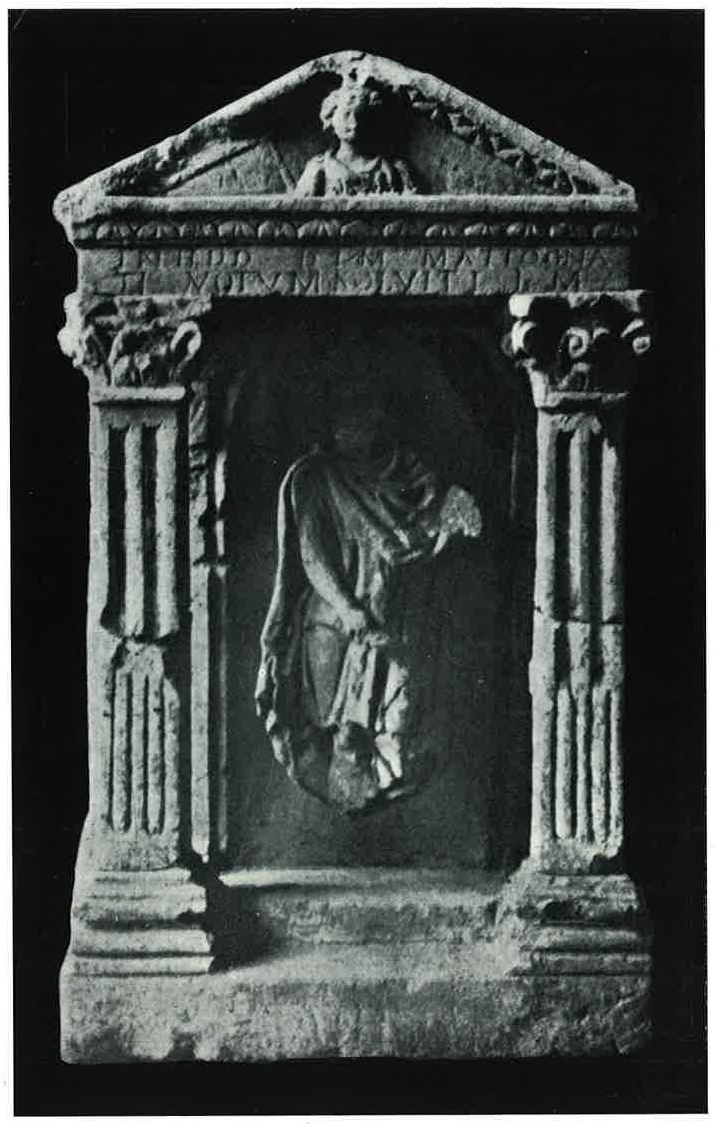
Sandstone monument in the form of a temple façade from the Mithraeum at Königshoffen, accessible by a step and framed by two Corinthian columns; the pediment is decorated with the bust of Luna, and the architrave carries an inscription.
Sandstone lion from Brumath, ancient Brocomagus, with a votive inscription on its base recording a dedication by Tertius; a common Mithraic cult animal.
Grey limestone relief fragment from Rockenhausen found at the Pfingstborn spring, preserving part of the bull-slaying scene
Assemblage of plates, jugs, dishes, cups, censers, two bronze coins, and animal bones from the Mithraeum at Dieburg
Inscribed altar from Gross-Krotzenburg dedicated to Deo Soli invicto Mithrae by Iulius Macrinus, immunis of Legio VIII Augusta
Fragmentary limestone relief showing the torchbearer Cautopates with a pedum.
Limestone relief fragment showing Cautopates beside traces of a tauroctony scene.
Fragmentary limestone statuette of a cross-legged torchbearer originally attached to a tauroctony relief.
Sandstone altar combining imagery of Apollo, Mithras and the torchbearers Cautes and Cautopates near the Roman fort of Whitley Castle.
Bearded nude statue formerly claimed to be Mithraic but later rejected as a seventeenth-century sculpture unrelated to the cult.

Styberra occupied an important position within the inland communications network of Roman Macedonia near modern Prilep.
Marble base in poor lettering found in the church of S. Maria de Cacabariis in Rome, recording the dedication by M. Aurelius Victor, vir clarissimus and prefect of the Feriae Latinae, to his patron Iovinus Callidianus, priest of Sol.
Relief of bluish marble in the Casino of the Villa Doria Pamphili showing Mithras slaying the bull with the usual animals, cross-legged torchbearers, and Sol in a quadriga and Luna in a biga in the upper corners.
Altar with a Greek dedication to Magna Mater and Attis and a Latin inscription recording the dedication by Petronius Apollodorus, vir clarissimus and pater sacrorum of Invictus Mithras, following his taurobolium and criobolium with his wife, dated to 370 A.D…
Marble base with a dedication by G. Magius Donatus Severianus, vir clarissimus and pater sacrorum of Invictus Mithras, hierophant of Liber Pater and of the Hecatae, commemorating his taurobolium on 15 April 313 A.D.
Marble base from the gardens of Julius III dedicated to Iunius Postumianus, vir clarissimus and pater patrum of Sol Invictus Mithras, pontifex of the sacerdotal order of the Sun, placed under the care of Flavius Herculus.
Coins found in the lower sandy strata of the S. Prisca Mithraeum, ranging from the time of Claudius to the late 4th century, including issues of Commodus, Crispina, Diocletianus, Galerius, Constans and Valens.
