Your search Roman cemetery of St. Matthias gave 2751 results.

White marble tauroctony relief fragment of unknown provenance, preserving the foremost part of the bull and part of Mithras as bull-slayer.
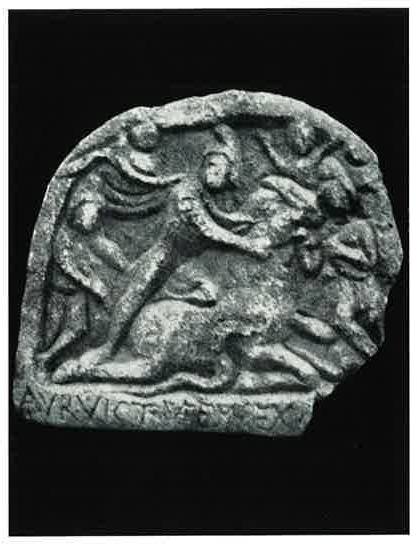
Arched white marble tauroctony relief of unknown provenance, depicting the standard bull-slaying in the usual attitude with dog and serpent.
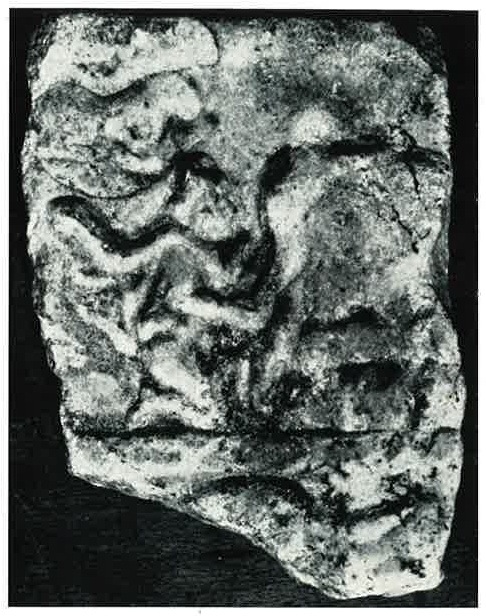
Marble tauroctony relief fragment from Dacia, preserved in Bucharest, with only Mithras's head and part of his flying cloak visible; above this a water-miracle scene and above that the bull in a small boat.

The Roman remains of Benifaió, or Benifayó in Spanish, are located on the outskirts of the city. Of particular interest is a rustic villa inhabited between the 1st and 4th centuries according to the numismatic and ceramic remains found.
The findspot of this monument is unknown, though it has traditionally been associated with the historical region of Wallachia.
Plevna occupies an important position in the lower Danube hinterland historically connected with Roman Moesia.
Zwiefalten belongs to the upland territory historically associated with the province of Raetia.
The area of modern Zagreb has yielded material linked to the northwestern frontier of the Dalmatian world.
The locality of Waggendorf belongs to the southeastern Alpine landscape historically linked with Noricum.
Višnja Gora lies within the southeastern Alpine region historically connected with Roman Pannonia.
Virovsko belongs to the rural settlement territory historically associated with Roman Thrace.
Windobona served as a major legionary and administrative centre on the middle Danube frontier.
Veles lies within the central Balkan communications corridor historically connected with Roman Macedonia.
Troesmis served as an important military and administrative centre on the lower Danube frontier.
Târgușor lies within the territory historically associated with Roman Dobruja and the lower Danube frontier.
Allmendingen near Thun occupies a strategic position between the Swiss plateau and Alpine communications routes.
Székesfehérvár lies within the central territory historically associated with Roman Pannonia.
Sucidava stood on the lower Danube frontier and formed part of the defensive network of late antique Dacia.
Solicinium occupied an important position within the frontier region of southwestern Germania.
