Your search Roman cemetery of St. Matthias gave 2751 results.

Limestone tauroctony relief from the Mithraeum at Sárkeszi, Pannonia Inferior, depicting Mithras killing the bull with a broad belt, dog, serpent, raven, and torchbearers; the grotto is indicated by rough soil.

Limestone altar fragment from the Mithraeum at Sárkeszi, Pannonia Inferior, dedicated to Fonti dei by Septimius Valentinus, optio.
Limestone altar from Brigetio, Pannonia Superior, dedicated to Invicto deo Mithrae by Masuininius Amicus, Augustalis of the Municipium Brigetionis Antoniniani.
Stone base from the Dolichenum at Brigetio, Pannonia Superior, dedicated to Deo Soli invicto Mithrae by Caius Valerius Matrinianus, cornicularius of the legate of Legio I Adiutrix.
Altar from Carnuntum, Pannonia Superior, dedicated to the Transitus — the Mithraic transit ritual — by Caius, an association also attested at Brigetio and Poetovio.
Lost inscription from Carnuntum, Pannonia Superior, dedicated to Soli invicto deo by Quintus Livinius Senecio, veteran of Legio XIIII Gemina; dated to the second or third century.
Sandstone altar from Carnuntum, Pannonia Superior, found near the theatre in 1890, dedicated to Deo Soli by Aurelius Exuperatus.
Sandstone altar from Carnuntum, Pannonia Superior, dedicated to Soli deo by Iulius Iulianus.
Small sandstone altar from Carnuntum, Pannonia Superior, dedicated to Deo Soli invicto by a dedicant whose name reads Sacellus; found in the Burgfeld in 1878.
Sandstone altar from Carnuntum, Pannonia Superior, dedicated jointly to Invicto deo by Baebius Martialis and Ulpius Breucianus.
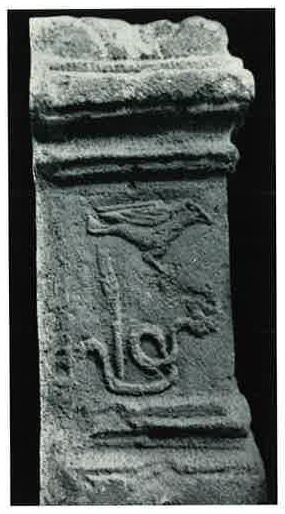
Sandstone altar from Carnuntum, Pannonia Superior, found in a flue of Building VII in 1899, decorated on the left with a raven, corn-ear, and serpent stacked vertically and on the right with a lying lion; dedicated to Invicto deo Mithrae.
Small altar from Petronell, ancient Carnuntum, Pannonia Superior, dedicated to Mithras (spelt Motre) by Caius Rip-, who made the altar as merited; the garbled spelling suggests a non-Latin speaker.
Minor finds from Mithraeum III at Carnuntum, Pannonia Superior, including lamps, bricks, pottery, and serpent-vase fragments; a coin of Macrinus (AD 217) from the entrance may provide a terminus, and the sanctuary is attested as restored in AD 307.
Small sandstone altar from Mithraeum III at Carnuntum, Pannonia Superior, dedicated by Munatius, a centurion of an unspecified legion.
Sandstone plate from Mithraeum III at Carnuntum, Pannonia Superior, dedicated to Deo invicto by Caius Iulius Propinquus, who built a wall ex voto; traces of red on the rim.
Inscription from Mithraeum III at Carnuntum, Pannonia Superior, recording a dedication pro salute Augusti to Deo invicto by Magnius Heracla, a Roman citizen of peregrinian origin as indicated by his cognomen.
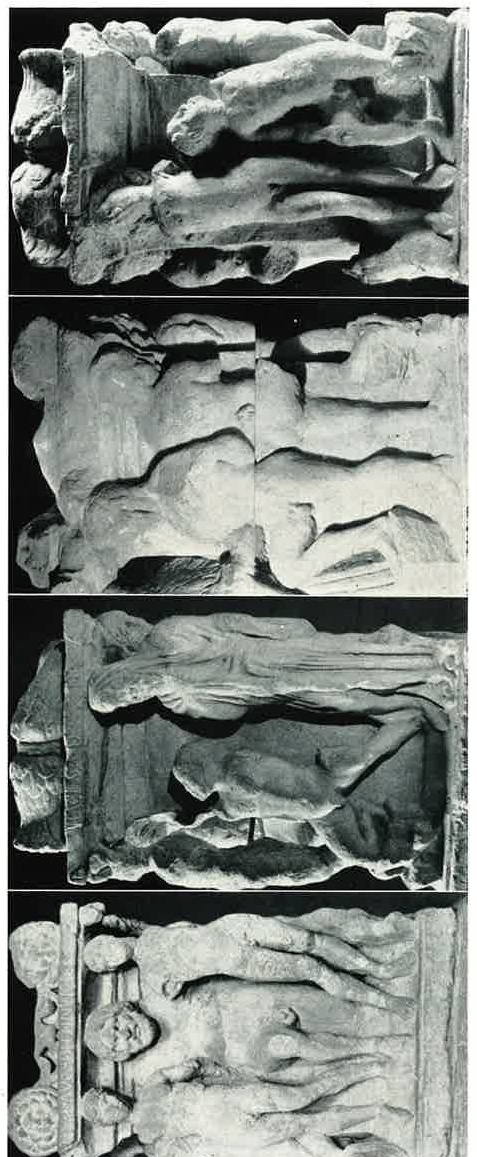
Large stone altar from Mithraeum III at Carnuntum, Pannonia Superior, decorated on all four sides with nine figures supporting the upper voluted section and bearing faces on the front of the volutes; a distinctive sculptural type within the Mithraic repertoire…
Inscription from Mithraeum III at Carnuntum, Pannonia Superior, recording that Titus Flavius Viator built or founded something for Deo invicto; the verb condi fecit is interpreted as referring to the construction of the sanctuary.
Minor finds from Mithraeum I at Carnuntum, Pannonia Superior, comprising legionary brick stamps, burnt coal and wood, ash with ox, sheep, and goat bones, and fragments of serpent-vases; the coin evidence points to a terminus ante quem in the early third century…
Altar from Mithraeum I at Carnuntum, Pannonia Superior, dedicated to Deo invicto by Iulius Pacatus ex voto, with Marcus Valerius serving as sacerdos for the second time — one of the few attestations of the Mithraic title sacerdos from Pannonia.
