Your search for Saint-Rémy-de-Provence gave 47 results.

Glanum was an important Roman town in Narbonensis near modern Saint-Rémy-de-Provence.

A dedicatory inscription to Sol Invictus, made by an individual named Eudaemon, found at Glanum (modern Saint-Rémy-de-Provence) in Narbonensis.
Nuits-Saint-Georges is a commune in the arrondissement of Beaune of the Côte-d'Or department in the Bourgogne-Franche-Comté region in Eastern France.
Aix-en-Provence or simply Aix, is a city and commune in southern France, about 30 km north of Marseille.
The locality of Saint Pierre de Messeane is associated with archaeological discoveries from Roman Gaul.
Bourg-Saint-Andéol is a commune in the Ardèche department in the Rhône Valley in southern France.
Structure in the Tarn region initially reported as a Mithraeum but later identified as an ordinary silo.

White marble relief, found near Aix "a la Torse dans un enclos ayant appartenu à la famille de Colonia".
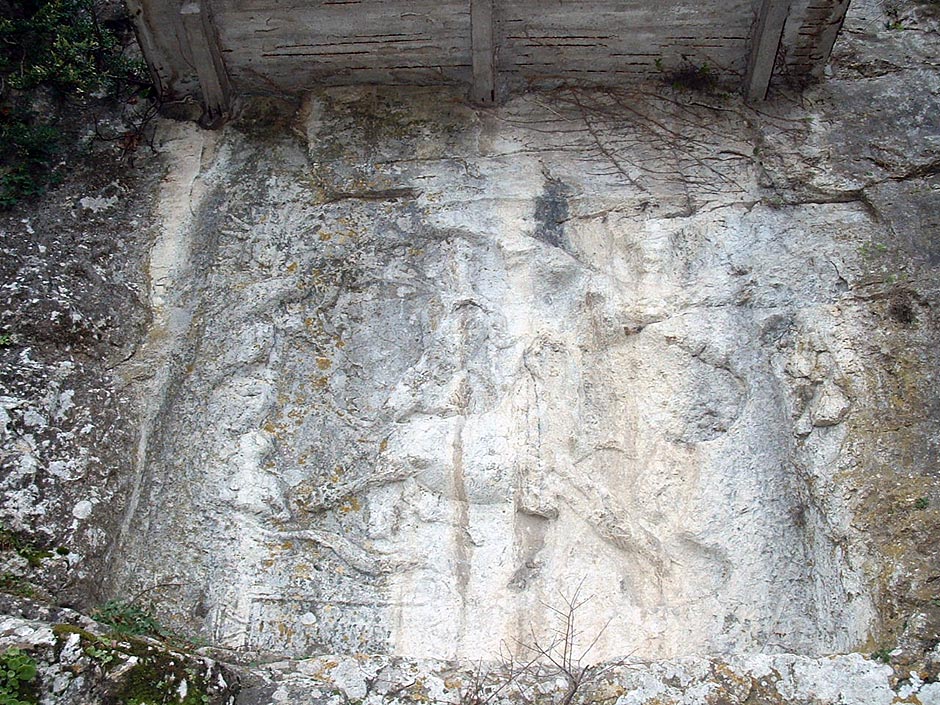
The low relief of Bourg-Saint-Andéol depicting Mithras killing the bull has been chiseled on the rock.
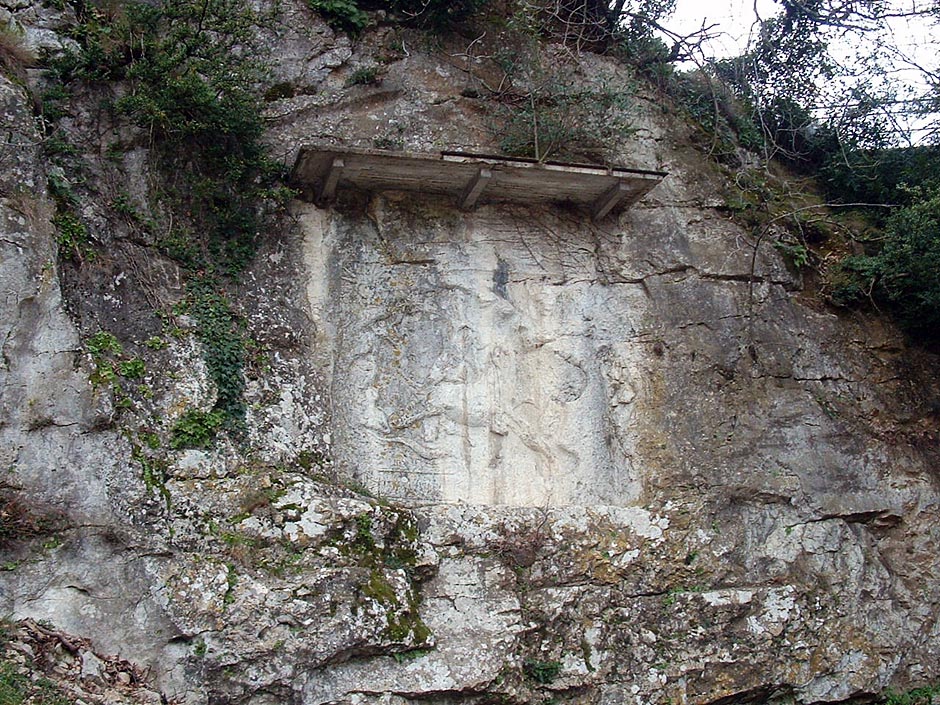
The Mithréum de Bourg-Saint-Andéol was built against a rock where the main Tauroctony was chiseled.
Mithra et ses actualités - Journée d'études (17 décembre 2021) au Musée royal de Mariemont.
Vaison-la-Romaine is a town in the Vaucluse department in the Provence-Alpes-Côte d'Azur region in southeastern France. Vaison-la-Romaine is famous for its rich Roman ruins and mediaeval town and cathedral. The old town is split into two parts: the
Apt is a commune in the Vaucluse department in the Provence-Alpes-Côte d'Azur region in southeastern France.
Alesia became famous as the site of Caesar’s decisive siege during the Gallic Wars.
Five fragments of a red terra-sigillata vessel showing Cautopates with his torch pointing downwards, in Eastern attire and cross-legged, with the hoof of the bull's hindleg before him, found at Alesia (Mont-Auxois) in Lugdunensis.
A red terra-sigillata cup bearing a relief tauroctony of Mithras, with Cautes and Cautopates cross-legged on either side, found at Alesia (Mont-Auxois) in Lugdunensis and now kept at Saint-Germain-en-Laye.