Your search San Giovanni al Timavo gave 3161 results.

Limestone tauroctony relief from Iglița, ancient Troesmis in Moesia Inferior, found in 1882, depicting the standard bull-slaying with serpent, scorpion, and a partial dog; the raven is lost.
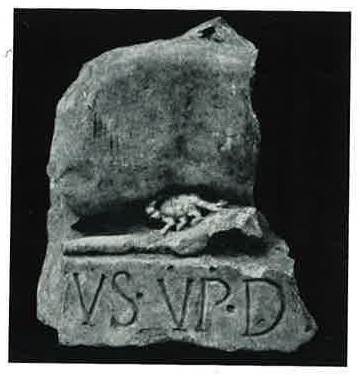
Marble tauroctony fragment from Axiopolis, Moesia Inferior, preserving only a small part of Mithras's knee, the hind part of the bull, and the scorpion.
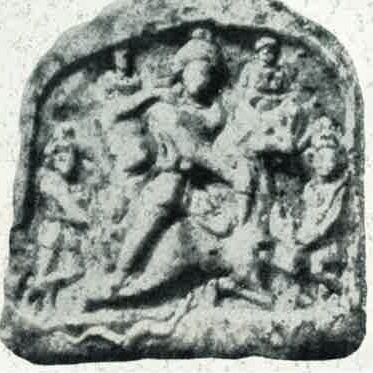
Small marble tauroctony relief from the Roman castellum near Soukhin-Dol, Moesia Inferior, in an arched circular composition depicting the standard bull-slaying scene.
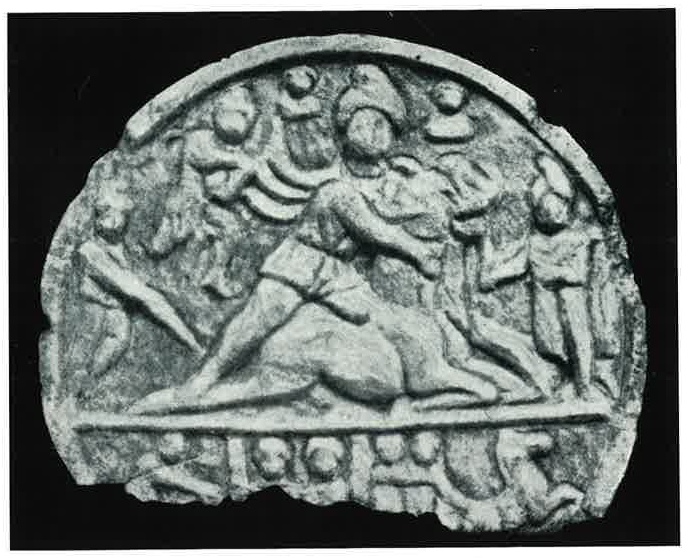
Small circular marble tauroctony relief from Kadine-Most in the Küstendil district, Moesia Superior, divided into two parts by a horizontal rim, with the bull-slaying in the upper and a figure or inscription in the lower.
Inscription from Civitas Montanensium, Moesia Superior, dedicated to Deo sancto invicto by Lucaius ex voto.
Fragment of a relief from Jassen, Moesia Superior, with three scenes: Mithras and kneeling Sol, the sacred repast, and Mithras ascending Sol's chariot; known from a personal communication.
Fragment of a Mithraic relief in a crown from Ratiaria, Moesia Superior, mentioned in a personal communication from Radnóti; no further details.
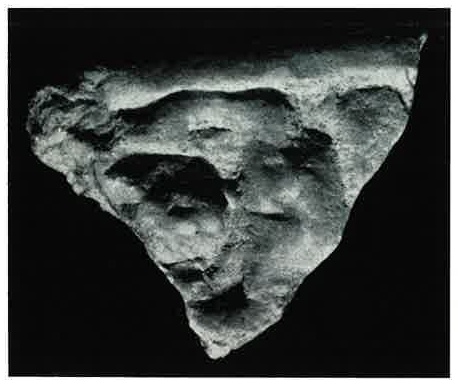
Small marble tauroctony fragment from Cladova, Moesia Superior, preserving part of Mithras's rock-birth scene.
Inscription from Lopata, Moesia Superior, recording that Apollonides, imperial slave and scrutator of the statio Lamud, restored a Mithraic temple that had collapsed through age at his own expense; dated to the consulship of Gentianus and Bassus, AD 211.
Inscription from Slăveni-Romanați, Dacia, dedicated to Soli invicto Mithrae: ara Solis — the altar of Sol.
Mithraic sanctuary found in 1837 on the right bank of the river Olt near Slăveni-Romanați, Dacia; the construction of the building is not detailed.
Fragment of a Mithras relief from Bumbești-Gorj, Dacia, bearing a partially preserved dedication to Deo Soli invicto Mithrae.
Small bronze statuette in Phrygian cap from Catunele de Motru, Dacia, possibly a torchbearer; the Mithraic attribution is not certain as no torch survives.
Limestone tauroctony relief fragment from Mintia-Vețel, ancient Micia in Dacia, now lost, preserving the left corner with Cautopates with torch downward and a partially legible inscription below.
Limestone tauroctony relief found in a quarry at Békásmegyer, ancient Vicus Vindonianus in Pannonia Inferior, together with the upper portion of a sacrificial altar; the standard bull-slaying scene with torchbearers.
Fragment of a Mithras relief from Zsámbék near Aquincum, Pannonia Inferior, showing seven altars alternated with trees — a processional or decorative border rather than a main tauroctony scene.
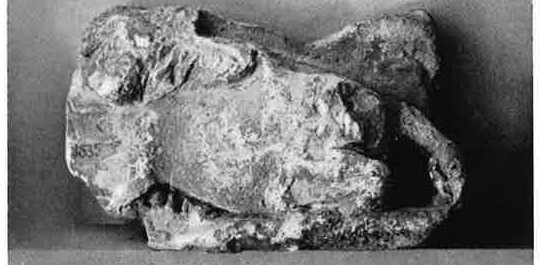
Fragment of a sandstone tauroctony relief from Schwadorf area, ancient Aequinoctium in Pannonia Superior, depicting Mithras killing the bull; the upper part of Mithras's body, the head, and parts of the bull are lost.
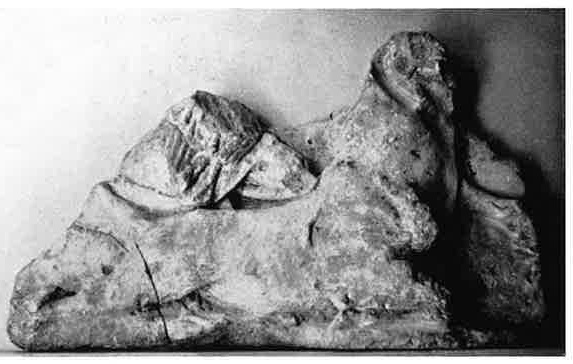
Fragment of a large sandstone tauroctony relief from Schwadorf, ancient Aequinoctium, depicting Mithras killing the bull; the upper part of the god's body, his head, the end of the tail, and the scorpion are lost.
Marble statuette of Cautopates from the Mithraeum at Sopron, ancient Scarabantia, in Phrygian cap and Oriental dress, holding the torch downwards; the head is lost.
Marble statuette of Cautes from the Mithraeum at Sopron, ancient Scarabantia, in Phrygian cap and Oriental dress, holding the upraised torch with both hands; the head is lost.
