Your search San Giovanni al Timavo gave 3665 results.
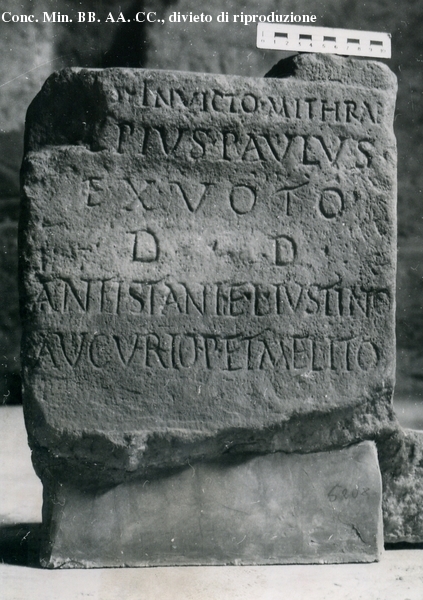
Small marble base, found in one of the private houses along the Via Sacra nearly opposite to the Basilica of Constantine, Rome.

White carnelian with red stripes, reportedly acquired at Epidaurum, depicting what may be Mithras as bull-slayer before a burning altar surmounted by a crescent and a nine-rayed star.

Yellow lenticular carnelian gem probably from Aquileia, now in Udine, depicting a Mithraic scene nearly identical to the Florence jasper.
A bronze fountain mouth and a square spout, together with other fragments of round spouts, from the Mithraic sanctuary at Angleur near Liège in Belgica.
Two fragments of a bronze statuette of a lioness, with the head preserved but the mouth lost, from the Mithraic sanctuary at Angleur near Liège in Belgica.
A bronze statuette of a lion with an open mouth, in which a hole connects to another hole in the stomach, suggesting use as a fountain or conduit, from the Mithraic sanctuary at Angleur near Liège in Belgica.
Two bronze statuettes of youthful women in flying cloaks with outstretched hands holding an object, possibly representing the Seasons, from the Mithraic sanctuary at Angleur near Liège in Belgica.
A torch end held by a hand in the pose of a dadophore, and another hand holding a small offering, found at the south-east cemetery adjacent to the Mithraeum of Les Bolards (ancient Venetonimagus) in Lugdunensis.
A fine white marble bust of Venus, a head of a helmeted deity possibly Minerva, small female heads, and bronze eye-plaques analogous to those from the temples of Sequana and Apollo Vindonnus, found at the building south-west of the Mithraeum at Les…
A small white marble column decorated in high relief with spiral oak-leaves and acorns, together with fragments of two legs and two hands holding votive offerings, found at the Mithraeum of Les Bolards (ancient Venetonimagus) in Lugdunensis.

I am an historian of religions. I currently studies so called "Oriental cults of the Roman Enmpire
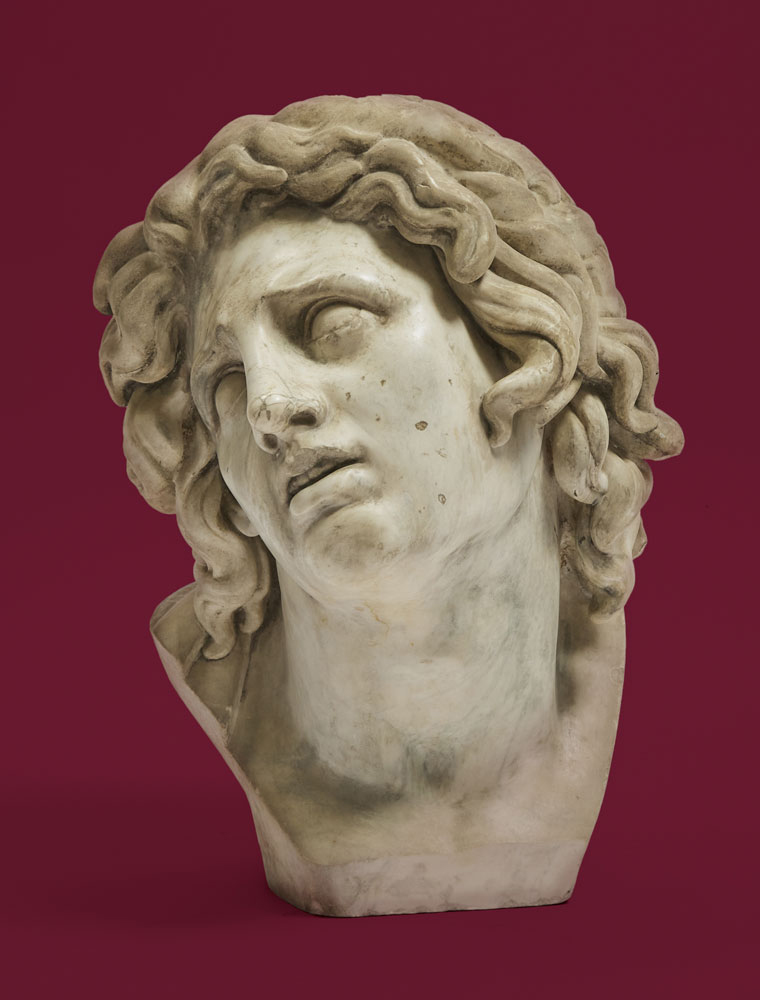
Head formerly associated with Mithraic material but interpreted by Margarete Bieber as a dying Giant.
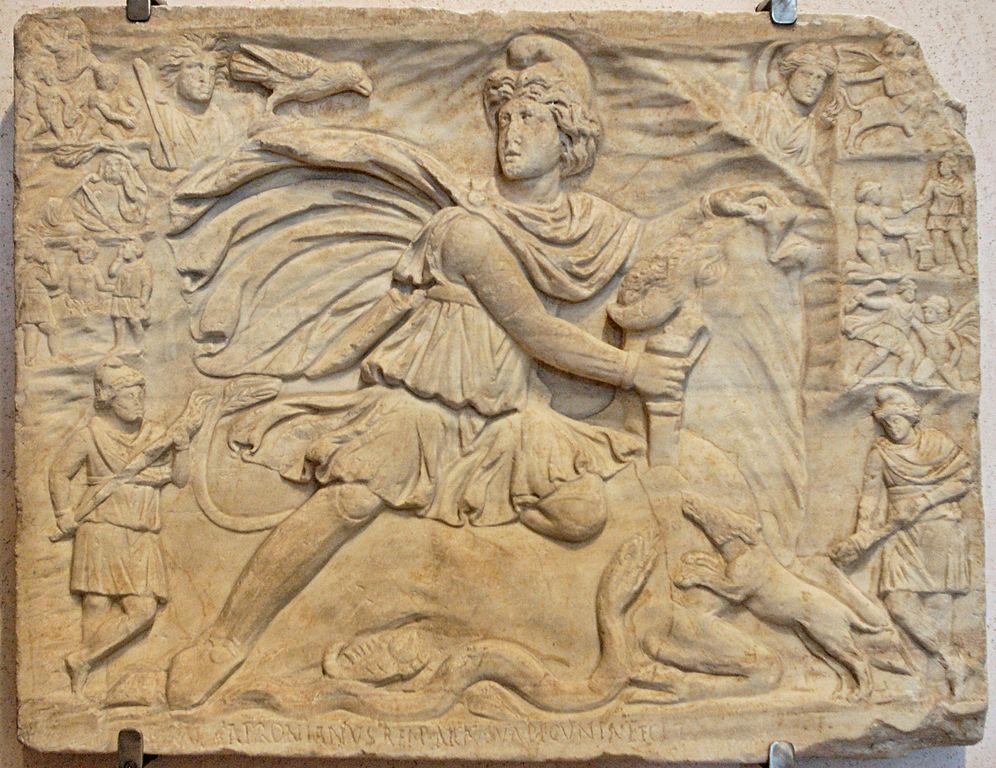
The relief of Mithras slaying the bull of Nersae includes several episodes from the exploits of the solar god.

Two limestone relief fragments from Bihać, Dalmatia, found near Kástel Stasi and the Croate Church of Saint Martha, preserving portions of a Mithraic bull-slaying scene.
Finds from the Mithraeum at Konjic, Dalmatia, comprising a large roof nail, fragments of a concentric-circle basin, pottery, glass, animal bones, 32 coins from Gallienus to Constantine, and a pine apple.
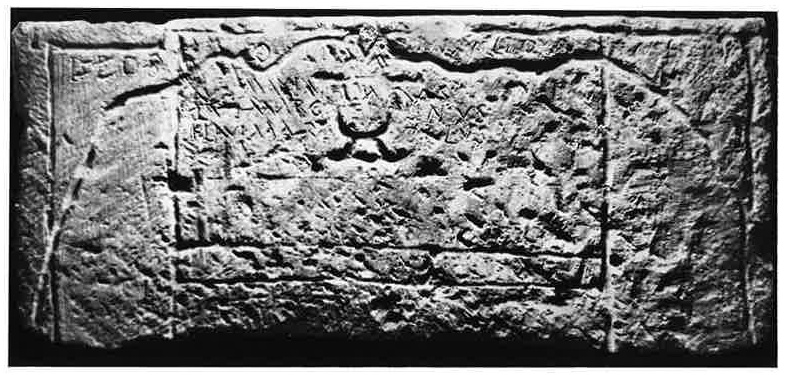
Limestone slab from a Roman settlement at Bijelo Polje north-east of Mostar, ancient area of Han Potoci in Dalmatia, found in 1902 and probably dating to the fourth century AD, depicting a Mithraic scene.
Monument in the Zagreb Archaeological Museum catalogued as an Aion but correctly identified as Icarus; not a Mithraic monument.
Limestone tauroctony relief fragment from Cavtat, ancient Epidaurum in Dalmatia, preserving the dog leaping up against the bull and part of a Cautes figure not cross-legged.
Tauroctony relief carved directly into the rock of the Mithraeum on the Colle S. Giorgio near Cavtat, ancient Epidaurum in Dalmatia; the composition includes Sol, Luna, Cautes, and Cautopates flanking the central scene.
Inscription from Narona, Dalmatia, dedicated to Deo Soli Iovi optimo maximo aeterno sacrum; the Mithraic attribution is doubtful.
