Your search San Giovanni al Timavo gave 3157 results.
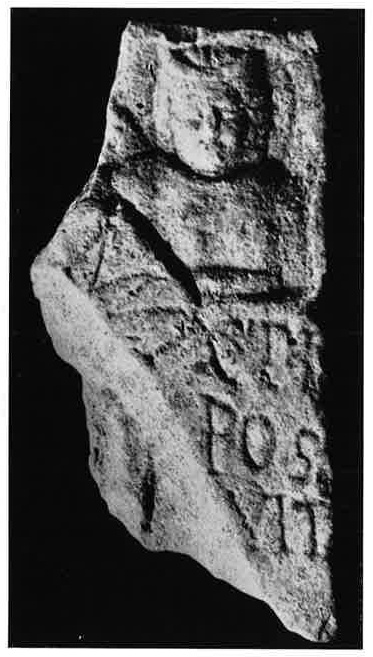
Small limestone tauroctony relief fragment from Gardun near Sinj, ancient Aequum in Dalmatia, found in a field at Oglavak.

Upper part of an epistylium or building fragment from near the church of S. Marco at Prozor, Dalmatia, bearing the dedication to Deo invicto Mithrae.
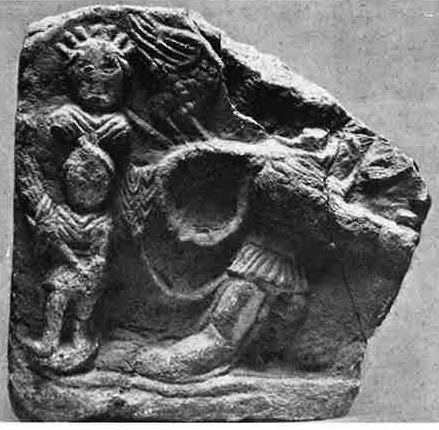
Yellow limestone tauroctony relief found in the bed of the brook Obdulje at Sinać near Otočac in the Lika, Dalmatia, depicting the standard bull-slaying scene.
Altar found at Rab, ancient Arba in Dalmatia, in 1867, bearing a dedication to Invicto by Octavius Geminus; the Mithraic attribution is uncertain.
Natural grotto called the Bichl on the south slope above the Glanegg lake near St. Urban, Noricum, adapted as a Mithraic sanctuary; part of the grotto floor was paved and remnants of water installations survive.
Structure in the Tarn region initially reported as a Mithraeum but later identified as an ordinary silo.
Decorated ceramic vessel showing Mithras slaying the bull together with torchbearers, zodiacal motifs and figures of abundance.
Sculpted lion’s head from Vichy tentatively described as Mithraic in regional archaeological literature.
A small marble cippus found in an old wall near the church of San Niccolò in Arezzo (ancient Arretium), bearing a dedication by Myron, a slave, to the Invincible Holy and Safe god for the welfare of his master Prunicianus.
A brief dedicatory inscription carved in the lower corner of the tauroctony relief from near Vicus Matrini on the Via Cassia in Etruria, recording L. Avillius Rufinus as dedicant.
Coins found in the lower sandy strata of the S. Prisca Mithraeum, ranging from the time of Claudius to the late 4th century, including issues of Commodus, Crispina, Diocletianus, Galerius, Constans and Valens.
Marble relief with the dressed busts of Sol with five rays, a long-bearded man, and Luna with crescent, found in the camp of the equites singulares near the Scala Santa, now in the Museo Nazionale delle Terme.
Fragment of a white marble statue of Mithras tauroktonos with dog, serpent and scorpion, upper body and right leg missing, found at Praeneste (modern Palestrina).
Finds discovered near the crossing of the criptoporticus of the Mithraeum at Capua, including marble plate fragments, a tuff base, red lamps, and animal bones.
Fresco showing a standing figure in a small cloak approached by two other persons, from the initiation sequence of the Mithraeum of Capua.
Fresco depicting Cautopates in Eastern attire between two laurels, cross-legged, pointing his torch downwards over a burning altar, from the Mithraeum of Capua.
Limestone head with Phrygian cap, possibly depicting Mithras, found in Egypt (possibly Alexandria), now in Tübingen, 2nd–3rd century A.D.
Sandstone ritual basin discovered in situ beside the north bench of the Vindobala Mithraeum.
Group of Mithraic and other cult remains possibly originating from several neighbouring sanctuaries destroyed or abandoned in Late Antiquity.
Author's observation that several inscriptions from Apulum, Dacia (CIL III 1096, 1095, 1154, 1002) may belong to a sanctuary of Diana rather than to a Mithraeum.
