Your search Stockstadt am Main gave 1174 results.

Animal bones, principally of birds, found in pit g at Mithraeum III, Heddernheim, ancient Nida, evidence of ritual feasting
Iron ritual bell from Mithraeum III at Heddernheim, ancient Nida, likely used during cult ceremonies
Small iron box with hinges and bronze nails from Mithraeum III at Heddernheim, ancient Nida
Square bronze plate from Mithraeum III at Heddernheim, ancient Nida, probably a cult tessera bearing barely legible engraved letters
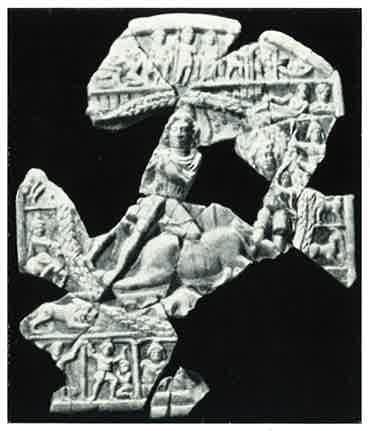
Fragments of a white marble arched tauroctony from Mithraeum III at Heddernheim, ancient Nida, showing Mithras killing the bull in a leaf wreath
Three basalt fragments of a standing figure in jack-boots from Mithraeum III at Heddernheim, ancient Nida, with traces of red paint on the loin-cloth

Fragment of a statuette on a sandstone base found in Mithraeum III at Heddernheim, ancient Nida, formerly in the Häberlin collection
Two basalt blocks walled into the podium of Mithraeum III at Heddernheim, ancient Nida, which supported decorative sandstone bases
Two basalt altars set into the corners of the west podium at Mithraeum III, Heddernheim, ancient Nida, one now lost
Two sandstone altars with voluted tops from Mithraeum III at Heddernheim, ancient Nida, possibly used to support a partition bar across the cult niche
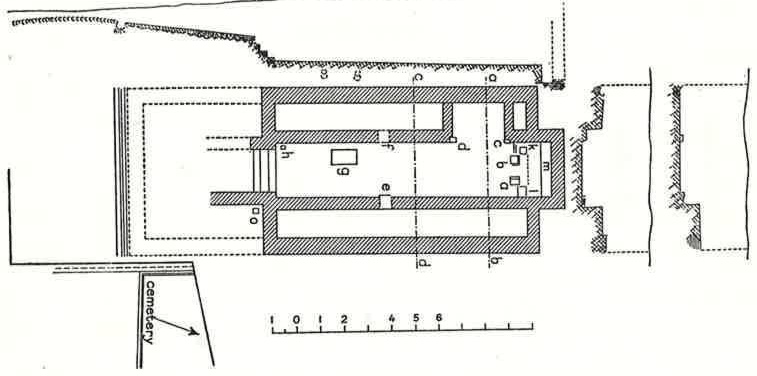
Third Mithraic sanctuary found north-west of the cemetery at Heddernheim, ancient Nida, in 1887 and fully excavated by G. Wolff in 1890
Two sandstone reliefs from Vibbel, found in a pit at Heddernheim, ancient Nida, in 1884, probably lost during the Second World War
Group of basalt cult furniture from Mithraeum II at Heddernheim, ancient Nida, comprising an altar, a large base, and two smaller bases
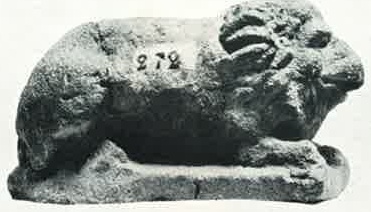
Red sandstone statue of a lying lion with a hollow channel running through its body, from Mithraeum II at Heddernheim, ancient Nida
Two stone relief heads of torchbearers in Phrygian caps, from Mithraeum II at Heddernheim, ancient Nida, with traces of Mithras's mantle
Sandstone altar from Mithraeum I at Heddernheim, ancient Nida, inscribed with a dedication to Cautes by Lucius Domitius Agilis (?)
Unpublished coin deposit from Mithraeum I at Heddernheim, ancient Nida, not recorded by the original excavators
Assemblage of cult refuse from shaft M at Mithraeum I, Heddernheim, ancient Nida, including pottery, bones, a boar's tooth, and a bronze ring with Mercury
Large circular iron pan with handle from Mithraeum I at Heddernheim, ancient Nida, likely used in Mithraic ritual feasting
Sandstone altar from Mithraeum I at Heddernheim, ancient Nida, bearing a dedication to Deo invicto Mithrae inscribed on its right side
