Your search Tal hal Hariri / Es-Sâlihiyeh / As Salhiyah gave 3730 results.

Mithraic monuments associated with Ceionius Iulianus Kamenius and linked with the inscriptions discussed in entries 395A–B.
Two painted decorative phases from the Santa Prisca Mithraeum whose figures became clearer after later conservation work.
Fragmentary relief from the area of the Porticus of Pompey once interpreted as Mithraic but later identified as a representation of Victoria.
Monumental inscription honouring the senator and Mithraic pater Kamenius together with his numerous priestly offices and initiatory roles.
Architectural and numismatic finds from the Mithraeum at Serdica, Thracia, comprising a door cornice, a capital fragment, two pilaster pieces, a stone water-basin, and two coins of Arcadius deposited when the sanctuary was reused as a cellar.
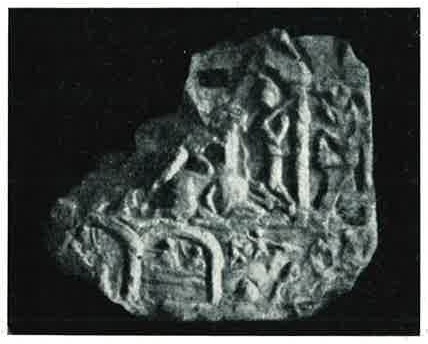
Marble tauroctony relief fragment from Steklen near Svichtov, ancient Novae in Moesia Inferior, preserving the right part of a bull-slaying scene with a serpent and the grotto border.
Inscription from Viminacium, Moesia Superior, recording that Caius Iulius Valerius, veteran of Legio VI Claudia, restored a Mithraic sanctuary destroyed by lightning at his own expense.
Inscription from Smederevo, Moesia Superior, dedicated to Deo invicto Mithrae by Publius Aelius Valerianus, vestiarius — a clothing-dealer or military garment officer.
Fragmentary inscription from Viminacium, Moesia Superior, preserving only the opening of a dedication to Mithrae Soli invicto ex voto.
Inscription from Viminacium, Moesia Superior, dedicated to Deo invicto Mithrae by a decurio and aedilis of the Colonia Viminacii ex voto.
Marble relief fragment from Romula, Dacia, bought in Resca in 1933, preserving the feet and forepart of a horse — possibly from a scene of Mithras ascending Sol's chariot.
Marble altar fragment from Romula, Dacia, with only the letters DE carved out, tentatively supplemented as De[o Soli invicto]; the attribution is questionable.
Limestone capital reused as an altar at Apulum, Dacia, its top scraped off, bearing a dedication to Soli Mithrae by Aelius Gordianus.
Fragment of a relief from Aquincum, Pannonia Inferior, walled into a house at Majláth-Utcai 51, preserving the lower left corner of a tauroctony with the bull's hind-leg, Mithras's leg, and the scorpion.
Base from Aquincum, Pannonia Inferior, recording that Marcus Aurelius Frontinianus and Marcus Aurelius Fronto, soldiers of Legio II Adiutrix and fratres, built a temple to Soli socio; dated to the consulship of Antoninus, either AD 213 or 222.
Marble tauroctony relief from Aquincum, Pannonia Inferior, found at Budapest III, Fötér, depicting Mithras as bull-slayer with both torchbearers flanking the central group.
Altar found at Altofen in 1855, ancient Aquincum, dedicated to Deo Arimanio — Ahriman, the Zoroastrian adversary — by Libella, leo, as a votive dedication to the fratres; one of the very few Mithraic dedications to Ahriman from the Roman world.
Minor finds from Mithraeum IV at Aquincum, Pannonia Inferior, comprising a stamped terra-sigillata bowl (CINNAMI), serpent-vase fragments, pine-apples, altars, balls, and lamps.
Large limestone altar from near Mithraeum III at Aquincum, Pannonia Inferior, with a hole in the base probably designed to hold a cult object; the detailed iconographic programme of this altar is notable within the Aquincum Mithraic assemblage.
Altar from Mithraeum I at Aquincum, Pannonia Inferior, dedicated to Leoni, suggesting a dedication to the Mithraic grade leo or to the lion as a cult animal.
