Your search Terme di Caracalla gave 2863 results.

Inscription from Constanța, ancient Tomis in Moesia Inferior, recording a dedication to Deo Soli for the welfare and victory of Emperors Diocletian and Maximianus invicti Augusti; a significant tetrarchic dedication from this region.
Fragmentary inscription from Acbunar, Moesia Inferior, recording a votive fulfilment on the Kalends or Ides of January — one of the few Mithraic inscriptions with a calendar date.
Inscription from Lopata, Moesia Superior, recording that Apollonides, imperial slave and scrutator of the statio Lamud, restored a Mithraic temple that had collapsed through age at his own expense; dated to the consulship of Gentianus and Bassus, AD 211.
Inscription from Șard near Apulum, Dacia, dedicated to Soli invicto in Latin and to Helios aniketo in Greek by Abeallathos — a rare bilingual Mithraic dedication.
Altar from Petrovaradin, ancient Cusum in Pannonia Inferior, found around 1690, dedicated to Soli invicto Mithrae by Donatus, sacerdos — one of the attestations of the Mithraic priestly title from the Danubian provinces.
Sandstone altar from Campona, Pannonia Inferior, dedicated to Deo Soli invicto by Claudius Neronianus; the dedication is painted red.
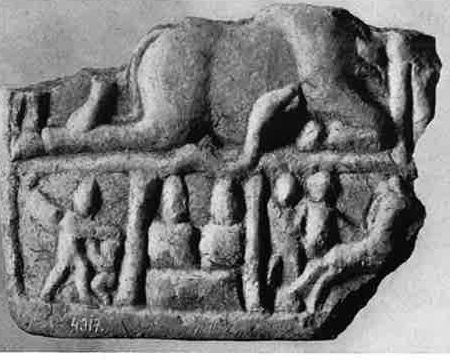
Altar from Eisenstadt, Pannonia Superior, dedicated to Deo invicto Mithrae by Titus Claudius Frontinus, centurion of Legio XIIII Gemina.
Marble altar fragment from the Mithraeum at Sopron, ancient Scarabantia, dedicated to Deo invicto Mithrae by a dedicant whose name includes Secundinus.
Marble altar from the Mithraeum at Modrič, Pannonia Superior, dedicated to Deo invicto Mithrae by Ulpius Secundinus, beneficiarius consularis.
Altar from Vidy near Lausanne, ancient Leusonna, dedicated to Soli Genio Lunae sacrum by Publius Clodius Primus, curator of the vici Lousonnenses, sevir Augustalis, and curator of the Roman citizens of the Helvetian conventus; not earlier than AD 161–169…
Miscellaneous sandstone altar fragments from the Mithraeum at Königshoffen, including uninscribed pieces and one bearing a solar disc with two heart-shaped figures on the upper front face.
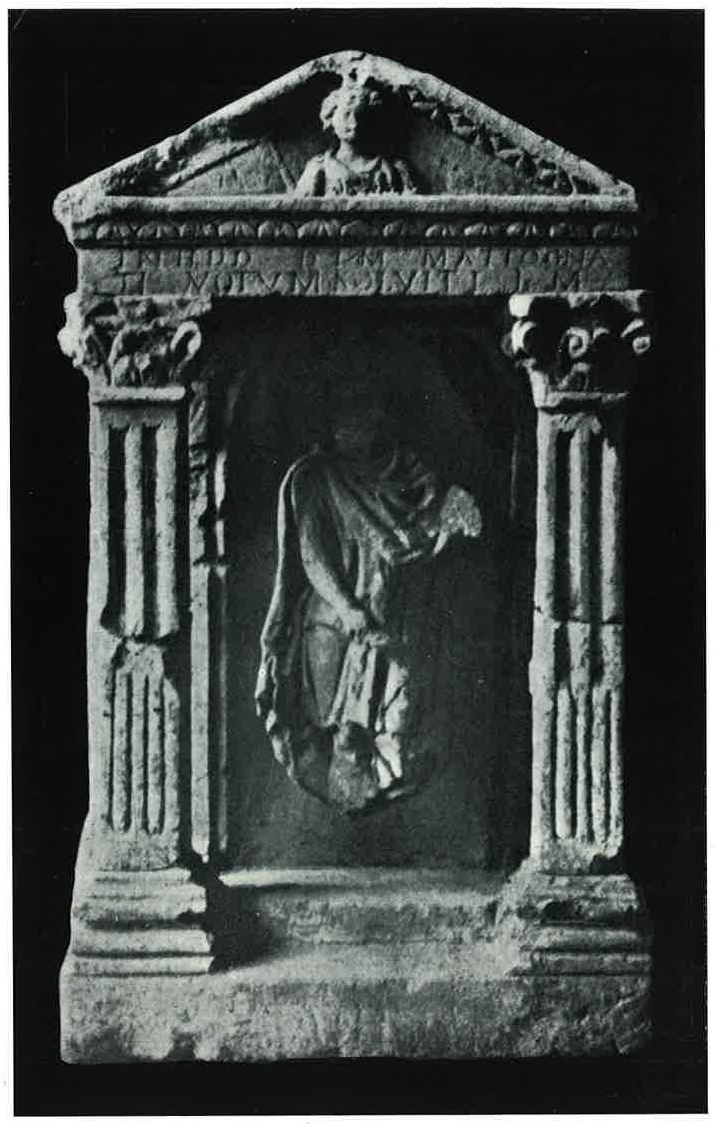
Sandstone monument in the form of a temple façade from the Mithraeum at Königshoffen, accessible by a step and framed by two Corinthian columns; the pediment is decorated with the bust of Luna, and the architrave carries an inscription.
Fragment of an altar from Alzey, ancient Vicus Altiajensium, dedicated to Deo invicto by Adiutorius Tertius, found in the north-west corner of the castellum in 1920
Mithraic dedication by Lucius Candidinius Verus from Bonna.
Circular marble relief preserving part of the bull, a serpent and zodiacal signs associated with Mithraic iconography.
A bluish marble tauroctony relief once in the Villa Ludovisi in Rome, showing Mithras slaying the bull with the raven perched on his cloak holding a heart-shaped fruit, the bull's tail ending in ears of grain, and the dressed busts of Sol and Luna in the upper corners…
Fragment of a red ware dish from Rome, now in the Akademisches Kunstmuseum at Bonn, with a representation of Mithras as a bull-killer sitting astride the bull with a flying cloak.
Small marble altar from the house of the guardian of the Cancelleria in Rome, with a dedication of an altar to Sol by L. Spedius Quadratus.
Marble base in poor lettering found in the church of S. Maria de Cacabariis in Rome, recording the dedication by M. Aurelius Victor, vir clarissimus and prefect of the Feriae Latinae, to his patron Iovinus Callidianus, priest of Sol.
Partially legible altar from a cardinal's vineyard in Rome, bearing a fragmentary dedication to the Invictus God Mithras Sol.
