Your search for Val Camonica gave 208 results.

Camuni refers to the ancient people and territory of Val Camonica in northern Italy.

A black marble cippus from Val Camonica with clear but inelegant lettering, dedicated to Cautopates by G. Munatius Tiro, a duovir iure dicundo, and his son G. Munatius Fronto.
An inscription from the place called La Oneda near Breno in Val Camonica, dedicated to Sol Divinus by L. Apisocius Successus for himself and his four patrons Marcus, Gaius, Lucius and Quintus, with a dagger with ribbons carved below.
Val di Non is an Alpine valley in Trentino associated with Roman-period finds.
A double-sided limestone relief found near Meclo in Val di Non in 1895, now in the Museo Nazionale at Trento, with a raven and altar scene on the obverse and scenes on the reverse showing a figure attacking a kneeling Phrygian-capped person and Mithras as a bull-carrier…
Group of Mithraic finds distributed across different localities named San Zeno along the Verona–Brenner route.

San Zeno is a locality near Tuenno in the Val di Non, where Mithraic material attributed to Roman Raetia was discovered.
The identification of Tavalicavo remains uncertain, though it appears connected with the Balkan interior.

Posthumous publication of Franz Cumont’s study of the Mithraeum of Dura-Europos, edited and introduced by Eric David Francis.

Discovered beneath the church of Vieu-en-Valromey in 1869, this Mithraeum formed part of the monumental religious centre of ancient Venetonimagus.

Landowner from Augustobriga, transferred to Tarraco by Antoninus Pius and owner of the villa of Els Munts and its Mithraeum.
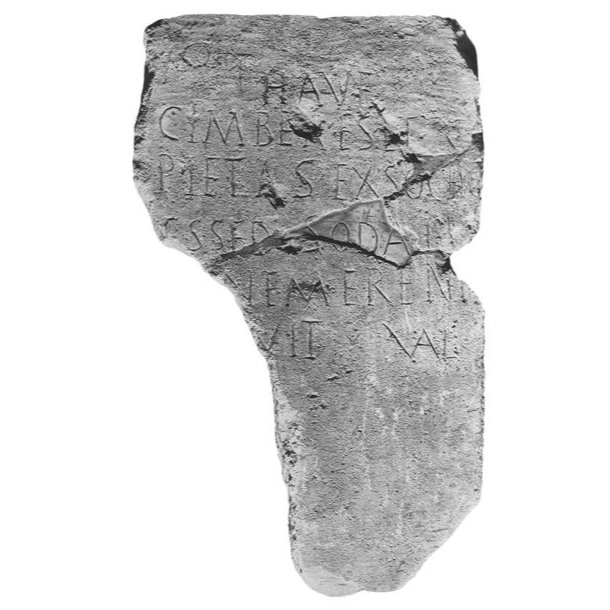
This monument with an inscription by two individuals was found in the first mithraeum of Cologne, Germany.
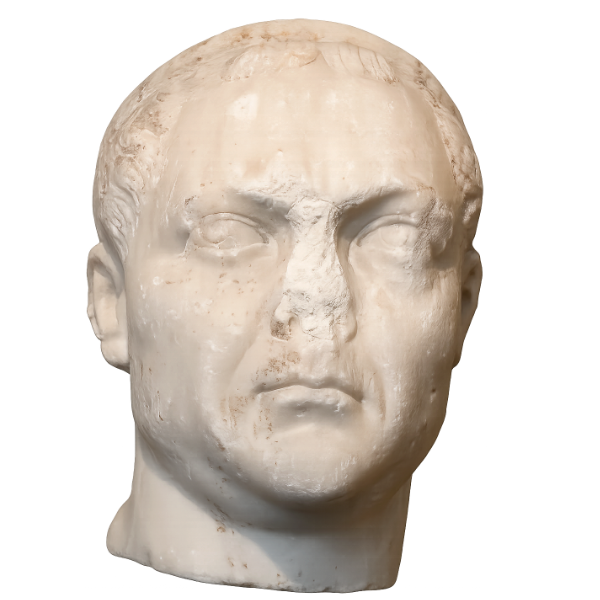
Roman emperor from 253 to 260, he was taken captive by Shapur I of Persia. He was thus the first emperor to be captured as a prisoner of war.
The base of a statuette, preserving only one foot of Cautes, found at Luguvallium (modern Carlisle), bearing a dedication to Deus Cautes by Iulius, the archietus.
A torch end held by a hand in the pose of a dadophore, and another hand holding a small offering, found at the south-east cemetery adjacent to the Mithraeum of Les Bolards (ancient Venetonimagus) in Lugdunensis.
Three epigraphical fragments that together form the word magister, with traces of fire, found at the Mithraeum of Les Bolards (ancient Venetonimagus) in Lugdunensis.
A fine white marble bust of Venus, a head of a helmeted deity possibly Minerva, small female heads, and bronze eye-plaques analogous to those from the temples of Sequana and Apollo Vindonnus, found at the building south-west of the Mithraeum at Les…
A large red and white granite marble disc surrounded by rays, possibly representing the sun, found at the building south-west of the Mithraeum at Les Bolards (ancient Venetonimagus) in Lugdunensis.
