Your search Val di Non gave 2329 results.
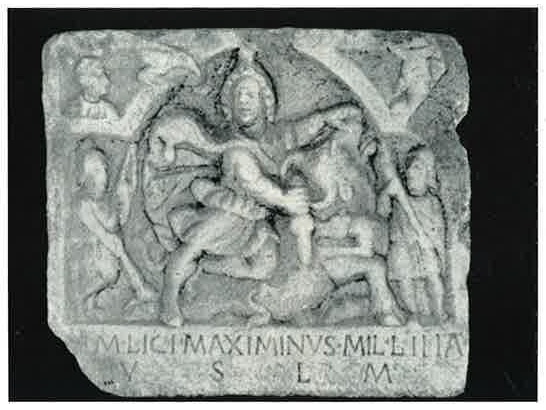
White marble tauroctony relief from Mithraeum II at Ptuj, ancient Poetovio, depicting Mithras in Oriental dress killing the bull with a girdle and the raven perched on the grotto's border.
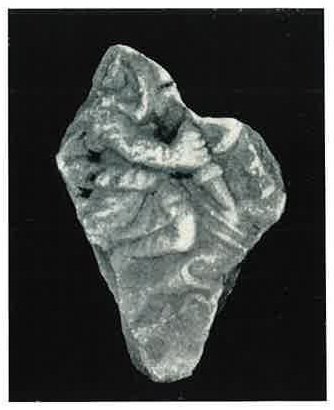
Marble tauroctony relief fragment from Mithraeum II at Ptuj, ancient Poetovio, preserving the central scene with the leaping dog, serpent, and scorpion; the bull's body is encircled by two girdles.
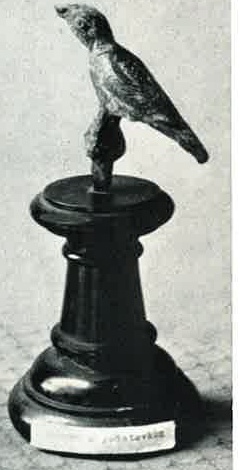
Small bronze raven perched on a dagger from Mithraeum I at Ptuj, ancient Poetovio — a Mithraic grade symbol representing the corax, the lowest of the seven Mithraic initiation grades.

White marble base from Ptuj, ancient Poetovio, bearing a weathered inscription and the remnants of a downward-pointing torch, identifying the statue as Cautopates.
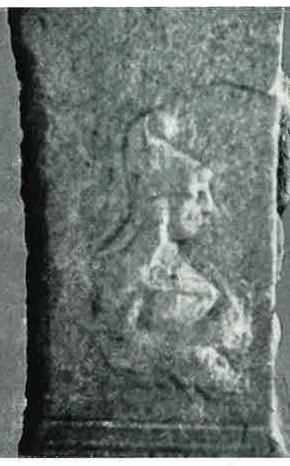
White marble altar from Mithraeum I at Ptuj, ancient Poetovio, decorated below the inscription with the dressed bust of Cautopates, a palm between two ram's heads above, and busts of Mithras on both lateral faces.
Duplicate inscription from Mithraeum I at Ptuj, ancient Poetovio, set up by Primitivos in memory of Hyacinthus; a companion piece to no. 1501, suggesting that the two inscriptions flanked the cult niche.
White marble base from Mithraeum I at Ptuj, ancient Poetovio, with an inscription and the preserved legs, garment, and torch of a Cautopates statue.
Inscription from Mithraeum I at Ptuj, ancient Poetovio, set up by Primitivos, contrascrip of the imperial procurator Caius Antonius Rufus, in memory of Hyacinthus — probably the founder of the sanctuary.
White marble base from Mithraeum I at Ptuj, ancient Poetovio, with an inscription and the preserved foot and lower garment of a Cautes statue.
Fragment of a small altar from Ljubljana, ancient Emona in Pannonia Superior, preserving a dedication to Invicto Mithrae by a dedicant whose name ends in -quartus; the Mithraic attribution is not entirely certain.
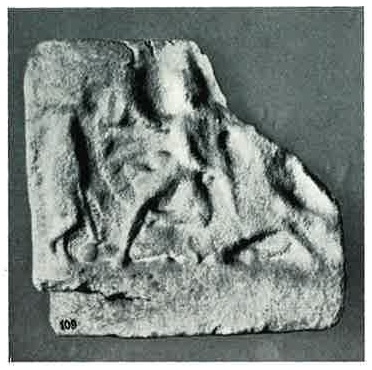
Marble tauroctony relief from Ruše, Noricum, showing a grotto scene in which Cautopates holds the torch downward against the rocky ground and supports his head with his left hand in a pensive attitude; the upper left corner preserves a bust of Sol.

Small marble tauroctony relief from Ruše, Noricum, badly weathered, depicting the bull-slaying in a grotto-like niche with cross-legged torchbearers on bases.
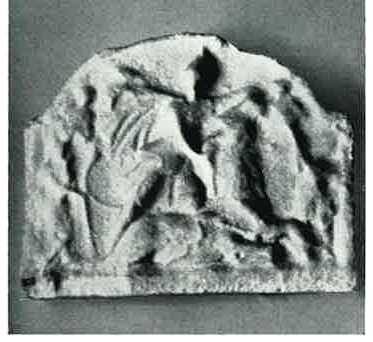
Small marble tauroctony relief from Ruše, Noricum, depicting Mithras killing the bull in a grotto, notable for the unusually elongated neck of the bull; dog and serpent approach the wound, and the raven perches above.
Deposit of twenty-three coins from the Mithraeum at Schachadorf, Noricum, spanning from Claudius II to Valentinianus II and providing a terminus for the sanctuary's use.
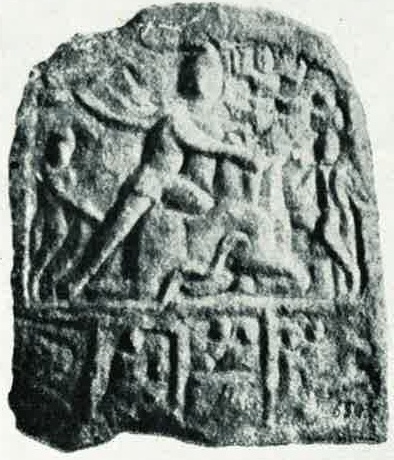
Small arched marble tauroctony relief from Philippovtsi near Sofia, Thracia, divided into two parts by a horizontal rim.

This dedicatory inscription by Aurelius Seleucus, found in Cilicia, aligns with Plutarch’s account of Cilician pirates performing foreign sacrifices and secret rites of Mithras.

Aphrodisias was a small ancient Greek Hellenistic city in the historic Caria cultural region of western Anatolia, Turkey.
Vaison-la-Romaine is a town in the Vaucluse department in the Provence-Alpes-Côte d'Azur region in southeastern France. Vaison-la-Romaine is famous for its rich Roman ruins and mediaeval town and cathedral. The old town is split into two parts: the
Claudium Virunum was a Roman city in the province of Noricum, on today's Zollfeld in the Austrian State of Carinthia.
Icosium was a Berber city that was part of Numidia which became an important Roman colony and an early medieval bishopric in the casbah area of actual Algiers.
