Your search Villa of Domitian at the Castel Gandolfo gave 3663 results.
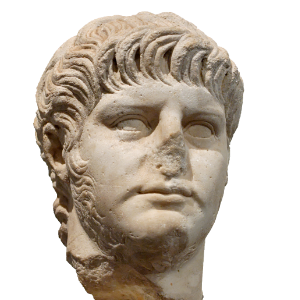
Roman emperor whose ceremonial reception of Tiridates I of Armenia established one of the earliest recorded links between Mithras and the Roman imperial court.
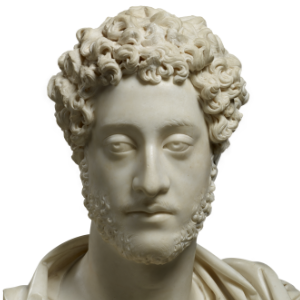
Roman emperor traditionally regarded as the first ruler initiated into the Mysteries of Mithras.

Alfius Severus was a prominent figure associated with the Mithraeum of Marino, probably acting as pater of a small Mithraic community connected with the nearby peperino stone quarries.
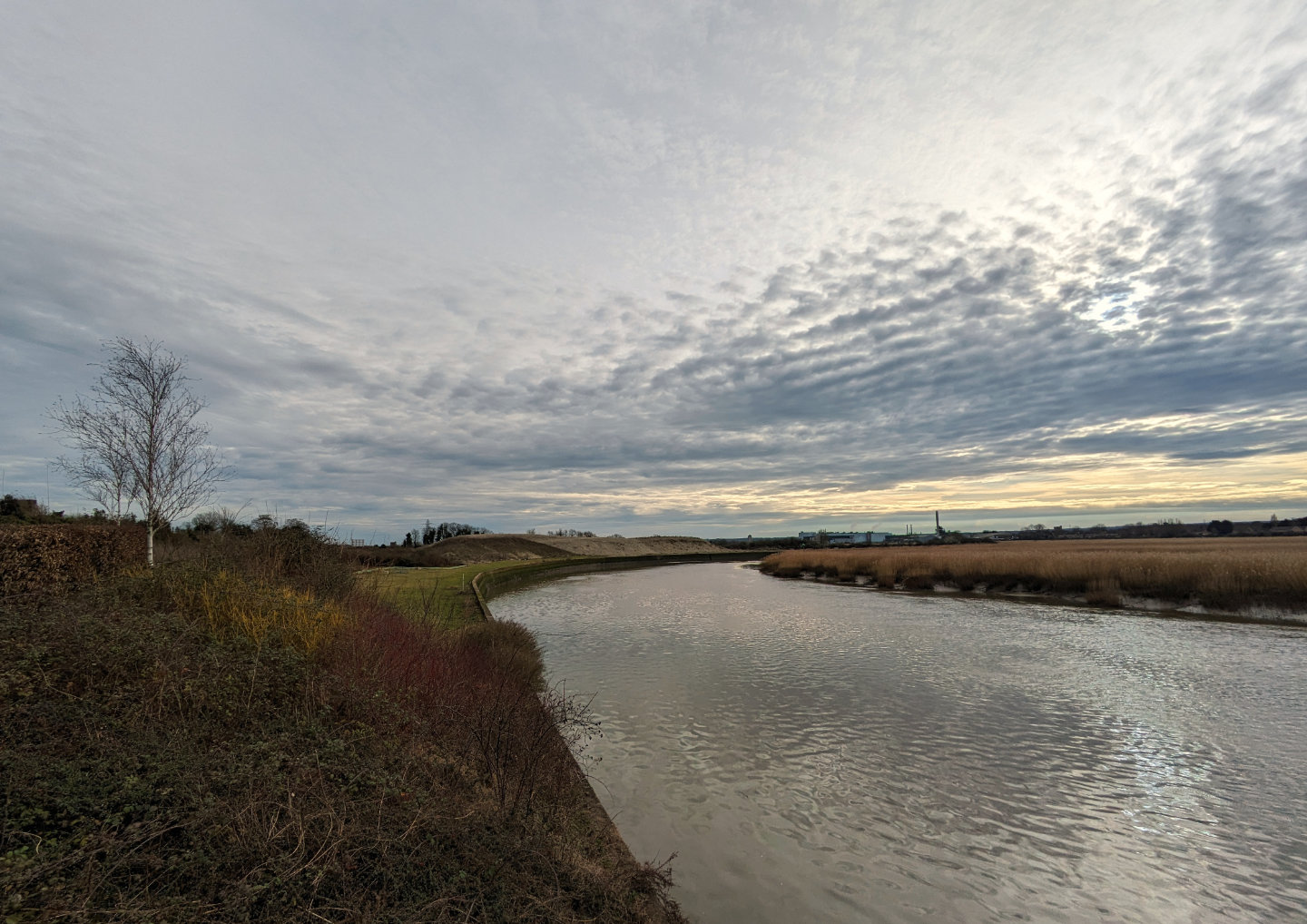
To date, there is no evidence that the so-called Mithraeum of Burham was ever used to worship the sun god.
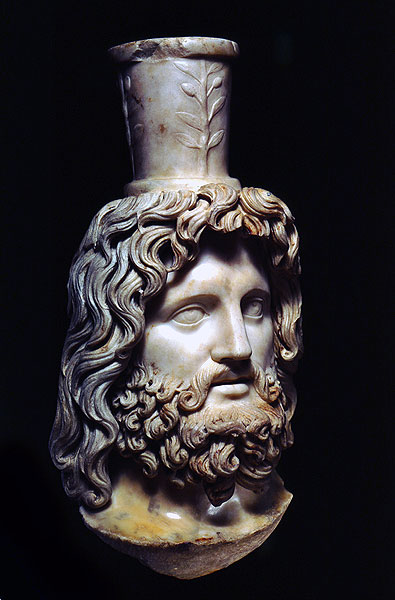
The head of Serapis found at Walbrook, London, is decorated with stylised olive branches.
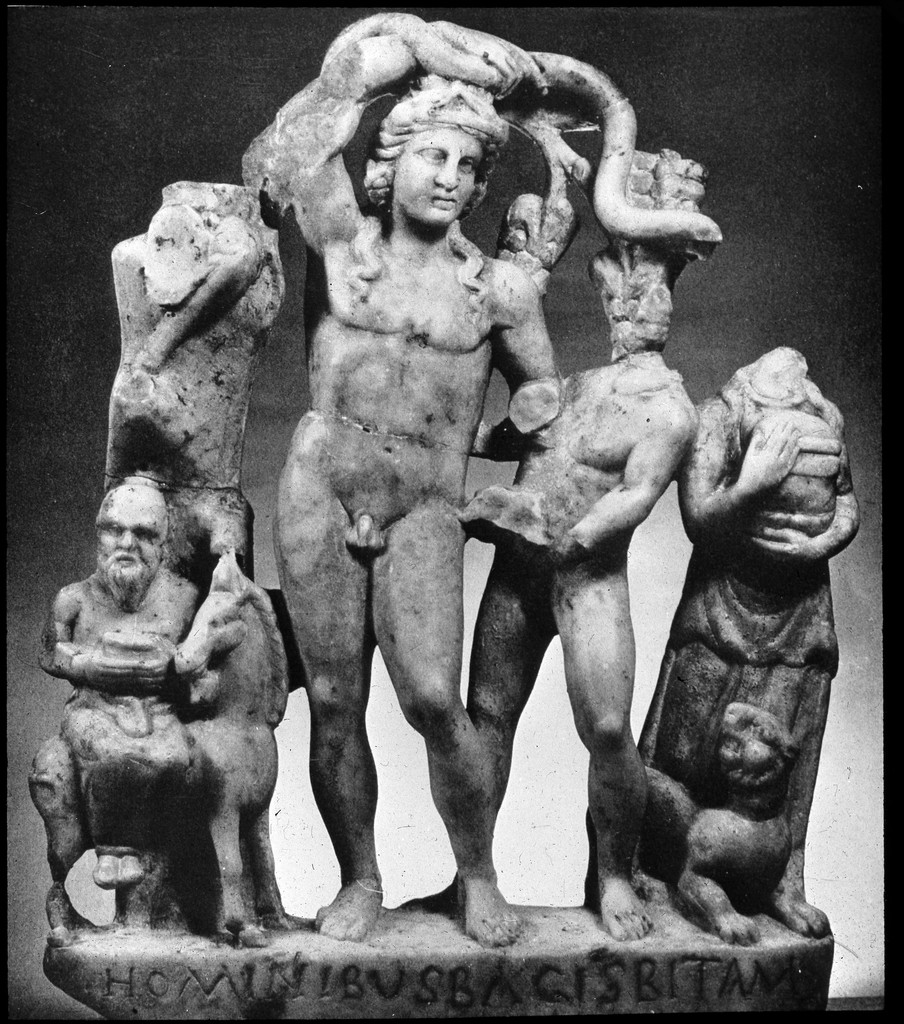
Marble group of Dionysus accompanied by a Silenus on a donkey, a satyr and a menead.
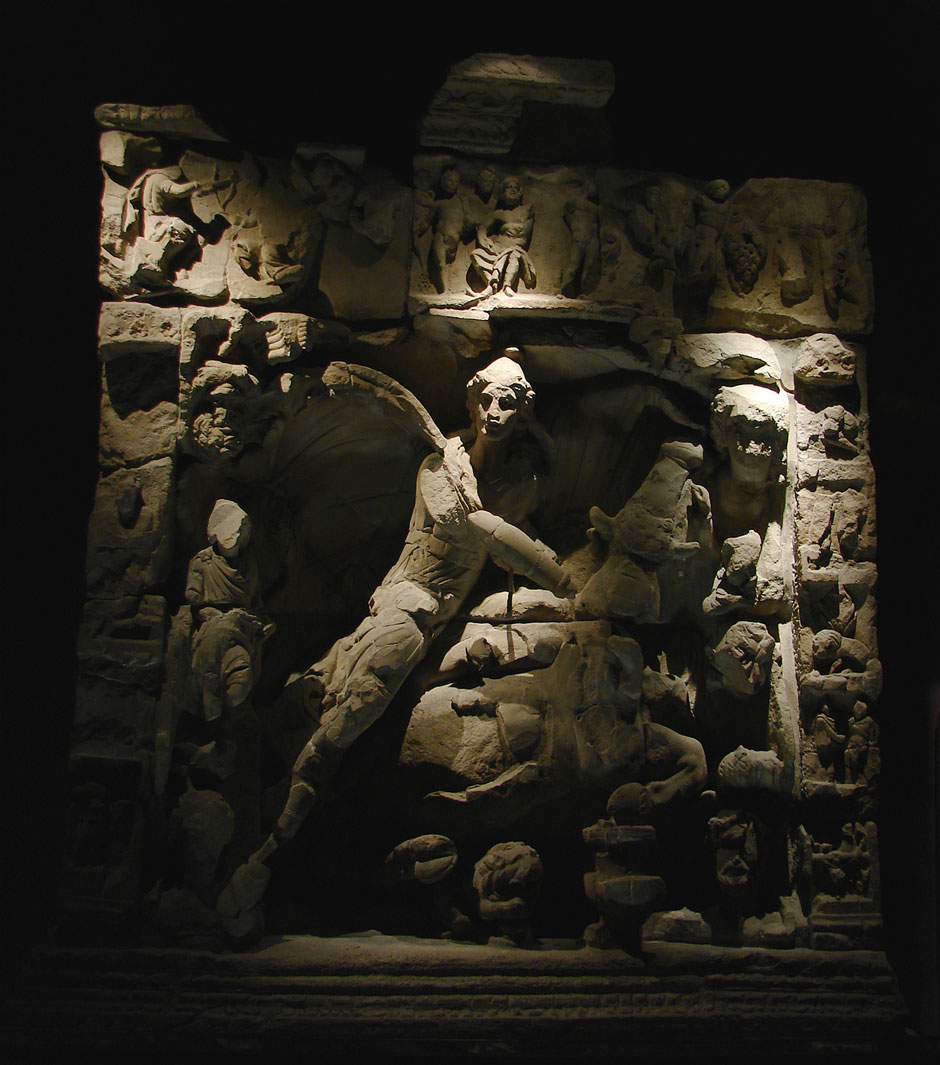
The Tauroctony of Saarbourg (Sarrebourg, ancient Pons Sarravi), France, contains most of Mithras deeds known in a single relief.
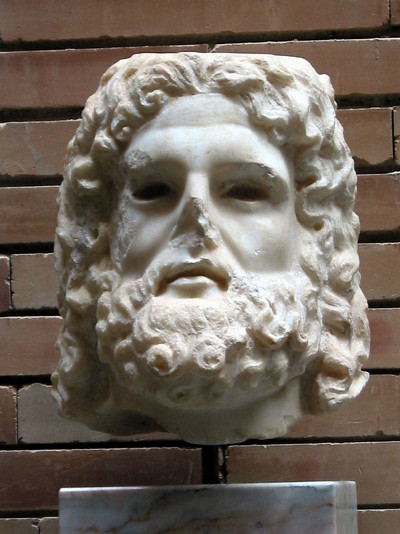
This head of Serapis from Cerro de San Albín may be unrelated to Mithras worship.

A decorated inscription with egg-and-dart moulding found in the castle of La Fratta near Montefalco in Umbria, bearing a brief dedication to Sol Invictus.
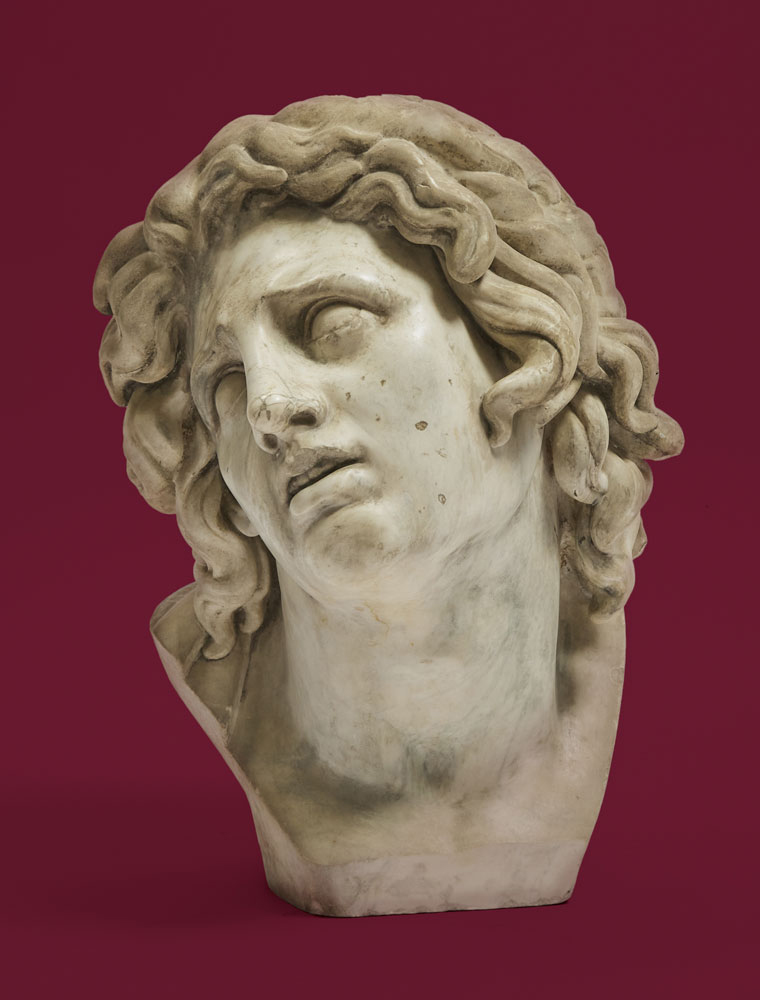
Head formerly associated with Mithraic material but interpreted by Margarete Bieber as a dying Giant.
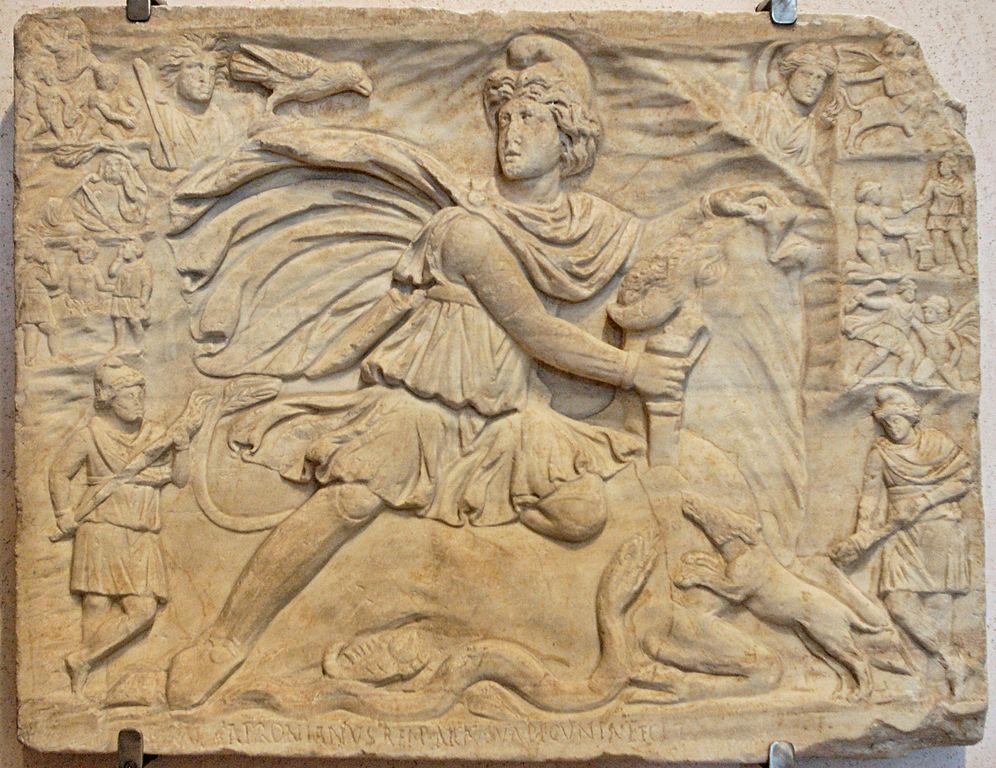
The relief of Mithras slaying the bull of Nersae includes several episodes from the exploits of the solar god.
Marble plate inscription dedicated to Deo Soli Invicto Mithrae for the wellbeing of Emperor Commodus, dated 180-192 A.D., from Aïn-Tekria.
Inscription of the cohorts of Legion II Herculiae dedicated to Deus Invictus Mithras, dated after 285 A.D., from the Ager Sitifensis.
Small stone block inscribed to Deo Soli, found walled up in an Arabic wall near a Roman spring at Sicca Veneria (modern Kef).
Punic ex-voto to Tanit bearing the formula 'Meqim Elim Mithrahastarni', tentatively interpreted as a Mithras reference but pre-dating the Roman cult.
Small Mithras relief found in the upper layer of the tophet at Carthage by Cintas in 1949.
One of the rooms in a sustantive masonry building in Hollytrees Meadow was considered to be a Mithreum, a theory that has now been discarded.
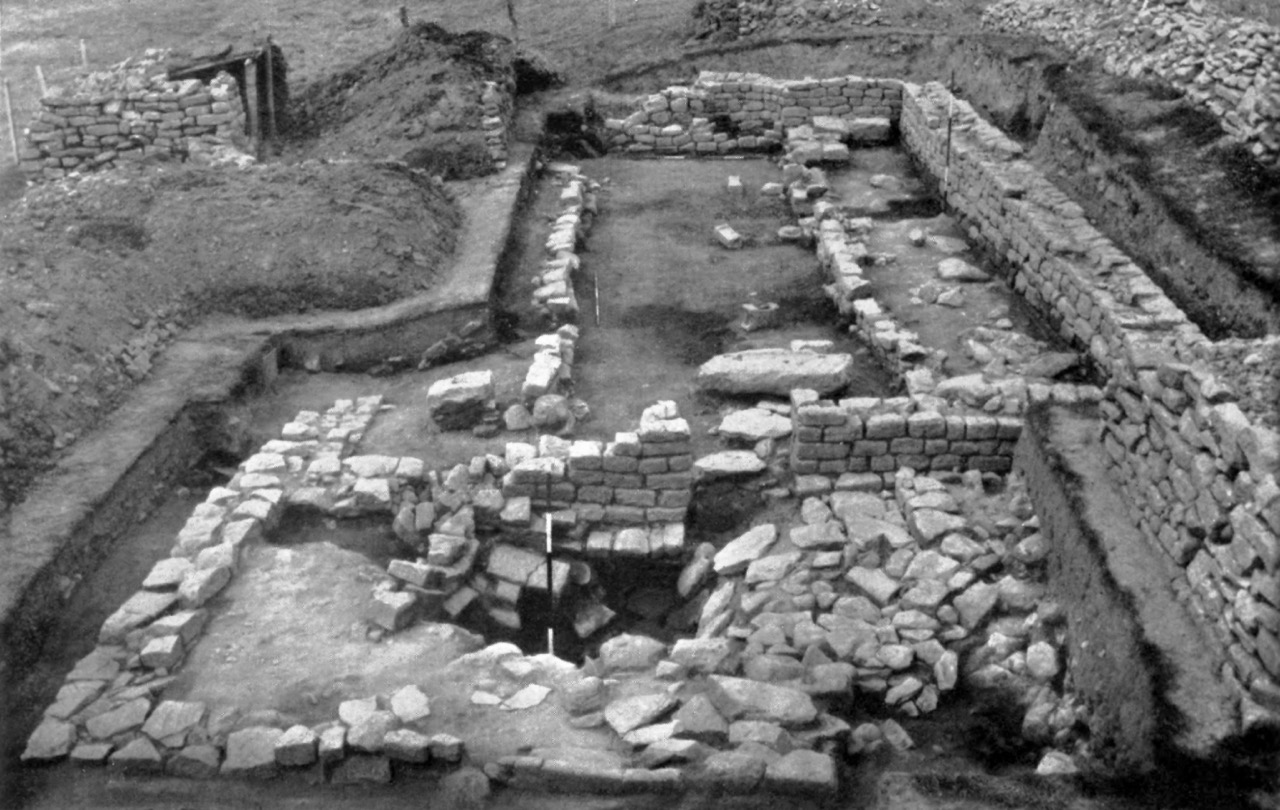
The Mithraeum of Rudchester was discovered in 1844 on the brow of the hill outside the roman station.
Limestone keystone dedicated to the invincible Sun by Peticius Pastor and preserved at Lepcis Magna.
Epigraphic monument from Tripolitania preserving a corrected reading discussed in later scholarship.
