Your search Villa of Domitian at the Castel Gandolfo gave 3678 results.

Punic ex-voto to Tanit bearing the formula 'Meqim Elim Mithrahastarni', tentatively interpreted as a Mithras reference but pre-dating the Roman cult.
Small Mithras relief found in the upper layer of the tophet at Carthage by Cintas in 1949.
One of the rooms in a sustantive masonry building in Hollytrees Meadow was considered to be a Mithreum, a theory that has now been discarded.
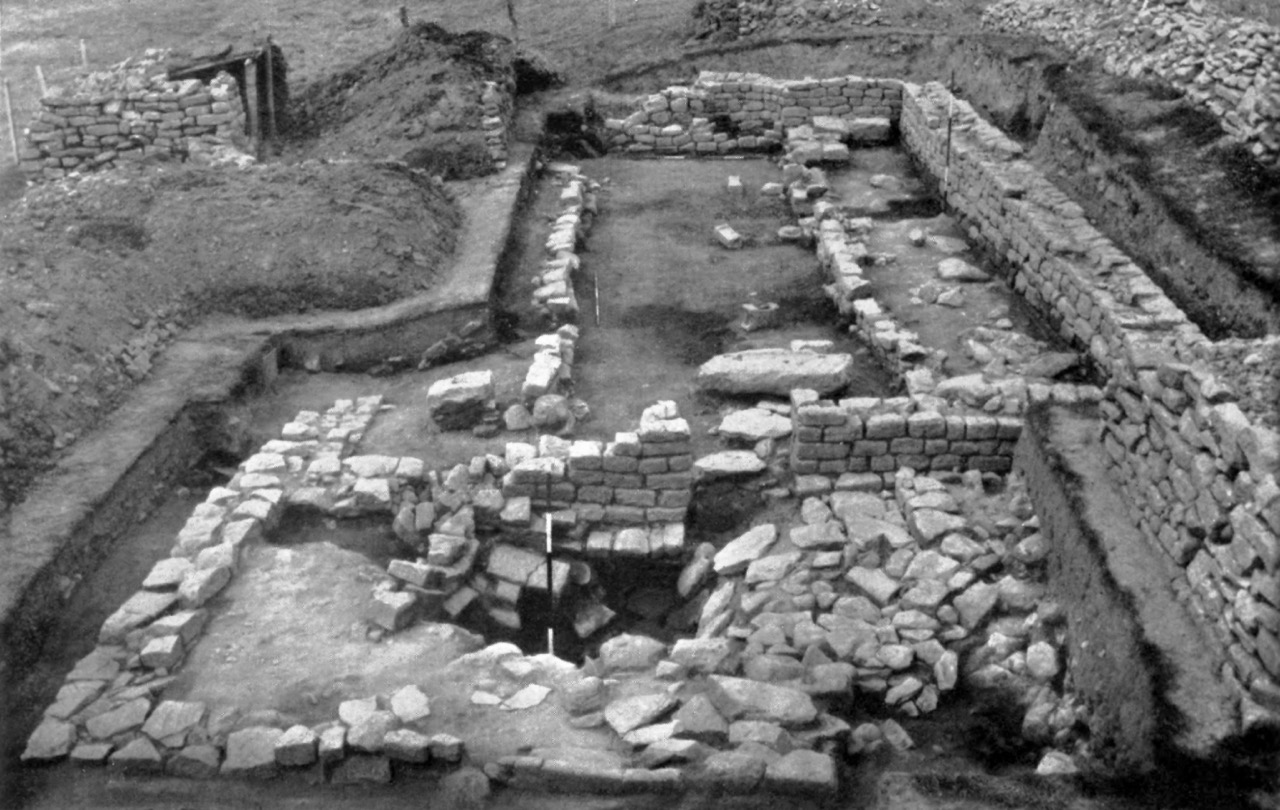
The Mithraeum of Rudchester was discovered in 1844 on the brow of the hill outside the roman station.
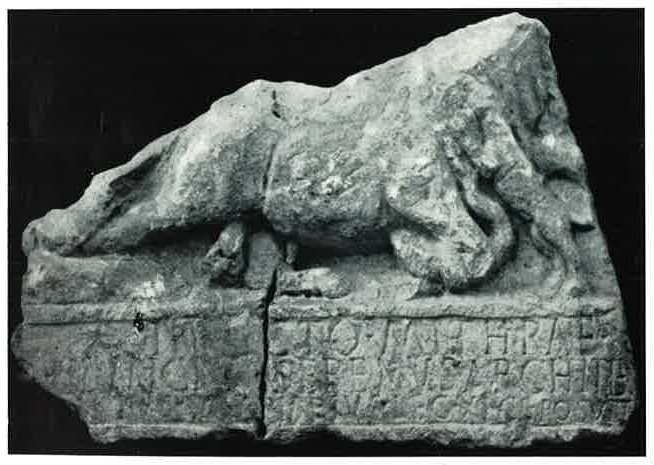
Limestone keystone dedicated to the invincible Sun by Peticius Pastor and preserved at Lepcis Magna.
Epigraphic monument from Tripolitania preserving a corrected reading discussed in later scholarship.
Partial list of Mithraic initiatory grade titles attested in inscriptions from the Mithraeum of Dura-Europos, Syria, 3rd century A.D.
Limestone stele recording endowments for the feast of the Mithrakana by Antipater and his son Gaios, found at Amorium (modern Hisarköy), Phrygia.
Marble funerary stele dedicated to the soldier Aurelius Lucanus, a devotee of Mithras, found at Amasya (ancient Amasia), Pontus.
Marble altar from Thessalonike, Macedonia, with a dedication on the front and a pedum on the left side and a caduceus on the right — attributes associated with Mithraic cult furniture.
Marble head from the south-west walls of Thasos, Macedonia, found in 1920, with long curly hair, Phrygian cap, and a pathetic expression; possibly Mithras or Attis.
Stone from Durrës, ancient Dyrrachium in Macedonia, dedicated to Soli aeterno by Marcus Laelius Aquila, sacerdos; the name Aquila may correspond to a Mithraic grade.
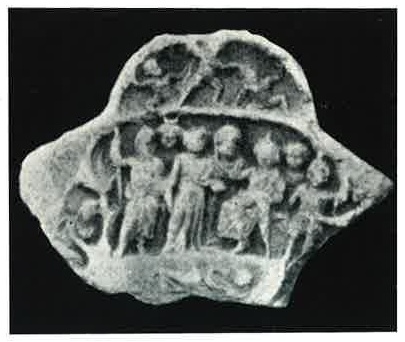
White marble tauroctony relief from Veles, ancient Bylazora in Macedonia; the merchant reported that other fragments of the same monument were walled into a fountain in Veles.
Small weathered arched tauroctony relief from the ruins of ancient Kabyle near Yambol, Thracia, depicting the standard bull-slaying scene.
Fragment of a marble tauroctony relief found between Sinitovo and Tatar-Bazardjik, Thracia, preserving only the upper portion with the busts of Sol and Luna; the Greek inscription in the border names the dedicant.
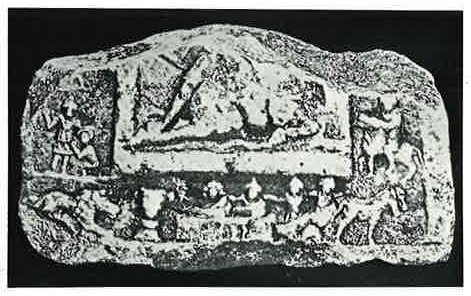
Marble tauroctony relief from Elli Dere near Tatar-Bazardjik, ancient Bessapara in Thracia, with the upper part broken off; the lower portion preserves the standard bull-slaying scene.
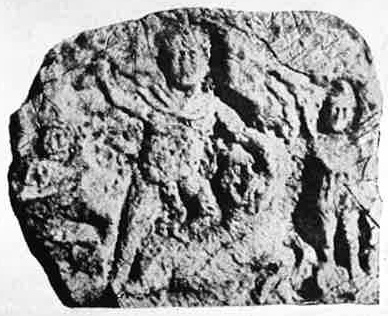
Rough relief from Gaganica, Thracia, depicting Mithras as bull-slayer in an unusual frontal attitude, wearing only a shoulder-cape and holding the dagger upwards; with dog, serpent, scorpion, and a non-cross-legged Cautes.
Limestone tauroctony relief from Virovsko near Vratsa, Thracia, depicting Mithras killing the bull with dog and raven, flanked by torchbearers, with Sol and Luna busts in the upper corners.
Weathered marble tauroctony relief from Iarlovtsi near Trn, Thracia, depicting the standard bull-slaying with dog, serpent, and the busts of Sol and Luna in the upper corners.
Sandstone tauroctony relief from Balcic, ancient Dionysopolis in Moesia Inferior, depicting the standard bull-slaying scene; the attribution to Dionysopolis rather than another site is disputed.
