Your search Villa of Domitian at the Castel Gandolfo gave 3663 results.

Assemblage of plates, jugs, dishes, cups, censers, two bronze coins, and animal bones from the Mithraeum at Dieburg
Small yellow-red sandstone altar from the Mithraeum at Dieburg dedicated to Deo sancto Mercurio
Small fragmentary inscription from the Mithraeum at Dieburg preserving only the abbreviated dedication D(eo) i(nvicto) M(ithrae)
Red sandstone fragment of a standing woman in a mantle from the Mithraeum at Dieburg, head and lower body lost, probably Minerva
Red sandstone base of a Mercury statue from the Mithraeum at Dieburg, preserving only the tortoise attribute at the god's feet
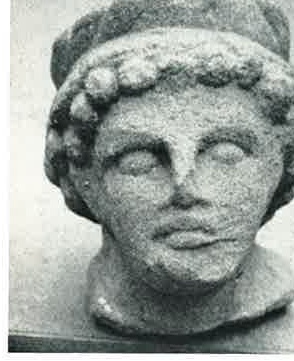
Head in red sandstone from the Mithraeum at Dieburg wearing an oblong pointed cap, possibly Mithras, a torchbearer, or Phrygia
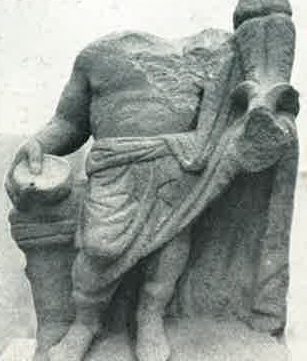
Yellow sandstone statue from the Mithraeum at Dieburg showing a genius with a double cornucopia, a mantle, and a leafy crown
Red sandstone statue of Mithras naked being born from the rock, found in a pit near the entrance of the Mithraeum at Dieburg
Fragmentary Latin inscription from Gross-Krotzenburg recording a dedication by Speratus of Cohors IIII Vindelicorum
Circular stone base wrapped by a serpent, possibly belonging to a representation of Aion.
Dedication to Mithras mentioning Freio and Friatto.
Dedication to Mithras from Juslenville by Axius Verus, Quintus Vetius and Probinus.
Structure in the Tarn region initially reported as a Mithraeum but later identified as an ordinary silo.
Group of Mithraic objects now preserved in the museum of the Société des Sciences de Semur at Alésia.
Terracotta matrix used to produce vessels decorated with the bull-killing scene of Mithras.
Decorated ceramic vessel showing Mithras slaying the bull together with torchbearers, zodiacal motifs and figures of abundance.
Sandstone altar combining imagery of Apollo, Mithras and the torchbearers Cautes and Cautopates near the Roman fort of Whitley Castle.
Group of inscriptions from Umbria including one entry reassigned to Interamna Lirenas in Latium.
A white marble fragment from Ocrea in Umbria bearing the name "Mitrha" (sic), possibly related to Mithraic monuments from nearby sites.
An earthen lamp bearing the name of C. Dessi along with two coins of Constantine and one of Gratianus, found in the Mithraeum at Spoleto in Umbria.
