Your search farid ud din attar gave 1816 results.
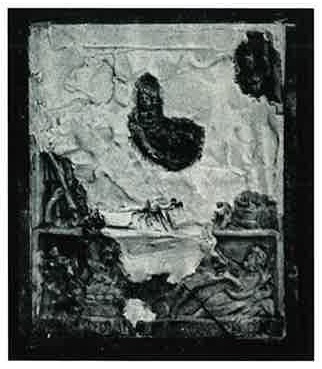
White marble tauroctony relief in eleven fragments from the Mithraeum at Sarmizegetusa, Dacia, divided into three horizontal registers, the central one depicting the bull-slaying and the others bearing subsidiary Mithraic scenes.

Marble fragment from Cinçsor, Dacia, preserving the torso of a standing torchbearer in a tunic; head, arms, and legs are lost.
Small Mithras relief from Apulum, Dacia, mentioned by Buday but not published; a design shows the bust of Sol with one ray pointing towards Mithras.
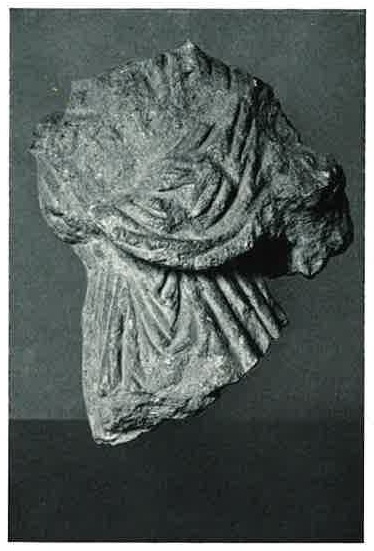
Limestone statue torso from the Mithraeum at Apulum, Dacia, found with the preceding piece, depicting a person in Oriental dress carrying a bull's head in his left hand; head, arms, and legs are lost.
Foundations of a rectangular building (10 × 6 m) and a front-stone fragment at Golubić near Bihać, Dalmatia, suggesting the existence of a Mithraic sanctuary.
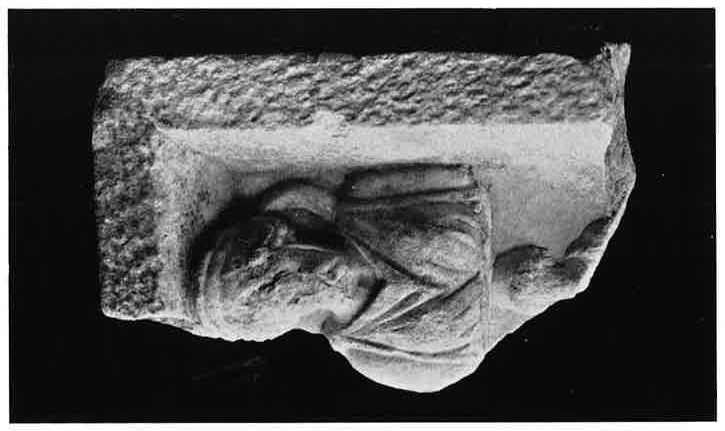
Right upper corner of a white marble bordered tauroctony relief from Salona or its surroundings, Dalmatia, with framing elements and part of the bull-slaying iconography.
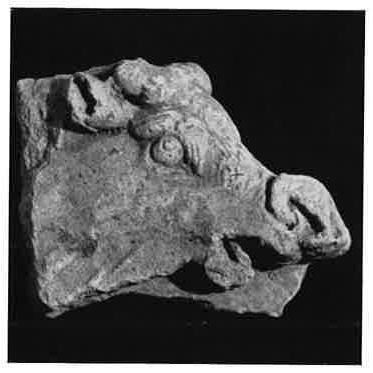
Limestone relief fragment from Salona or its surroundings, Dalmatia, preserving a very fine bull's head and the left hand of Mithras.
Fragmentary inscription from Salona, Dalmatia, preserving only the phrase impendio suo — probably recording a building act.
Altar from Intercisa, Pannonia Inferior, found in the area of the castra.
Fragments of two painted torchbearer statues from the Mithraeum at Brigetio, Pannonia Superior, including a Phrygian-capped head and fragments of garments and hands.
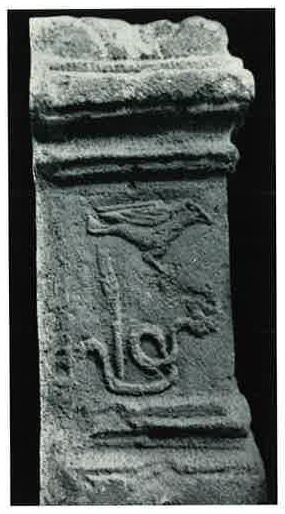
Sandstone altar from Carnuntum, Pannonia Superior, found in a flue of Building VII in 1899, decorated on the left with a raven, corn-ear, and serpent stacked vertically and on the right with a lying lion; dedicated to Invicto deo Mithrae.
Minor finds from Mithraeum III at Carnuntum, Pannonia Superior, including lamps, bricks, pottery, and serpent-vase fragments; a coin of Macrinus (AD 217) from the entrance may provide a terminus, and the sanctuary is attested as restored in AD 307.
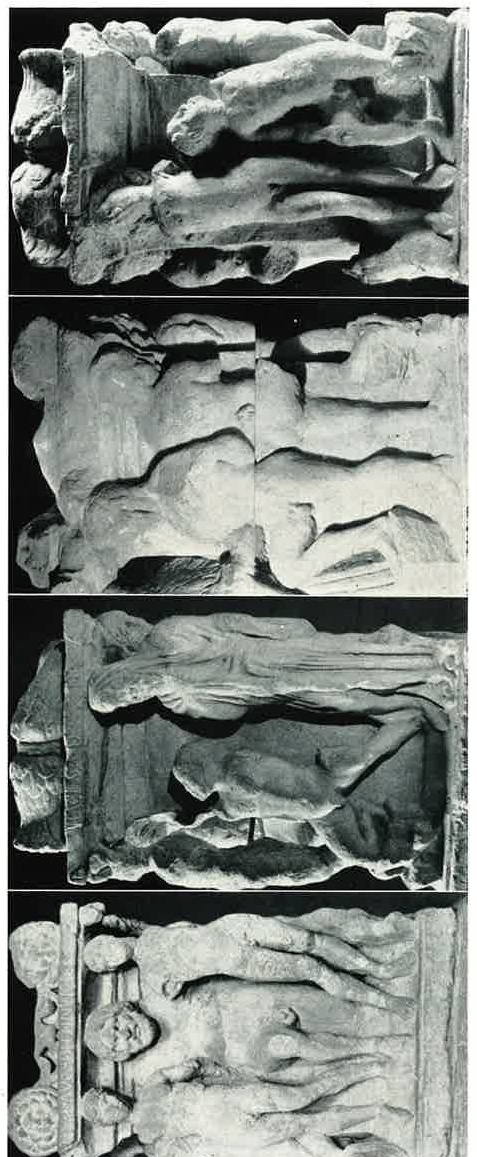
Large stone altar from Mithraeum III at Carnuntum, Pannonia Superior, decorated on all four sides with nine figures supporting the upper voluted section and bearing faces on the front of the volutes; a distinctive sculptural type within the Mithraic repertoire…
Inscription from Mithraeum III at Carnuntum, Pannonia Superior, recording that Titus Flavius Viator built or founded something for Deo invicto; the verb condi fecit is interpreted as referring to the construction of the sanctuary.
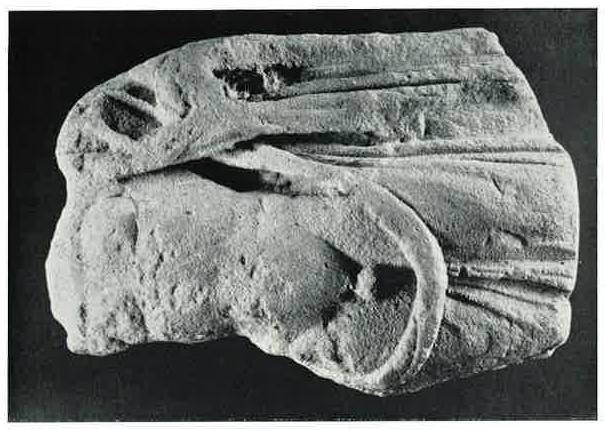
Marble statue from Carnuntum, Pannonia Superior, depicting a standing youth with a large mantle draped over his left shoulder and arm; head, right arm, and most of the legs are lost.
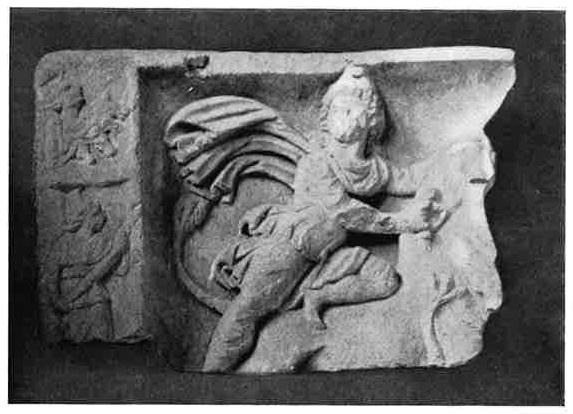
Marble tauroctony relief fragment from Mithraeum III at Ptuj, ancient Poetovio, notable for a three-headed serpent and a dog attempting to lick the blood; the bull's tail ends in three corn-ears.
Damaged marble relief from Mithraeum III at Ptuj, ancient Poetovio, preserving Cautopates with torch downward on the right and the outline of a standing Cautes on the other side, with a fragmentary inscription in the lower border.
Corner of a marble altar from Mithraeum III at Ptuj, ancient Poetovio, dedicated to Deo Soli invicto Mithrae for the welfare of persons whose names begin Atti- and Saturni-; the rest, including the dedicant, is lost.
Marble relief from Mithraeum II at Ptuj, ancient Poetovio, depicting standing Jupiter with sceptre and thunderbolt beside standing Hercules with the Hesperides' fruit and club — a divine pair with Mithraic associations.

Left portion of a marble tauroctony relief from Mithraeum II at Ptuj, ancient Poetovio, preserving the bust of Sol and below it standing Cautopates with a downward torch, together with the bull's hind-leg and Mithras's right leg.
