
Inscription from Han Potoci, Dalmatia, dedicated to Deo Soli invicto Meteri by Aurelius Maximinus, Flavius Marcellinus, and Flavius Marcellus; Meteri is interpreted as a variant spelling of Mithrae.
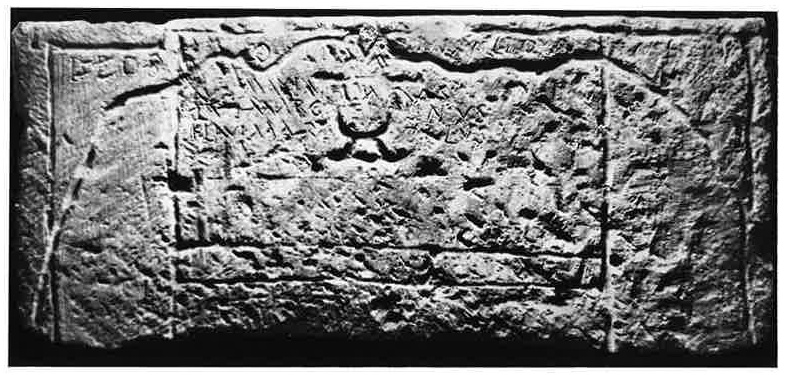
Limestone slab from a Roman settlement at Bijelo Polje north-east of Mostar, ancient area of Han Potoci in Dalmatia, found in 1902 and probably dating to the fourth century AD, depicting a Mithraic scene.
Monument in the Zagreb Archaeological Museum catalogued as an Aion but correctly identified as Icarus; not a Mithraic monument.
Inscription from Nefertara, Dalmatia, dedicated to Invicto Augusto by Aurelius, probably dated to the consulship of Aspro and Orfito.
Mithraic sanctuary in a steep rock face called Preslica at Nefertara near Plevlje, Dalmatia, described as carved into the cliff above a ravine with a carved tauroctony scene.
Limestone altar from the ruins of ancient Plevlje, Dalmatia, walled into the well of the local barracks, dedicated to Soli invicto sacrum by Sextus Baberius Ianoarius.
Tauroctony relief mentioned from a mountaintop at Krivošije near Risn, Boka Kotorska, Dalmatia, found before World War I; the relief was lost.
Limestone tauroctony relief fragment from Cavtat, ancient Epidaurum in Dalmatia, preserving the dog leaping up against the bull and part of a Cautes figure not cross-legged.
Tauroctony relief carved directly into the rock of the Mithraeum on the Colle S. Giorgio near Cavtat, ancient Epidaurum in Dalmatia; the composition includes Sol, Luna, Cautes, and Cautopates flanking the central scene.
Inscription from Narona, Dalmatia, dedicated to Deo Soli Iovi optimo maximo aeterno sacrum; the Mithraic attribution is doubtful.
Altar found at Vid near Metković, ancient Narona in Dalmatia, dedicated to Invicto deo Soli by the freedman Marcus Lusius Trofimas.
Altar found near Škrip on the island of Brač in 1899, bearing a dedication to Invicto deo; the Mithraic attribution and the expansion of i/d are uncertain.
Inscription found at Škrip on the island of Brač, ancient Brattia in Dalmatia, in 1805, dedicated to Soli invicto Mithrae by Iulius Bubulus.
Fragmentary inscription from Aequum, Dalmatia, preserving only the phrase invicti posuit.
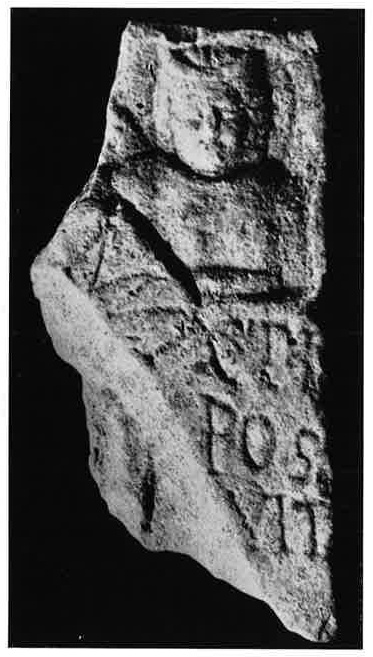
Small limestone tauroctony relief fragment from Gardun near Sinj, ancient Aequum in Dalmatia, found in a field at Oglavak.
Stone altar fragment from Danilo Gornje near Šibenik, Dalmatia, bearing a dedication to Deo invicto by Comitius.
Altar in poor-quality lettering from Burnum, Dalmatia, dedicated to Soli invicto by Caius Secundulus; the Mithraic interpretation is not entirely certain.
Upper part of an epistylium or building fragment from near the church of S. Marco at Prozor, Dalmatia, bearing the dedication to Deo invicto Mithrae.
Limestone altar found on the summit of Monte Vitalj near Prozor, Dalmatia, in 1900, dedicated to Soli invicto deo by Lucius Lucceius; the epithet rupe nato may be present in line one.
Rocky pass about twenty minutes south of Prozor, Dalmatia, containing a rock niche with a carved Mithraic scene; probably a secondary cult place related to the Vitalj sanctuary.
