Your selection in monuments gave 273 results.

Inscription from Neviodunum, Pannonia Superior, with a head of Sol at its centre and a dedication to Iovi optimo maximo Soli invicto comiti Augusti; the Mithraic attribution is doubtful.
Inscription from Wieden, ancient Neviodunum in Pannonia Superior, dedicated to Invicto deo by Charito, of the Neviodunenses — possibly a slave or freedman of the community.
Small limestone altar from near Višnja Gora, Pannonia Superior, dedicated to Fonti perenni — the eternal spring — a dedication associated with the Mithraic water cult.
Altar from Trebnje, ancient Praetorium Latobicorum in Pannonia Superior, dedicated to Invicto Mithrae by Publius Aelius Respectus.
Bronze tabula ansata from Brigetio, Pannonia Superior, dedicated to Deo invicto by Ulpius Sabinus, miles of Legio I Adiutrix.
Altar from Brigetio, Pannonia Superior, dedicated to Soli invicto by Aurelius Iulianus, beneficiarius.
Altar from Brigetio, Pannonia Superior, dedicated to the Transitus — the Mithraic transit ritual — paralleled at Carnuntum and Poetovio.
Fragment of a relief from Brigetio, Pannonia Superior, preserving the central tauroctony scene surrounded by a laurel wreath.
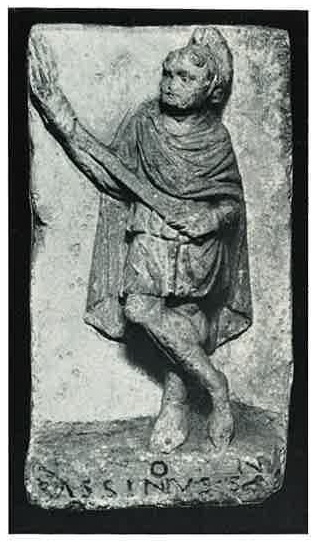
Inscription from Brigetio, Pannonia Superior, dedicated by Nonius Bassinus; possibly a sacerdos inscription though the reading is uncertain.
Two marble reliefs of the same height from Brigetio, Pannonia Superior, each depicting a cross-legged torchbearer in Oriental dress — Cautes and Cautopates — holding their torches.
Altar from Brigetio, Pannonia Superior, dedicated to Mithrae by Donnius.
Limestone altar from Brigetio, Pannonia Superior, dedicated to Invicto deo Mithrae by Masuininius Amicus, Augustalis of the Municipium Brigetionis Antoniniani.
Altar found in the ruins of Brigetio, Pannonia Superior, dedicated to Invicto deo.
Stone base from the Dolichenum at Brigetio, Pannonia Superior, dedicated to Deo Soli invicto Mithrae by Caius Valerius Matrinianus, cornicularius of the legate of Legio I Adiutrix.
Base probably found during the discovery of the Dolichenum at Brigetio in 1899, Pannonia Superior; possibly belonging to the adjacent Mithraeum given its proximity.
Fragments of two painted torchbearer statues from the Mithraeum at Brigetio, Pannonia Superior, including a Phrygian-capped head and fragments of garments and hands.
Lost base from the Mithraeum at Brigetio, Pannonia Superior, dedicated jointly to Cautopates and Invicto deo by Marcus Ulpius Castrensis, veteran of Legio I Adiutrix; a companion piece to the preceding Cautes dedication.
Lost base from the Mithraeum at Brigetio, Pannonia Superior, dedicated to Cautes by Marcus Ulpius Castrensis, veteran of Legio I Adiutrix; dated to the early third century.
Altar from Carnuntum, Pannonia Superior, dedicated to the Transitus — the Mithraic transit ritual — by Caius, an association also attested at Brigetio and Poetovio.
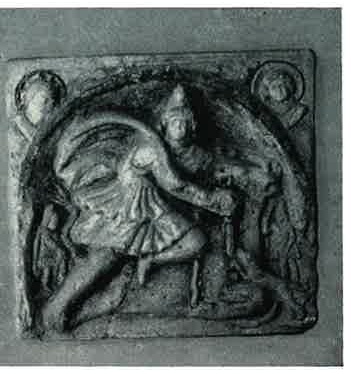
Marble tauroctony relief from Petronell, ancient Carnuntum in Pannonia Superior, with the bull's tail ending in corn-ears; no scorpion is depicted, and Cautes holds the upraised torch.
