Your selection in monuments gave 384 results.

Plate fragment from Intercisa, Pannonia Inferior, bearing a fragmentary inscription beginning Soli... Aug-.
Marble statue from Intercisa, Pannonia Inferior, depicting Cautopates in Oriental dress and a high Phrygian cap, walking.
Marble relief fragment from Intercisa, Pannonia Inferior, too damaged for the original subject to be identified.
Rectangular plate from Intercisa, Pannonia Inferior, bearing a dedication to Deo invicto Mithrae.
Altar from Intercisa, Pannonia Inferior, dedicated to Deo Soli invicto for the welfare of Emperor Commodus.
Fragment of a limestone tauroctony relief from Székesfehérvár, Pannonia Inferior, preserving only the border of the grotto in which Mithras kills the bull; the greater part of the god and bull are lost.
Two lamps — one bearing the stamp Fortis — and a bronze coin of Hadrian from the Mithraeum at Sárkeszi, Pannonia Inferior.

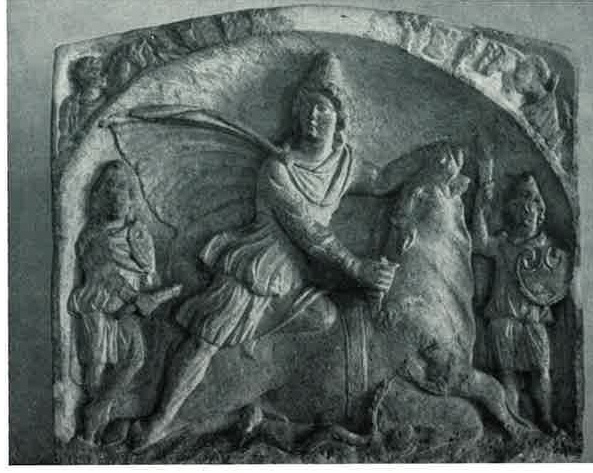
Limestone tauroctony relief from the Mithraeum at Sárkeszi, Pannonia Inferior, depicting Mithras killing the bull with a broad belt, dog, serpent, raven, and torchbearers; the grotto is indicated by rough soil.
Circular white marble relief in five fragments from the Mithraeum at Sárkeszi, Pannonia Inferior, depicting an open-work tauroctony enclosed in a laurel wreath; only part of the bull's body, the god's foot, and the scorpion are preserved.
Limestone altar fragment from the Mithraeum at Sárkeszi, Pannonia Inferior, recording the restoration of a templum that had collapsed through age.
Limestone altar fragment from the Mithraeum at Sárkeszi, Pannonia Inferior, dedicated to Fonti dei by Septimius Valentinus, optio.
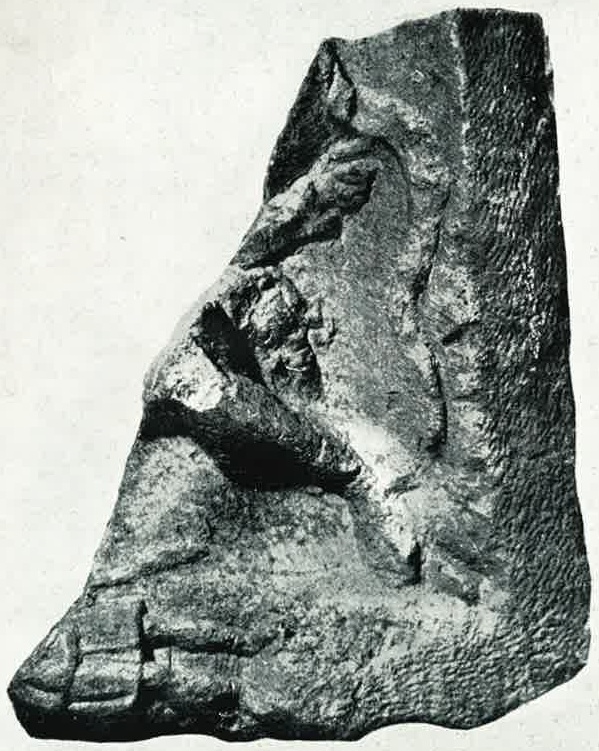
Right upper corner of a white marble tauroctony relief from Budapest, ancient Aquincum or its vicinity, in the National Museum since 1868, preserving part of the grotto border and divine busts.
Fragment of a relief from Aquincum, Pannonia Inferior, walled into a house at Majláth-Utcai 51, preserving the lower left corner of a tauroctony with the bull's hind-leg, Mithras's leg, and the scorpion.
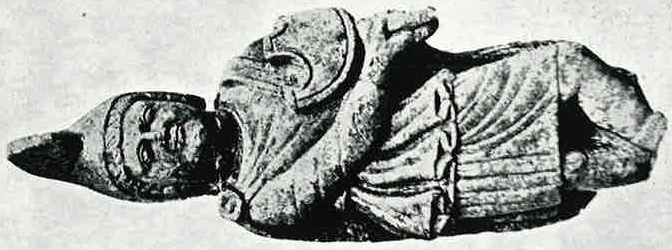
Small head in Phrygian cap from Aquincum, Pannonia Inferior, possibly representing a torchbearer or Attis.
Base from Aquincum, Pannonia Inferior, recording that Marcus Aurelius Frontinianus and Marcus Aurelius Fronto, soldiers of Legio II Adiutrix and fratres, built a temple to Soli socio; dated to the consulship of Antoninus, either AD 213 or 222.
Base from Aquincum, Pannonia Inferior, dedicated to Deo invicto Mithrae by Marcus Aurelius Frontinianus, decurio of the Colonia Aquinci.
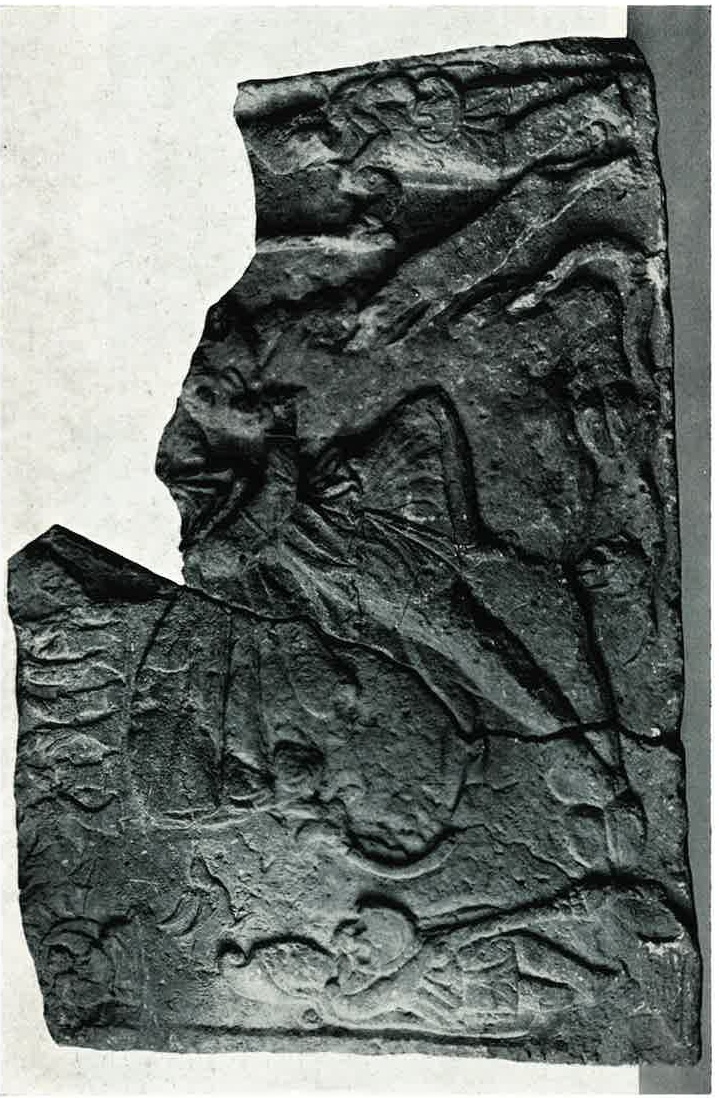
Marble tauroctony relief from Aquincum or possibly Budaörs, Pannonia Inferior, depicting the bull-slaying scene with cypress trees between the torchbearers and the central group.
Altar from Aquincum, Pannonia Inferior, dedicated to Mythrae Nabarze by Tiberius Pontius Maximus — the epithet Nabarze, possibly of Iranian origin meaning 'victorious', is attested on only a handful of Mithraic inscriptions.
Altar from Aquincum, Pannonia Inferior, dedicated to Deo Soli by Claudius Patasio; dated to AD 191, one of the earliest dated Mithraic inscriptions from Aquincum.
Altar from Aquincum, Pannonia Inferior, dedicated to Deo invicto Mithrae by Sextus Pompeius Saturninus.
