Haldi and Mithra/Mher

The article shows why it matters to join the efforts of “eastern” and “western” scholars in studying the complex problems of antiquity. It links Urartian, Iranian, Caucasian, and Armenian studies, as well as specialists in mythology and epic. Igor Diakonoff was the first to write about the Urartian-Armenian roots of Mithraism.
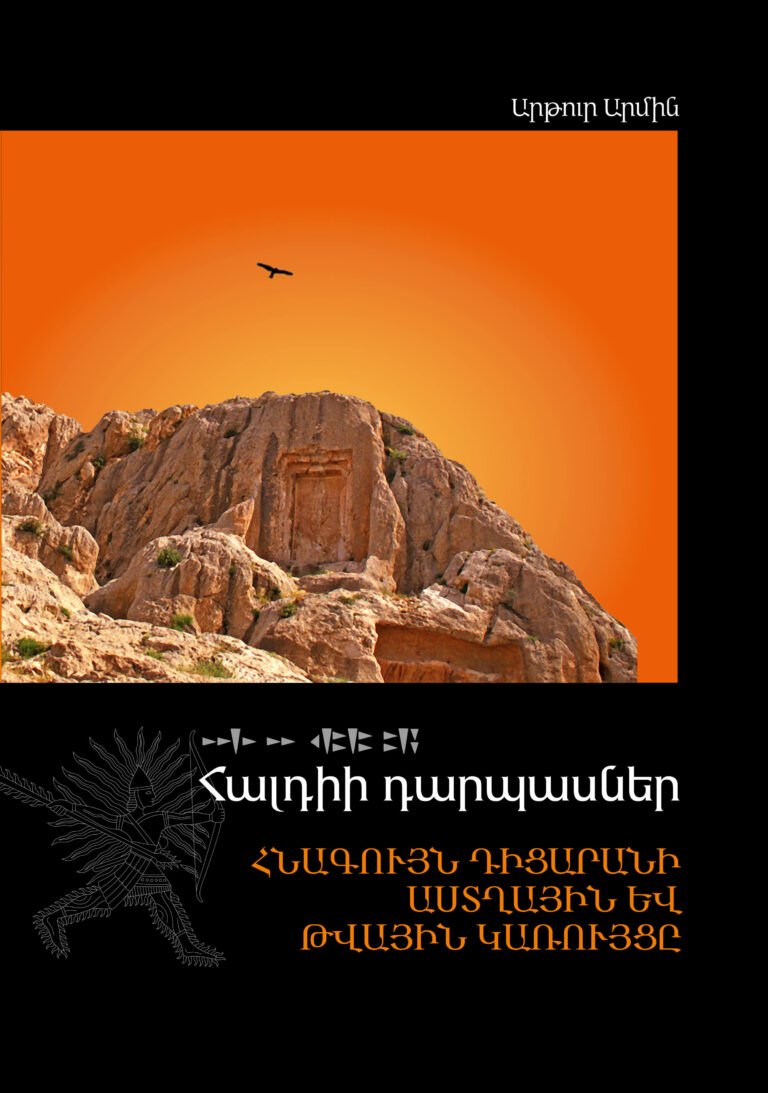
At the center of the study are the figure of Mher (Mher the Younger) and the god Haldi. The name Mher derives from the pre-Christian Armenian theonym Mihr, borrowed from Iranian. In the Armenian epic, Mher enters a “gate” and is destined to emerge from it in the future. Armenians called this “gate of Haldi” the Door of Mher (Mheri duṙ). According to Diakonoff, this indicates that under Achaemenid rule or shortly afterward, Haldi was identified with Mithra.
The author shows that Mher and Haldi share several features with Mithras, including resurrection and a connection to caves. The Door of Mher is interpreted as a symbol of rebirth, with parallels in Caucasian folklore and Urartian beliefs. In this way, the theme of resurrection and rebirth in ancient Armenian epics, including the myths of Mher and Ara the Handsome, becomes a key to the question of the origins of Mithraism.
Details
- Publisher
- Aramazd: Armenian Journal of Near Eastern Studies, Yerevan
- Publication date
- 2006
- Language
- French