The New Mithraeum
8 Feb 2022
Updated on May 2026
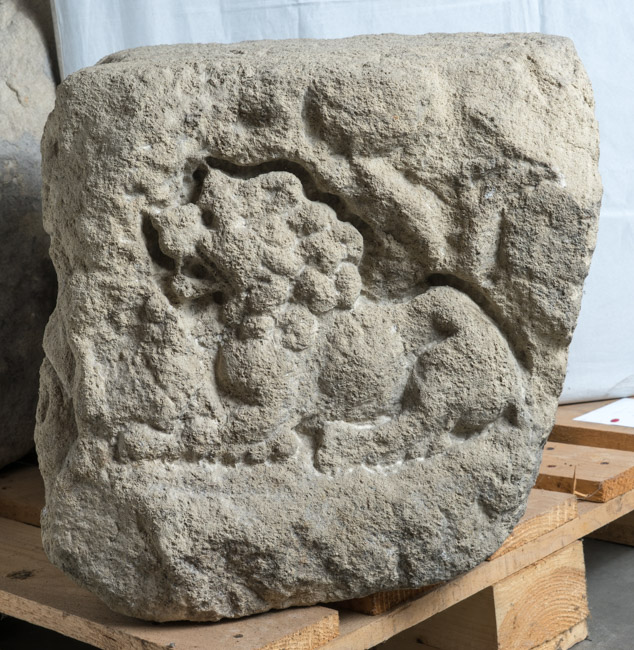
A reclining lion devours a bull’s head held between its paws. The open mouth of the beast still bears traces of red paint.
The iconography of the lion with a bull’s head is well known, specially because of some gems and a few coins. Those gems were amulets, on which the bull’s head represented evil. In fact, according to Egyptian beliefs, the bull’s head was a symbol of evil, possibly of Seth, and the lion was an image of the divine power which was supposed to control and conquer evil.
One should not suppose that the lion with a bull’s head from the Mithraea were directly related to Egyptian ideas…
The iconography of the lion with a bull’s head is well known, specially because of some gems and a few coins. Those gems were amulets, on which the bull’s head represented evil. In fact, according to Egyptian beliefs, the bull’s head was a symbol of evil, possibly of Seth, and the lion was an image of the divine power which was supposed to control and conquer evil.
One should not suppose that the lion with a bull’s head from the Mithraea were directly related to Egyptian ideas…
The full article is reserved for our members.
Log in or create a free account to access the entire site.