This site uses cookies to offer you a better browsing experience.
Find out more on how we use cookies in our privacy policy.

 
Support The New Mithraeum The New Mithraeum is an independent, non-profit project dedicated to Mithraic studies, ancient religions and classical culture. Developed and maintained independently since 2007, the site exists without advertising, paywalls or institutional funding. If you have found value in its articles, interviews, photographs or database, please consider supporting the project with a contribution. Every contribution helps keep The New Mithraeum open, free and alive. Thank you.
Support us →
Monumentum

Felsgeburt des Mithras

Mithras Petrogenitus, born from the rock, from the Mithraeum of Carnuntum III.
  • Mithras Petrogenes of Carnuntum

    Mithras Petrogenes of Carnuntum
    The New Mithraeum / Andreu Abuín (CC BY-SA)

  • Mithras Petrogenitus of Carnuntum

    Mithras Petrogenitus of Carnuntum

  • CIMRM 1687

    CIMRM 1687
    Vermaseren's Corpus

 
31 Dec 2020
Updated on Apr 2023

TNMM 237 ↔ CIMRM 1687

This freestanding sculpture was found in 1894 inside Mithraeum IlI at Carnuntum, the capital of the Roman province of Pannonia Superior, on the right bank of the Danube. The sanctuary's movable objects appear to have been deliberately destroyed, at least in part.

Reconstituted from scattered fragments, this statue of calcareous sandstone, probably having been located to the left of an altar at the back of the sanctuary, ilustrates the petrogenesis, the episode of the birth of Mithras. Its conically formed base is composed of irregular rocks, from which the young god emerges nude, other than the Phrygian cap he is wearing. His arms raised, it is quite likely that he originally was holding a knite and torch. A serpent wrapped around the rocky base passes behind the back of the rock-born figure; sculpted in protile, the reptile s head appears to the left of the god's one.

This image is distinguished from other representations of this type by the presence in reliet of a tree with branches framing the birth of Mithras. This last element shows that the birth of the god stimulated the return of vegetation to a ravaged earth.

___

Statue in sandstone (H. 0.85 Br. 0.53 D. 0.39), found near the Mithraeum of Carnuntum III.

On a rectangular base there is a cone-shaped base from which the youthful naked Mithras is born. In the uplifted hands he probably held the torch and the dagger. There is a hole in his left hand. His right hand is lost. Around the rock a serpent is coiled, the head of which is visible on the rear side of Mithras' Phrygian cap. The god has long wavy hair. In the background, a large tree.

References

Related monuments

Mithraeum III of Carnuntum

Mithraeum III found in the west part of Petronell near Hintausried in August 1894 by J. Dell and C. Tragau.

Tauroctonia de Carnuntum (III ?)

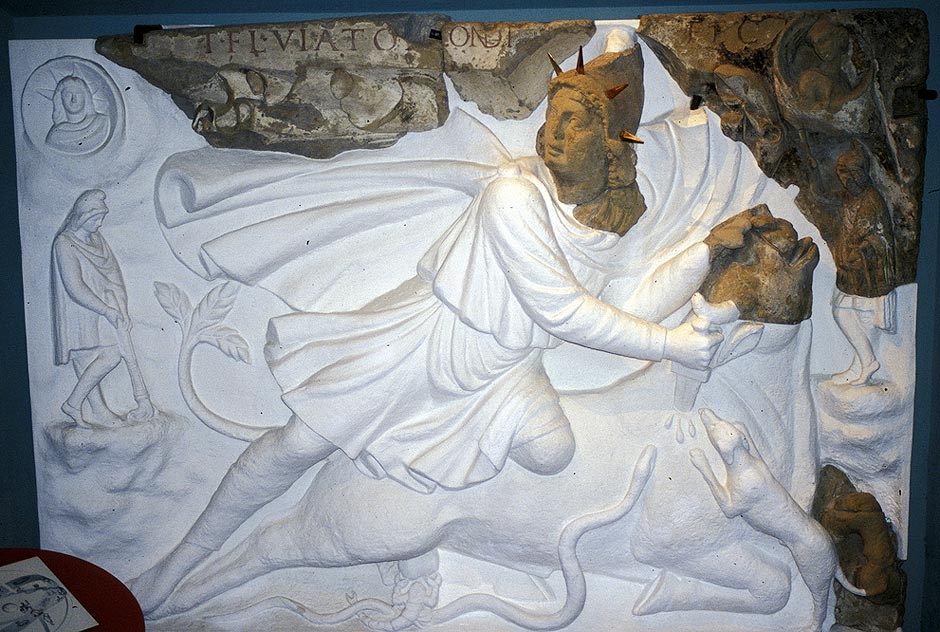
Of this great relief of Mithras slaying the bull only a few segments remain.

Inscription by Propinquos of Carnuntum

On this slab, Gaius Iulius Propinquos indicates that he made a wall of the Mithraeum at his own expense.

Lion of Carnuntum III

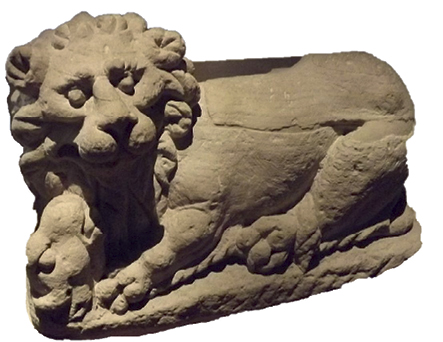
Exceptional sculpture of a lion devouring a bull’s head founded in 1894 in Carnuntum, Pannonia.


Altar of Carnuntum by the Augusti and Caesares

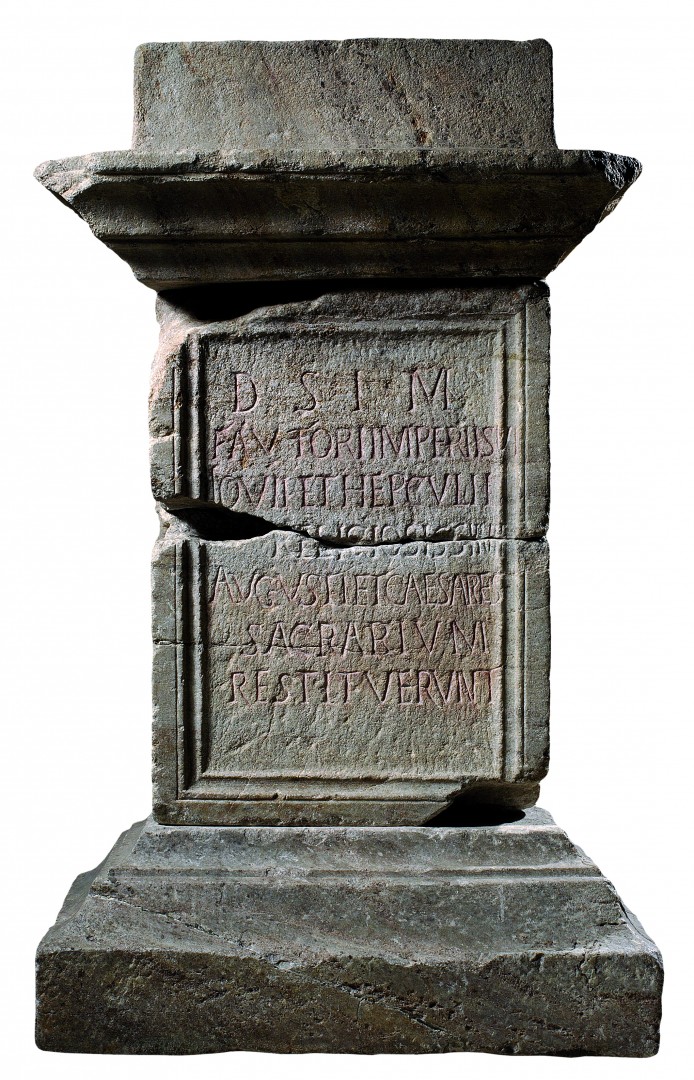
Altar with Cautes and Cautopates dedicated to Sol Invictus Mithras as protector of the Tetrarchy in 3rd-century Carnuntum.

CIMRM 1694

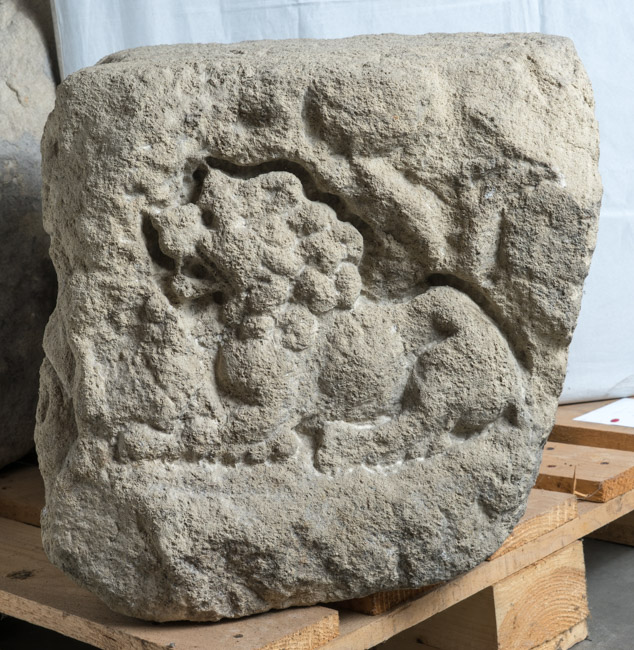
Sandstone base carved on two sides, with a head of Medusa framed by acanthus leaves and a reclining lion holding a head between its forelegs.

 
Back to Top