Mithraeum II of Aquincum in Victorinus’s house
TNMM 84 ↔ CIMRM 1750
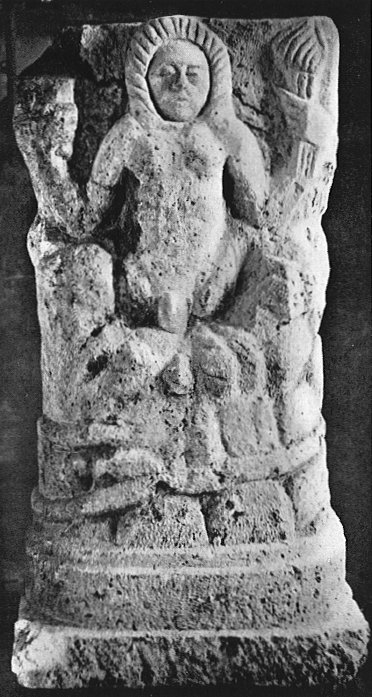
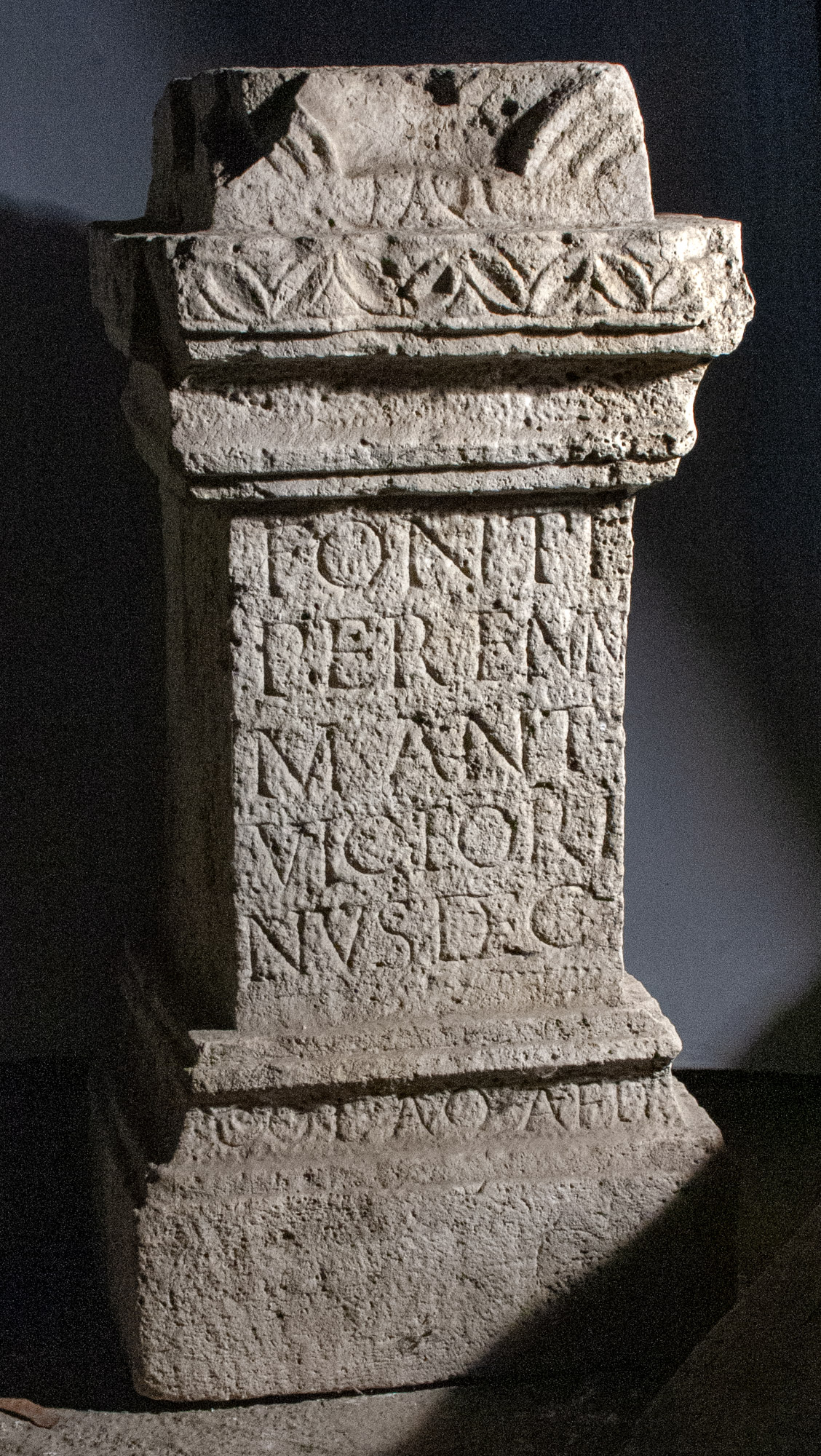
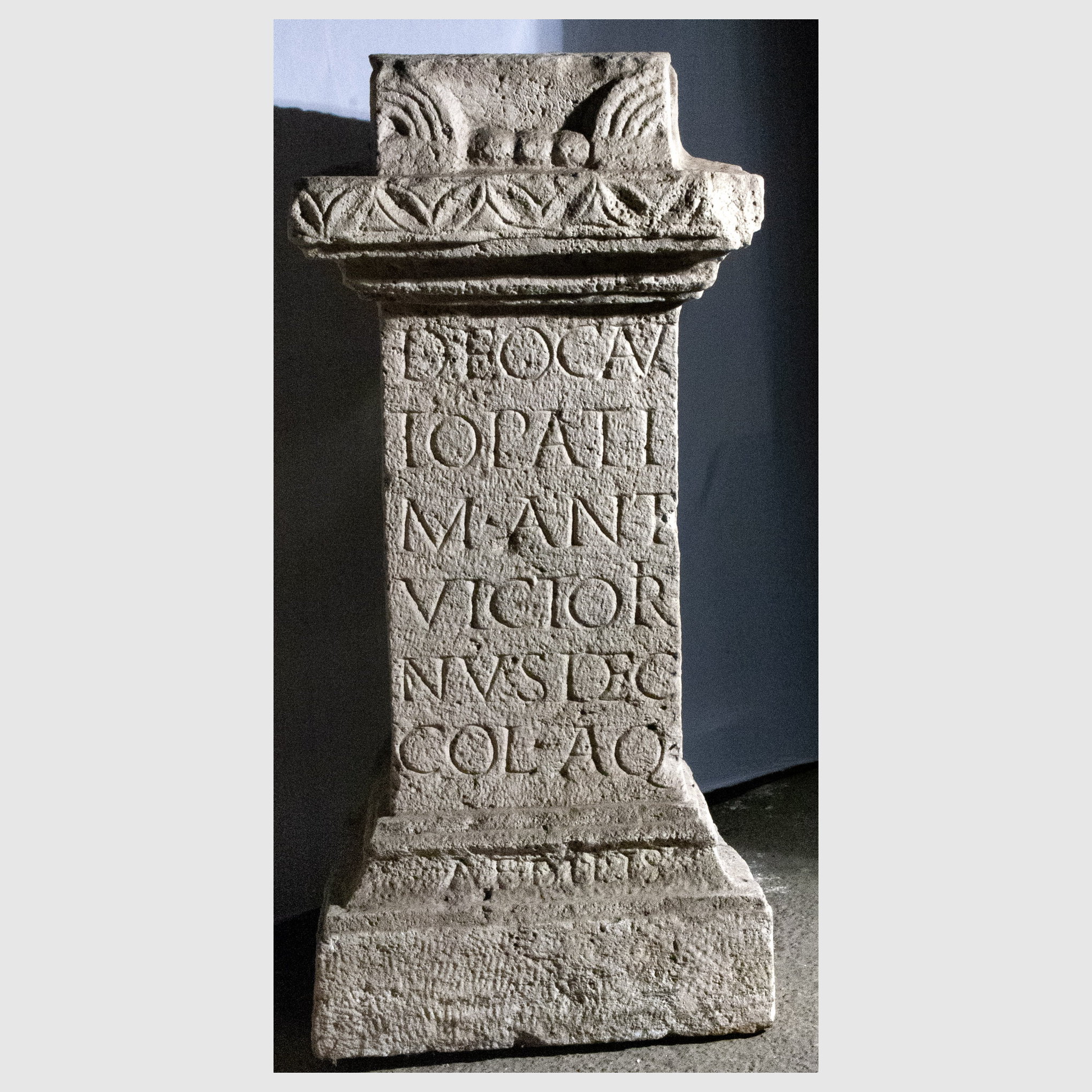
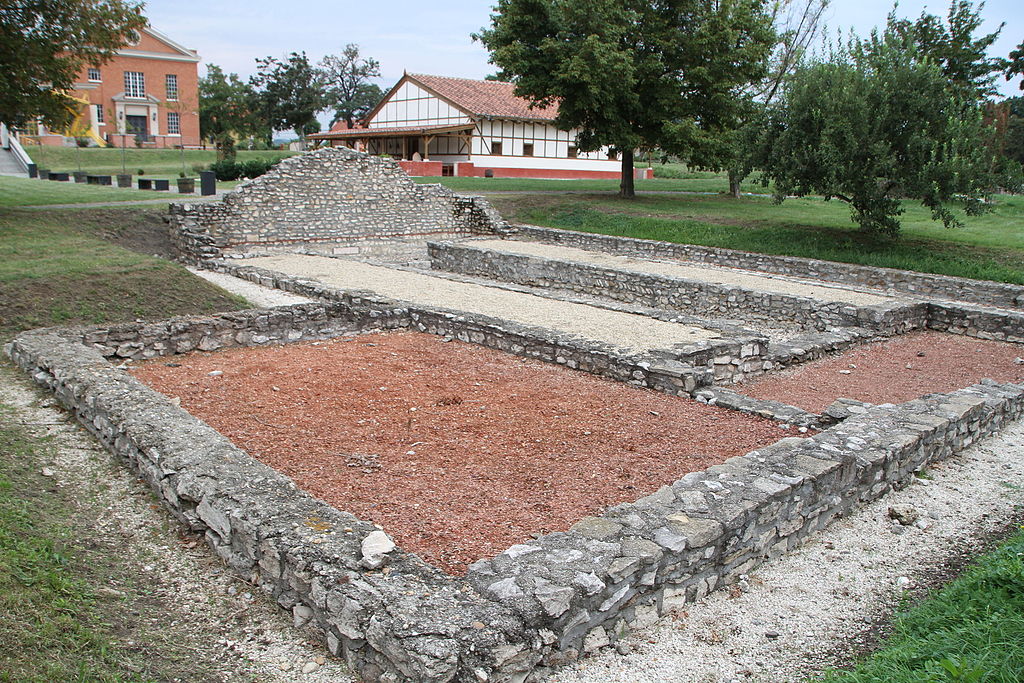
Located within the town house of the decurio Marcus Antonius Victorinus. Orientation N-S. 7m x 16m The shrine is divided up into three parts-two ante rooms (the front room is populated by the excavators as a Shrine of Mercury. Certainly a large statue base stood here) and the cella trichora with its central aisle about 2 feet below ground level. The benches were accessed by a single step on either side of the bottom of the two cella entrance steps. A fragment of the tauroctony was found in the excavations and would have stood on the large stone base at the end (south) wall of the cella. Within the cella a pair of small altars stood recessed into the front of each podium all dedicated by Marcus Antoninus Victorinus, a city councillor. An altar depicting Mithras being born from the rock was discovered in the excavations. Visible remains: Shrine fully excavated, though heavily restored for display.
The shrine is fully accessible within the Aquincum Archaeological Park, just south of the Aquincum Museum building. The remains have been heavily restored and consolidated for display. The tauroctony fragment and the altar are located in the eastern wing of the Lapidarium situated at the northern edge of the Archaeological Park. The Victorinus altars are the originals in situ.
Video description from Aquincumi Múzeum
We are in the densely-populated south-western part of the Aquincum Civil Town in the 3rd century. Going past shops and homes, in one of the narrow streets we reach a walled enclosure. In one of the two buildings behind this high wall, a temple was set up for the followers of Mithras. Symphorus, who was of eastern origin, was likely a respected member of the community. The simple building had three rooms, which only the initiated were allowed to enter. From the courtyard we enter the vestibule through the doorway, facing east. A room, where worshippers – who were exclusively male – could prepare for the sacrifices and initiations, opened from here.
In the vestibule, two stone lions guarded the sanctuary door. Next to the entrance there was a basin with water for ritual cleansing. Worshippers witnessed the rituals from the podiums along the walls. Altars, reliefs and wall paintings in the sanctuary followed a set order and symbolised the path of the Sun and the cosmic cycle. At the back of the sanctuary was the cult image, which invariably depicted Mithras slaying the bull, surrounded by his helpers, who represented the constellations. Smaller cult objects stored by the cult image were used during the ceremonies and sacrifices. The sacrificial altar stood in front of the cult image.
A stone bowl on the floor collected water from the rituals. The altars placed by the podium walls are the proofs of fulfilled vows. We now return to the vestibule, where vessels and other objects used for banquets after the rituals were likely stored. What the rituals and initiations were like is still shrouded in mystery. Only the initiates knew the secrets of the cult of Mithras and they were bound by an oath of secrecy.
In or near the temple, built next to the town wall, above an earlier shrine, a secret mint also operated in the early-3rd century. The enclosure and the vicinity of the town wall enabled the pursuit of this illegal activity. The sanctuary was destroyed during the first half of the 4th century. The last coins found there date to the reign of Constantine the Great. It is possible that the Mithras cult’s sworn enemies, the Christians were behind the destruction, after which this community was not re-established here.
Some of the inscription found:
CIMRM 1751 – CIL III 10463
Deo Cauti / M. Ant(onius) Victorinus / dec(urio) col(oniae) / Aq(uinci) aedilis.
CIMRM 1752– CIL III 10461
Deo Cau/topati / M. Ant(onius) / Victori/nus / dec(urio) col(oniae) / Aq(uinci) / aedilis.
CIMRM 1753 – CIL III 10462
Fonti / perenni / M. Ant(onius) / Victori/nus dec(urio) / col(oniae) Aq(uinci) / aed(ilis).
CIMRM 1754 – CIL III 10464
. . . . . [de]c(urio) / col(oniae) Aq(uinci) aed(ilis).
References
- Pablo Maurette (2005) Porphyry and Mithraism: De antro nympharum and the Controversy against the Christians.
- István Tóth (1992) A Dacian 'Apostle' of the cult of Mithras?.

Comments
I assume the Victorinus altar is the one dedicated to Fonti Perenni - referring to the miracle of the water coming from the rock. That too should be on show I think as there are so many pieces of sculpture to look through in the Lapidarium! But a good way to spend an afternoon!