This site uses cookies to offer you a better browsing experience. Find out more on how we use cookies in our privacy policy.
The full article is reserved for our members.
Log in or create a free account to access the entire site.

Roman Mithraeum at Kom Dafbaby, near ancient Memphis, poorly documented archaeologically but known through the remarkable group of Mithraic sculptures and reliefs recovered from the site.
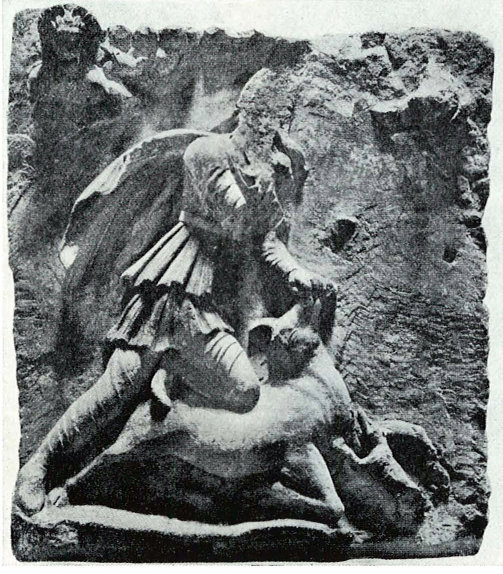
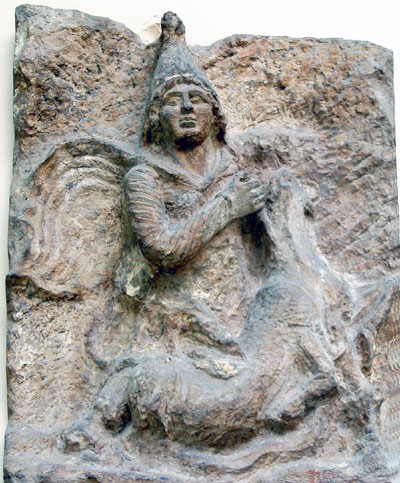
Limestone tauroctony relief from the Mithraeum of Memphis, depicting Mithras sacrificing a small bull inside a rocky cave.
Primitive limestone tauroctony relief from the Mithraeum of Memphis, preserving a simplified representation of Mithras slaying the bull.
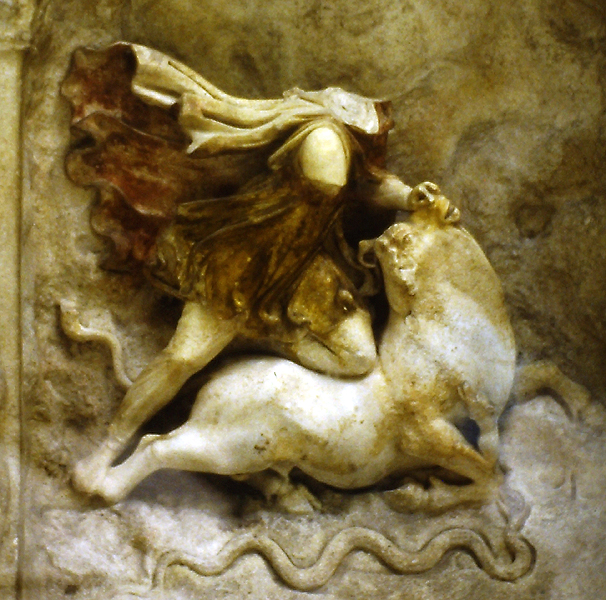
Marble tauroctony relief from the Mithraeum of Memphis, depicting Mithras slaying the bull within an architectural niche framed by Cautes and Cautopates.
Two limestone figures of women, possibly from the Mithraeum near Memphis, one standing cross-legged holding a branch with flowers, Egypt.
Badly damaged limestone statuette of a standing figure in Eastern attire, head, arms and feet lost, from the Mithraeum near Memphis, Egypt.
Upper part of a limestone torchbearer statue in tunic and hanging cloak, arms and lower legs lost, from the Mithraeum near Memphis, Egypt.
Limestone statuette of a standing torchbearer, torch and right arm lost, from the Mithraeum near Memphis, Egypt.
Fragment of a limestone statuette of a torchbearer in Eastern attire, head and lower legs lost, not cross-legged, from the Mithraeum near Memphis, Egypt.
Limestone statue of a figure in Eastern attire and Phrygian cap, probably a Cautes torchbearer, from the Mithraeum near Memphis, Egypt.
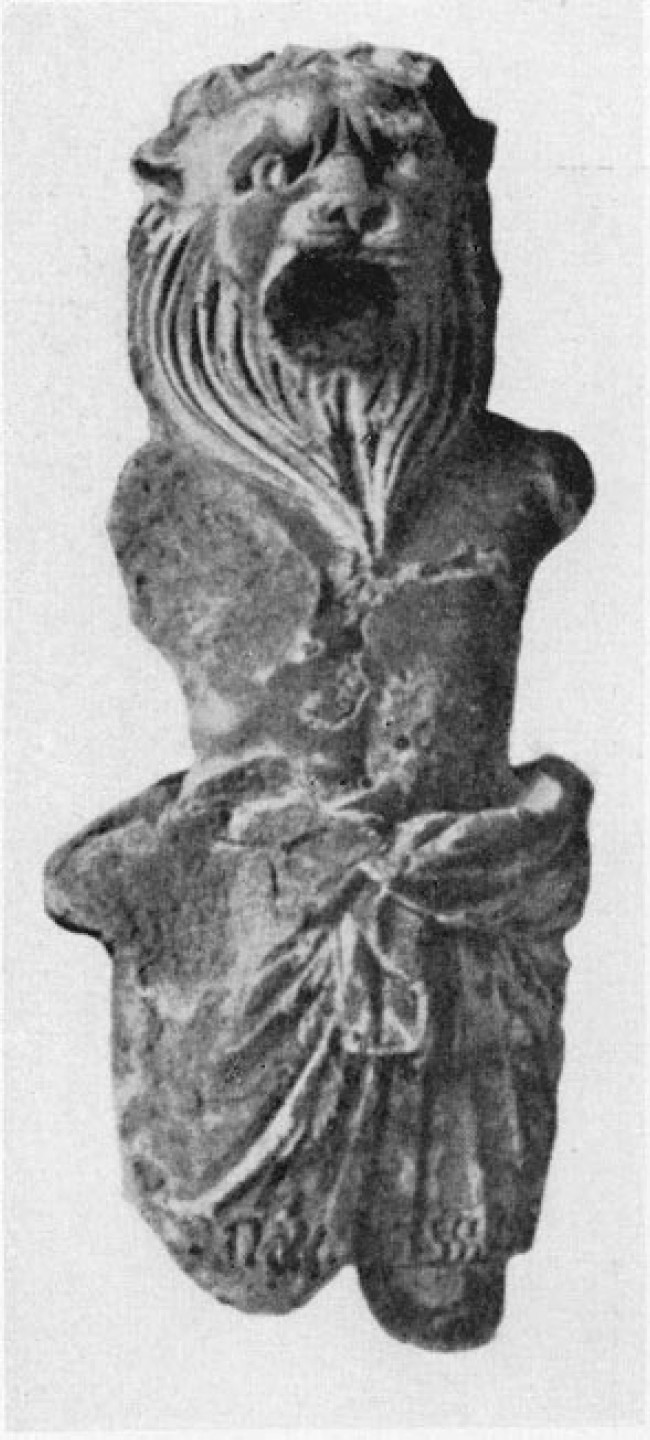
This statue of the god lion-head was found in Memphis, Egypt.