Biography
of Aurelius Heraclides
- Aurelius Heraclides, a free citizen, is attested as a member of a Mithraic community (syndexios).
- Attested at Siscia, Pannonia superior, Pannonia in 3rd century (TNMM 397).
TNMP 39
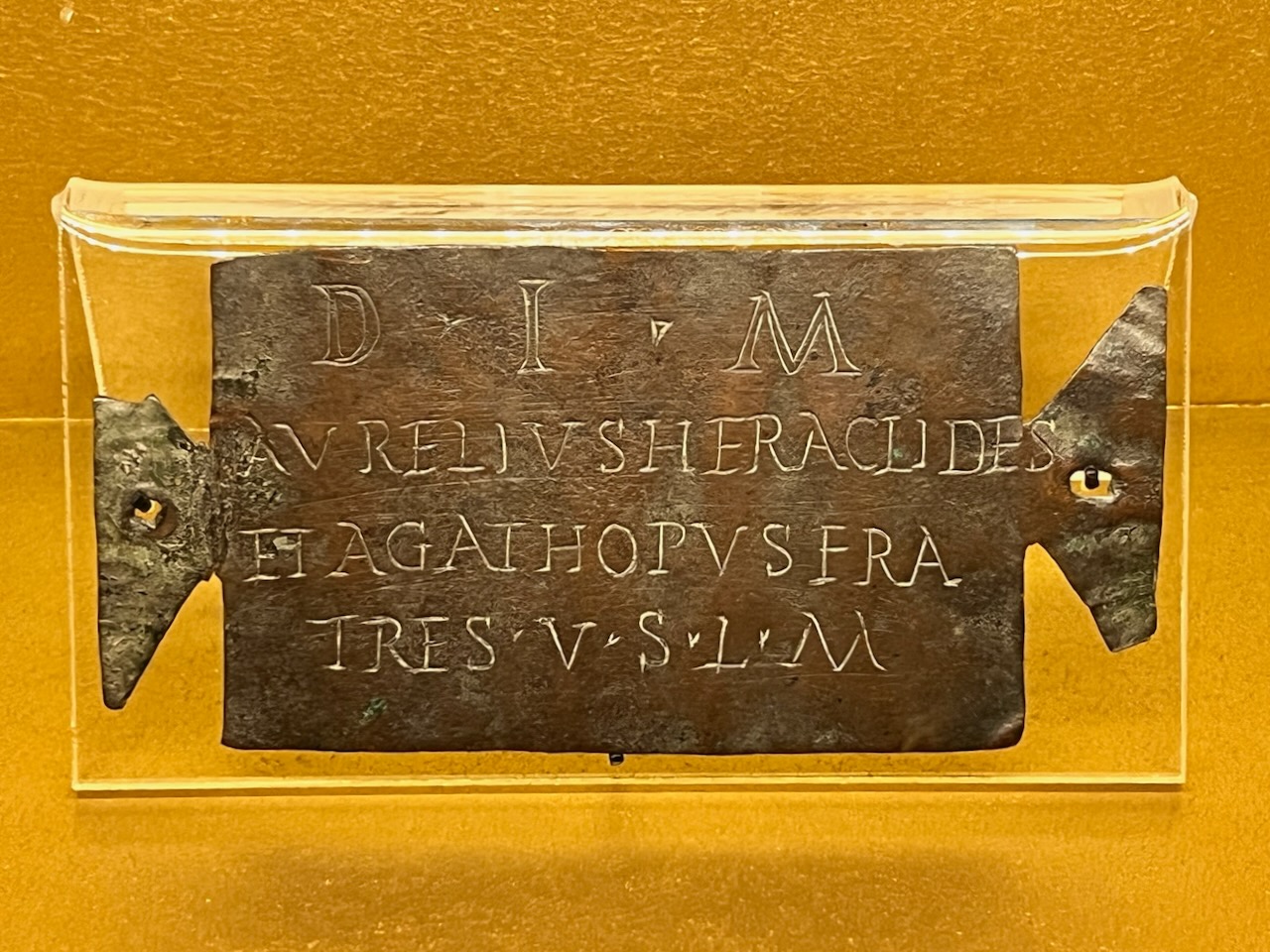
Aurelius Heraclides was a follower of Mithras at Siscia in Pannonia Superior, probably during the late 2nd or first half of the 3rd century CE. He is known from a small bronze tabula ansata (TNMM 397; CIMRM 1477; CIL III 3959), dedicated to Deus Invictus Mithras jointly with Agathopus. The inscription describes the two dedicants as fratres.
Their relationship is uncertain. The term may indicate biological brothers, but several scholars have preferred to understand it as referring to membership of the same Mithraic community. Clauss (1992), however, notes that the cultic use of fratres is itself only rarely attested and therefore does not exclude actual kinship.
Heraclides bears the Roman nomen Aurelius and the Greek cognomen Heraclides. The latter does not by itself demonstrate Greek or eastern origin. His nomen confirms Roman citizenship, but his precise social status and the circumstances in which citizenship was acquired remain unknown.
References
- Nicolas Amoroso, Laurent Bricault & Richard Veymiers (eds.) (2021) The Mystery of Mithras.
- Manfred Clauss (1992) Cultores Mithrae.
- Marjeta Šašel Kos (2005) The Residents of Siscia: A Population Study.
Attestations
Bronze plaque of Sisak
TNMM 397
This small bronze tabula ansata was dedicated to Mithras by two brothers, probably not related by blood.