Biography
of Aurelius Agathopus
- Aurelius Agathopus is attested as a member of a Mithraic community (syndexios).
- Attested at Siscia, Pannonia superior, Pannonia in 3rd century (TNMM 397).
TNMP 55
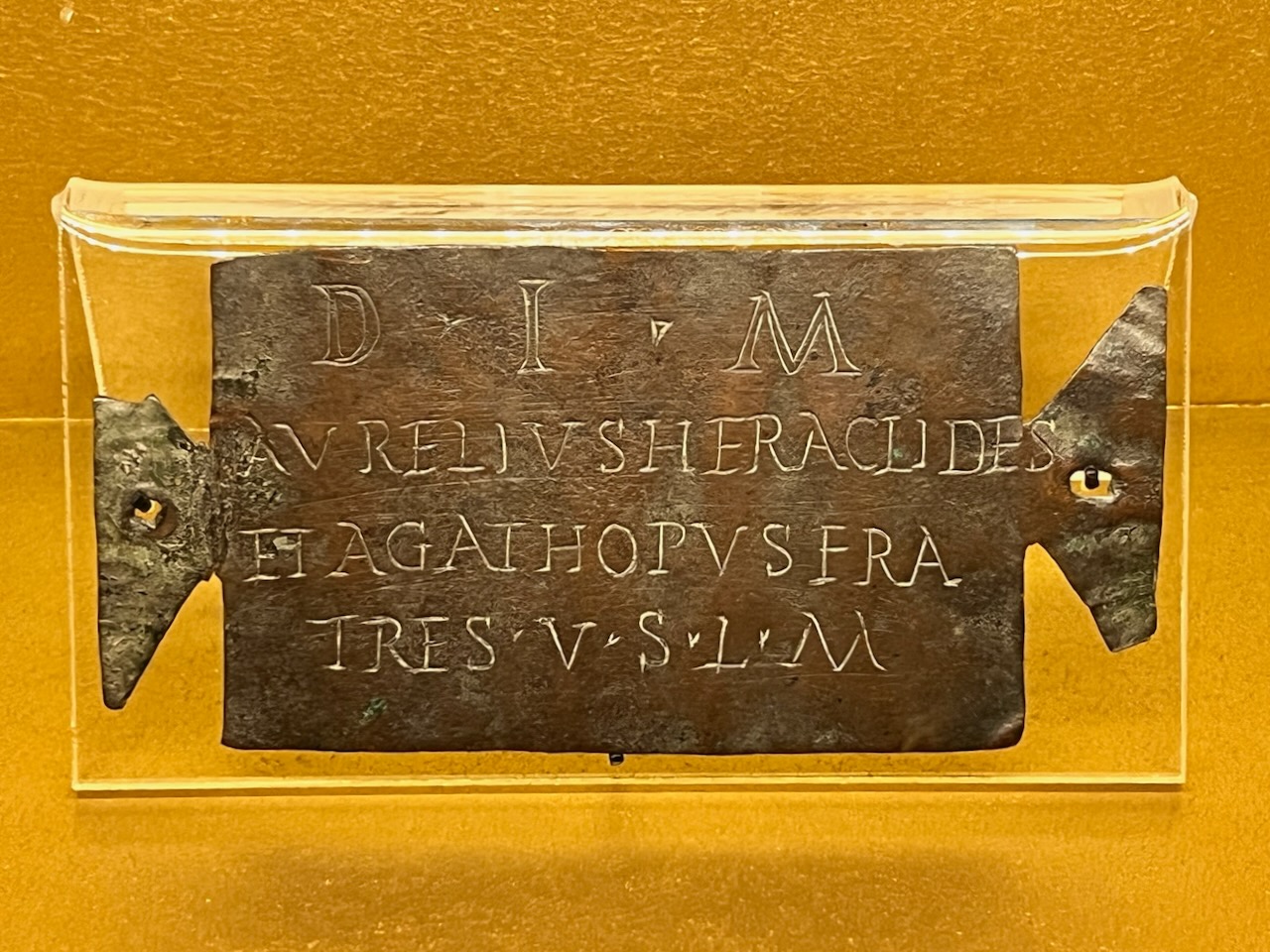
Aurelius Agathopus is mentioned in a bronze plaque discovered at Siscia, modern Sisak. His cognomen is Greek in origin, although this does not necessarily imply Greek or Eastern ancestry.
Agathopus may have been a free provincial lacking Roman citizenship, in which case the inscription would probably predate the Constitutio Antoniniana of 212 CE, since only his cognomen is recorded. Alternatively, he may have been a slave, although neither a master’s name nor any explicit indication of servile status appears in the inscription.
His legal status may have been identical to that of Aurelius Heraclides, the other dedicant, with the craftsman deliberately omitting the nomen Aurelius in the case of Agathopus because of limited space or redundancy. Yet, if both men formally bore the nomen Aurelius, one might expect the plural form Aurelii to have been used instead.
The inscription describes the two men as fratres. This term most likely refers not to biological kinship, but to ritual brotherhood within the Mithraic community. The two dedicants may therefore have been fellow initiates, perhaps even freedmen of the same patron.
References
- Nicolas Amoroso, Laurent Bricault & Richard Veymiers (eds.) (2021) The Mystery of Mithras.
Attestations
Bronze plaque of Sisak
TNMM 397
This small bronze tabula ansata was dedicated to Mithras by two brothers, probably not related by blood.