The evidence documented in Cilicia illustrates the circulation of Mithraic cults through ports, coastal cities and communication corridors linking the Roman Near East to southern Anatolia. The province formed part of one of the principal zones of exchange in the eastern Mediterranean.
People attested in Cilicia

Places in Cilicia
Inscriptions from Cilicia
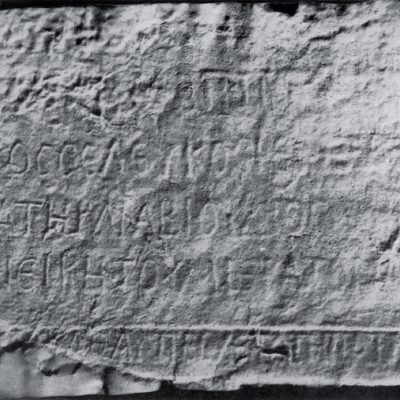
Mithraic inscription from Anazarbus
[[- - - - - ]]
[[ὑπάτου τὸ]] β’, π[ατρὸς] π[ατρίδος] · [Μ. Αὐρή-]
λιος Σέλευκος ἱε[ρεύς καὶ]
πατὴρ διὰ βίου Διὸς [‘Ηλίου
ἀνείκητου Μίθρα τὸν [. .
...] καθ’ ὑπέσχετο τῇ πατ[ρίδι].
[[ὑπάτου τὸ]] β’, π[ατρὸς] π[ατρίδος] · [Μ. Αὐρή-]
λιος Σέλευκος ἱε[ρεύς καὶ]
πατὴρ διὰ βίου Διὸς [‘Ηλίου
ἀνείκητου Μίθρα τὸν [. .
...] καθ’ ὑπέσχετο τῇ πατ[ρίδι].
[[- - - - - ]] [[Of the consul]] [2nd year], pater of the homeland; [M. Aurēlius] Seleucus, priest and father for life of Zeus [Helios], the invincible Mithras, who [...] as he pledged to the homeland.
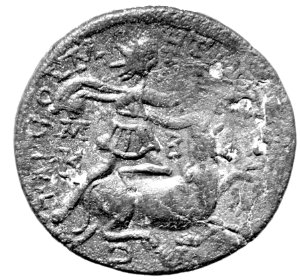
Bronze medallion of Gordian III with tauroctony
Τάρσου μητροπόλεως. Α[ύτονόυ] μ[ητρόπόλεως] Κ[ιλιχίας] γ[ράμματι] β[ουλής].
Of Tarsus, metropolis, autonomous metropolis of Cilicia, by decree of the council.
