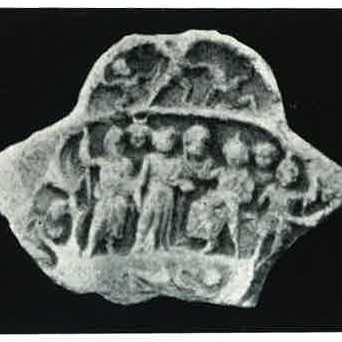
The Mithraic material documented in Macedonia reflects the province’s strategic role within the urban and military networks linking the Aegean to the Danubian frontier. The evidence illustrates the movement of cults and populations through one of the principal corridors of the Roman Balkans.

Mithraic monuments of Macedonia
Mithraeum of Prilep
The Mithras temple of Prilep is in a small grotto under the castle of Markovi-Kuli.
CIMRM 2341
Tauroctony relief from Veles
White marble tauroctony relief from Veles, ancient Bylazora in Macedonia; the merchant reported that other fragments of the same monument were walled into a fountain in Veles.
CIMRM 2340
Altar of Marcus Laelius Aquila sacerdos from Dyrrachium
Stone from Durrës, ancient Dyrrachium in Macedonia, dedicated to Soli aeterno by Marcus Laelius Aquila, sacerdos; the name Aquila may correspond to a Mithraic grade.
CIMRM 2342
Altar with pedum and caduceus from Thessalonike
Marble altar from Thessalonike, Macedonia, with a dedication on the front and a pedum on the left side and a caduceus on the right — attributes associated with Mithraic cult furniture.
CIMRM 2345
Head in Phrygian cap from Thasos
Marble head from the south-west walls of Thasos, Macedonia, found in 1920, with long curly hair, Phrygian cap, and a pathetic expression; possibly Mithras or Attis.
CIMRM 2344
Sepulchral inscription with Mithraic grade from Philippi
Third-century sepulchral inscription from near Philippi, Macedonia, studied for its Mithraic content in the upper lines of the text.
CIMRM 2343
Places in Macedonia
Stymbara
Styberra occupied an important position within the inland communications network of Roman Macedonia near modern Prilep.
Thessalonike
Thessalonike became one of the principal urban centres of the Balkans and the Via Egnatia corridor.
Veles
Veles lies within the central Balkan communications corridor historically connected with Roman Macedonia.