Your search Ša‘āra gave 2453 results.

Thessalonike became one of the principal urban centres of the Balkans and the Via Egnatia corridor.
The locality of Radeša belongs to the mountainous hinterland of the central Balkans.

A dedication to the unconquered and propitious Sol Invictus Mithras, made by a priest named M. Pompeius on behalf of the divine house, the most sacred council, and the devout inhabitants of the colony of Elusatium (modern Eauze) in Aquitania.
A brief inscription reading "Deo Invicto Mithrae", found in the ruins of the Castello di Tuenno near San Zeno at the entry to the Tovel valley in Trentino, alongside the decorated relief No. 723.
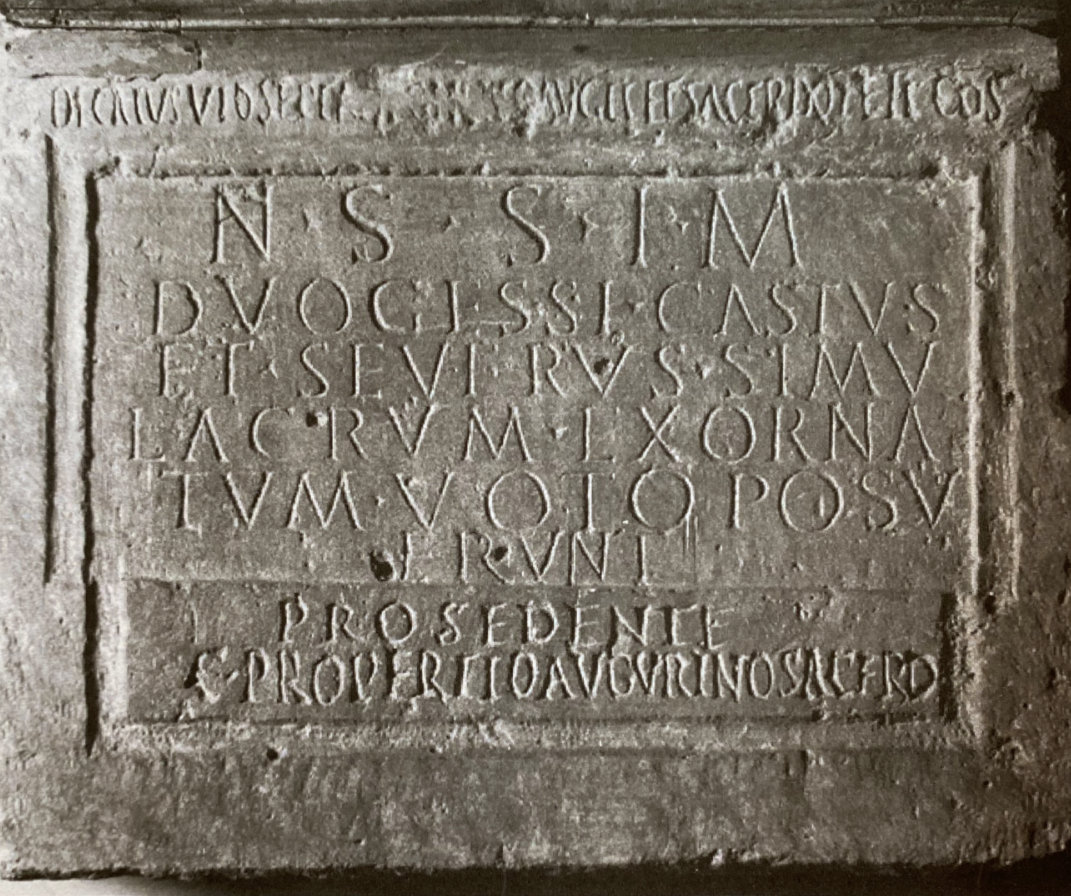
Gessius Castus and Gessius Severus have placed a decorated stutue and left testimony on this inscription below.
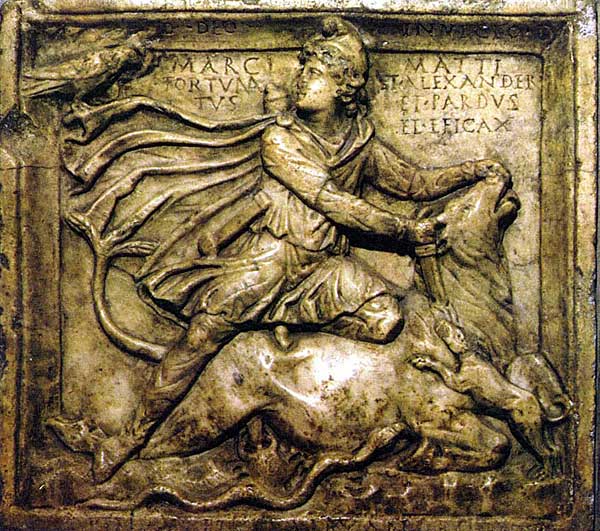
The relief marble of Mithras sacrifying the bull, exposed on the Hermitage Museum comes from Rome.
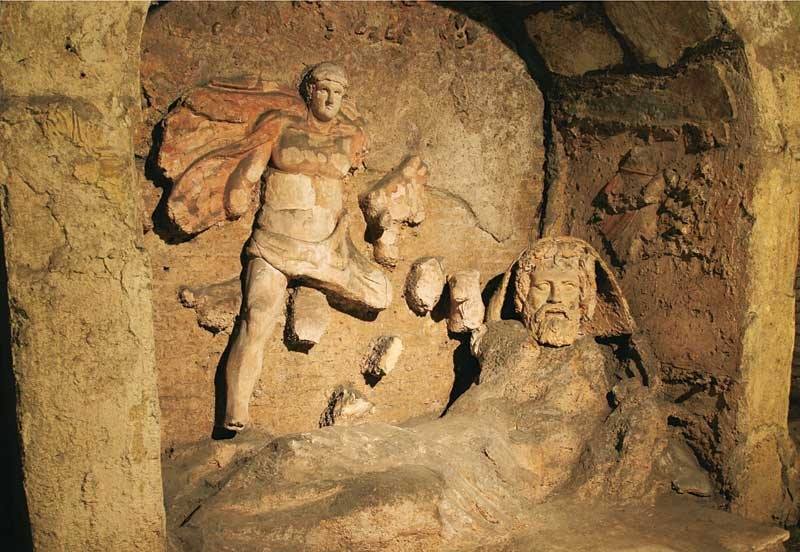
The fragmented tauroctony of the Mitreo di Santa Prisca rests on the naked figure of a bearded man, probably Ocean or Saturn.
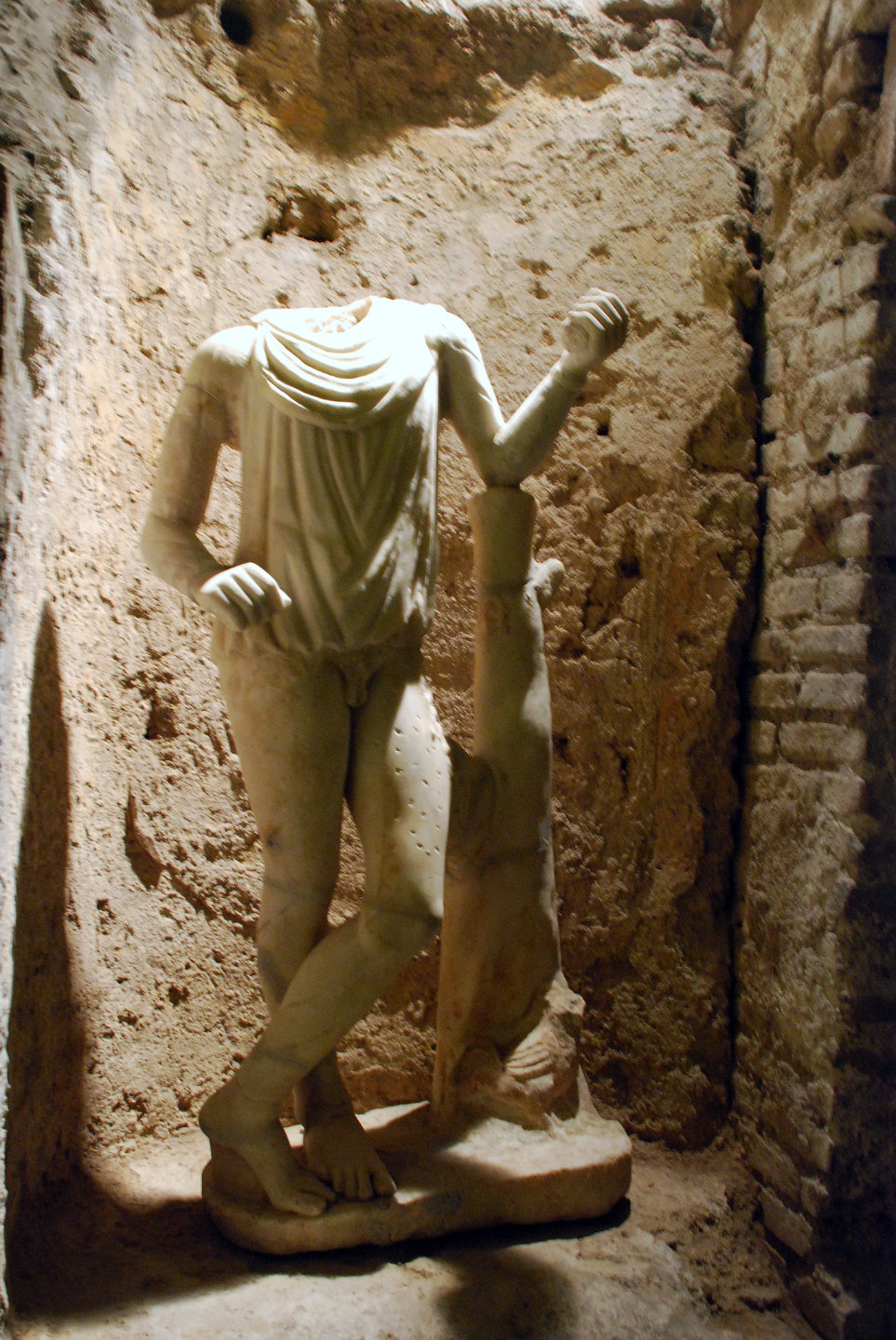
The marble statue of Cautes, found in the Mithraeum of Santa Prisca, was originally a Mercury.
Altar from Osijek, ancient Mursa, found when the fortress was demolished in 1922, dedicated to Deo Aeterno — the Eternal God — a title sometimes associated with Mithraic worship.
Small marble head from Saifnitz, Noricum, wearing a Phrygian cap; possibly representing Attis or a Mithraic torchbearer.
Small altar found in 1843 at Sankt Johann in the Saan valley, Noricum, dedicated to Deo invicto Mithrae by Sextus Masclinus.
Altar from Vidy near Lausanne, ancient Leusonna, dedicated to Soli Genio Lunae sacrum by Publius Clodius Primus, curator of the vici Lousonnenses, sevir Augustalis, and curator of the Roman citizens of the Helvetian conventus; not earlier than AD 161–169…
Evidence for a Mithraeum at Sentinum (modern Sassoferrato) in ancient Umbria, attested by a marble tauroctony group and three inscriptions, with a related mosaic found on the grounds of the Countess of Leuchtenberg and later given to King Louis of Bavaria…
White marble plate inscription dedicated to Soli Invicto pro salute, from Caesarea of Mauretania (modern Cherchel).
Inscription dedicated to Sol Invictus with a votive formula pro salute, from Mozaïaville.
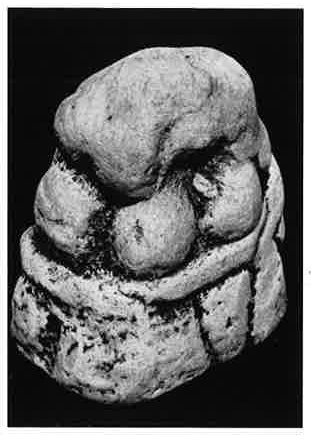
White marble rocky base encircled by a serpent from the Mithraeum at Sarmizegetusa, Dacia, probably the base of a rock-birth group.
Fragmentary inscription from Sarmizegetusa, Dacia, recording a dedication by a freedman for the welfare of Marcus Lucceius Felix, procurator Augusti.
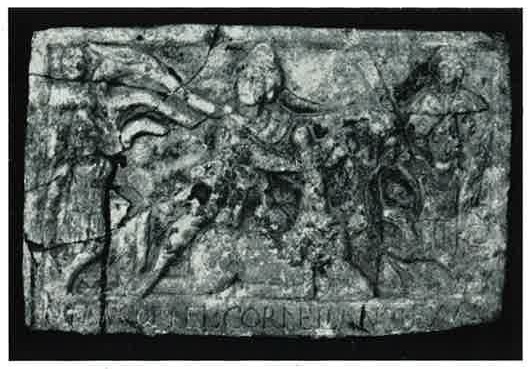
Marble tauroctony relief from Sarmizegetusa, Dacia, in the Deva Museum, depicting Mithras killing the bull; one of several reliefs attributed to the Sarmizegetusa sanctuary that were found elsewhere.
