Your search Ain Zana gave 1332 results.

Pair of white marble statues — Cautes with upraised torch and a cock, and Cautopates with a bird at his feet — found in 1886 on the north side of the Palatine between the hill and Via S. Teodoro, with traces of red painting on base and sides.
Marble statue of Cautopates in Eastern attire, cross-legged, leaning against a trunk and rocky stone with a cock beside his left foot, from the Mithraeum of S. Lorenzo in Damaso; the greater part of his arms and torch are lost.
White marble statue of a standing cross-legged torchbearer in Eastern attire with traces of red painting, found in the Castra Pretoria in 1882; head, arms, and feet are lost and the monument could not subsequently be traced.
Wall-painting on the last column but one of the Palazzo Barberini Mithraeum, showing a standing person in a short tunic with a wreath of ivy, carrying fruits in his left hand.
Relief in plaster, fixed on the wall beside the Mithraic wall-painting (No. 386) in the house of the Nummi Albani on the Quirinal, with traces pointing to a representation of Mithras slaying the bull.
Well with a drainage pipe and two oblong brick-built tombs in the room to the left of the entrance of the Mithraeum of San Clemente, one tomb filled with refuse and a large number of animal bones, particularly swine.
The Sacello delle Tre Navate near the Therms of the Sette Sapienti at Ostia, whose identification as a Mithraeum remains uncertain, with a decorated cult-niche but lacking typical Mithraic iconography.
Marble cap mentioned by Visconti, subsequently identified as certainly belonging to the finds of the Mitreo degli Animali rather than the Mitreo del Palazzo Imperiale, Ostia.
Two marble fragments of a statue of Mithras as bull-killer, preserving the head in Phrygian cap and right hand with dagger, with traces of red paint, from the Mitreo del Palazzo Imperiale at Ostia.
Two inscriptions dedicated to Mithras found at Volubilis near the Fertassa aqueduct fountain, probably indicating the presence of a Mithraeum.
Inscription dedicated to Sol Invictus at Lambaesis, of uncertain Mithraic attribution.
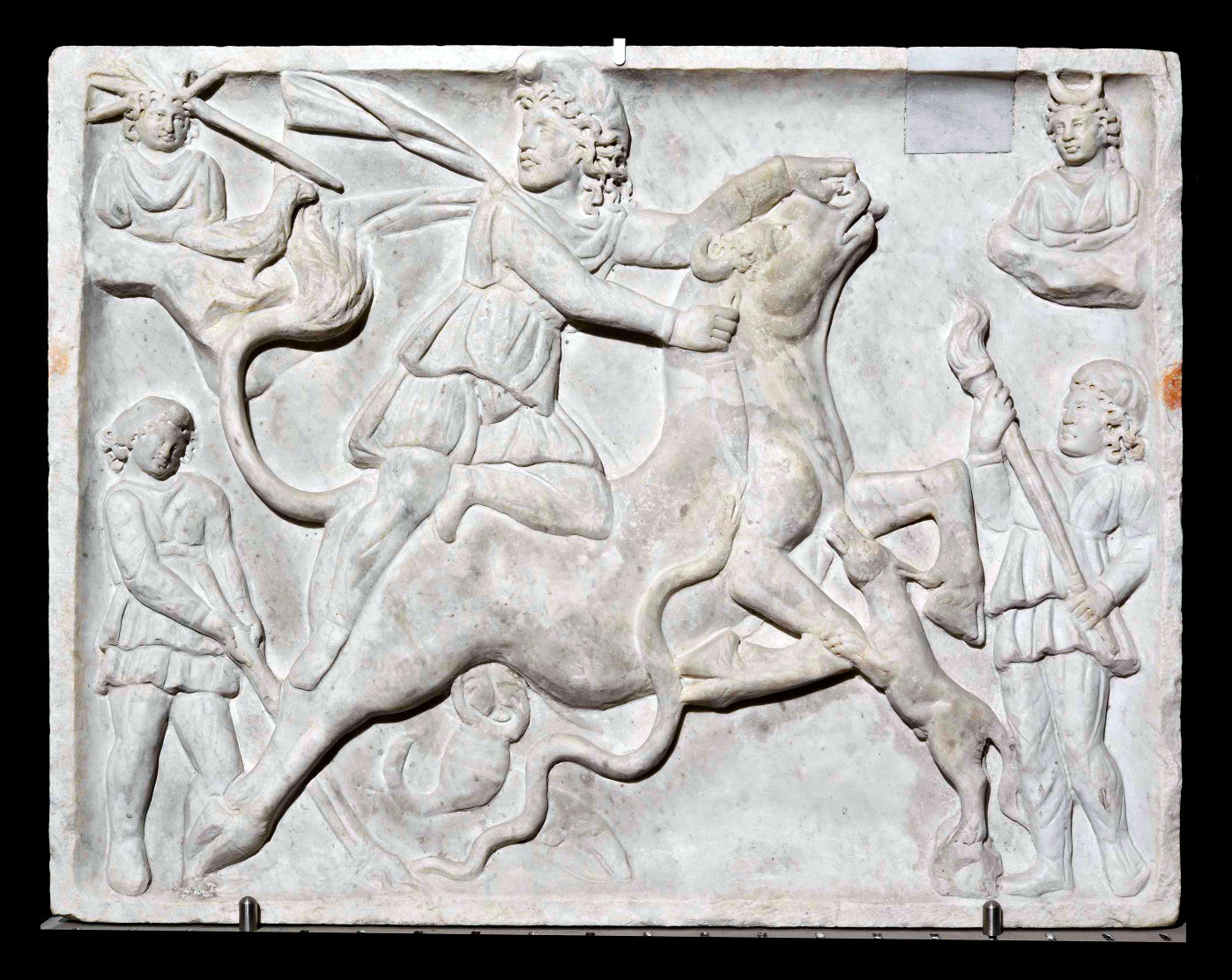
It is not certain that the marble relief of Mithras killing the bull was found on Capri, in the cave of Matromania, where a Mithraeum could have been established.
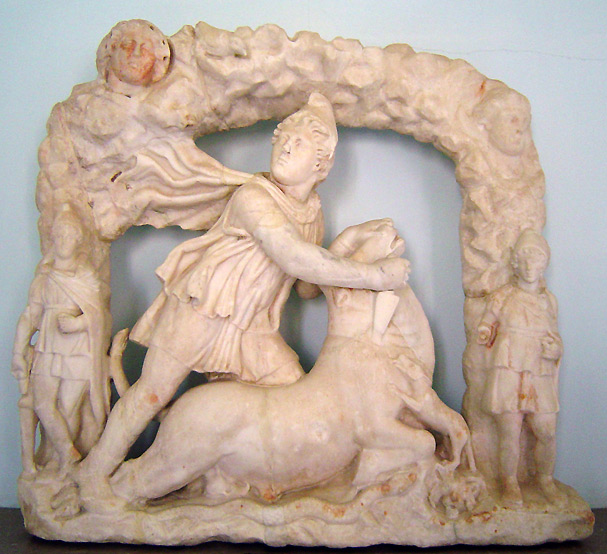
The assumed find-place of the Mithras Tauroctonus of Palermo is uncertain.
Stone lamp installation, vessels and bronze chain links associated with ritual activity inside the Mithraeum of Vindobala.
Group of Mithraic and other cult remains possibly originating from several neighbouring sanctuaries destroyed or abandoned in Late Antiquity.
Archaeological remains connected with the Praetorian camp and the presence of Mithraic worship among the imperial guard.
Sandstone altar with patera from the rock sanctuary at Kreta, Moesia Inferior, bearing a Greek inscription of uncertain reading, possibly a thanksgiving to Mithras.
Fragments of two painted torchbearer statues from the Mithraeum at Brigetio, Pannonia Superior, including a Phrygian-capped head and fragments of garments and hands.
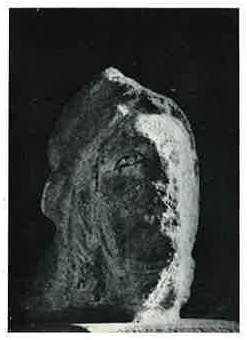
Two sandstone fragments from Mithraeum III at Carnuntum, Pannonia Superior, belonging to a torchbearer statue probably of Cautes, comprising a Phrygian-capped head with painted eyes and a body fragment; the statues probably stood at the beginning of the benches…
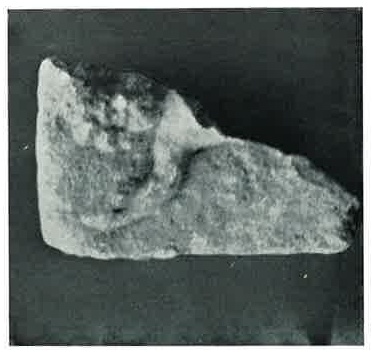
Left upper corner of a marble relief from Mithraeum II at Ptuj, ancient Poetovio, depicting Jupiter with the thunderbolt in his raised right hand, identified as a scene from the Battle against the Giants.
