Your search Al-Bahnasa gave 3015 results.

Possible Mithras sanctuary at a grotto entrance in the Kavag-Dağ, Lycia; the identification remains purely hypothetical according to Cumont.
Fragments of censers (Räucherschalen), thirteen lamps, and bronze and iron fittings from Mithraeum II at Stockstadt
Collection of sculptural fragments from Mithraeum I at Stockstadt including a genius, a cornucopia, a goddess with a he-goat, and a youth's head
Small red sandstone fragment from Mithraeum I at Stockstadt depicting the ritual hand-clasp, iunctio dextrarum
Two grey sandstone fragments of a large raven from Mithraeum I at Stockstadt, considerably bigger than the smaller raven statuette
Red sandstone relief from Mithraeum I at Stockstadt showing a male figure stooping and walking to the right with outstretched hands, head veiled
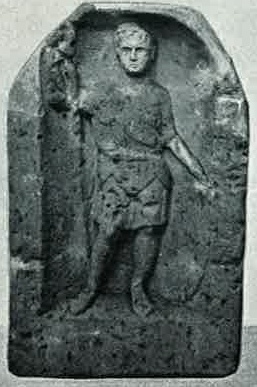
Red sandstone relief from Mithraeum I at Stockstadt depicting a standing Mars in helmet with lance and shield, head partially restored
White sandstone fragment from Mithraeum I at Stockstadt preserving the naked torso of a male with raised arms, interpreted as Mithras' rock-birth
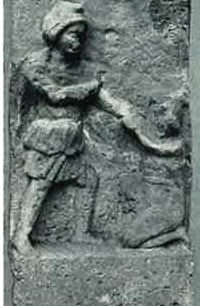
Red sandstone relief from Mithraeum I at Stockstadt depicting Mithras in Oriental dress approaching kneeling Sol with outstretched arms
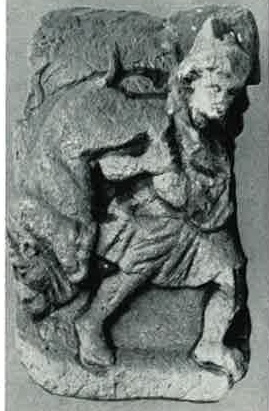
Grey sandstone relief from Mithraeum I at Stockstadt showing Mithras in Oriental dress walking to the right while carrying a bull on his shoulders
Sandstone stele from Mithraeum I at Stockstadt depicting Cautes cross-legged in Oriental dress, resting his left hand on a pedum
Sandstone stele from Mithraeum I at Stockstadt showing Cautopates in Oriental dress, cross-legged, holding a burning torch down and resting on a pedum
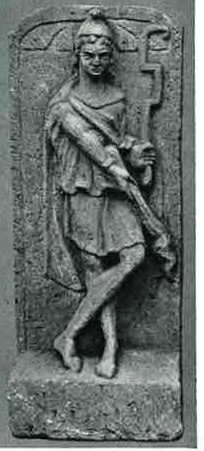
Red sandstone stele from Mithraeum I at Stockstadt depicting Cautopates in Oriental dress, cross-legged, holding a downward torch
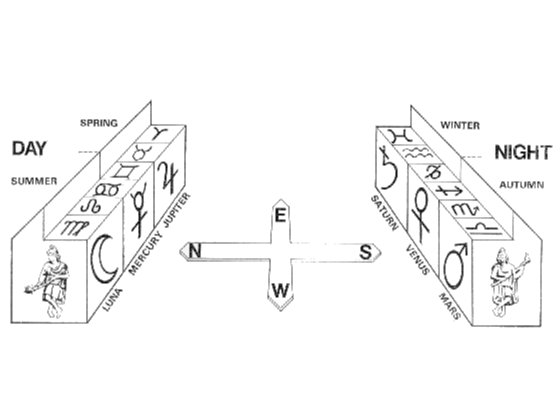
The rich mosaics of the Mithraeum of the Seven Spheres include the the signs of the Zodiac.
The inscription is carved into two pieces of marble cornice.
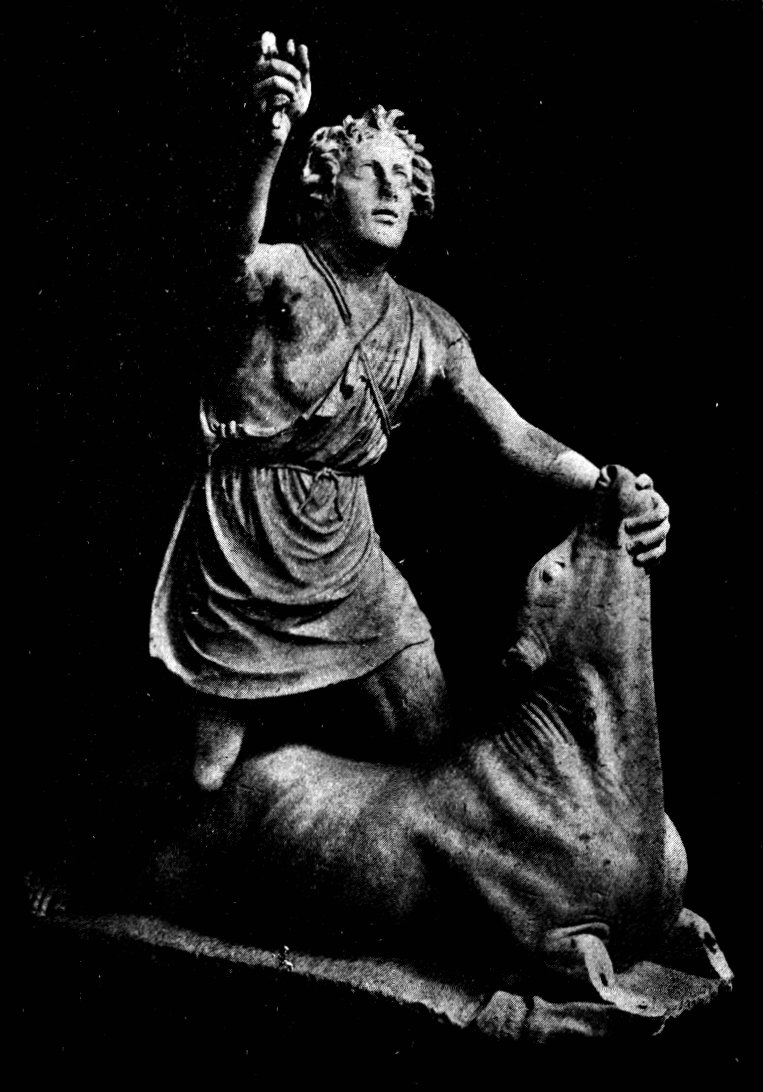
The person who commanded the sculpture may have been M. Umbilius Criton, documented in the Mitreo della Planta Pedis.
Gold lamina from Ciciliano showing a nude, serpent-entwined Aion-Kronos holding a key and surrounded by Greek voces magicae (2nd c. CE).

Ciciliano is a comune in the Metropolitan City of Rome in the Italian region of Latium, located about 35 kilometres east of Rome.
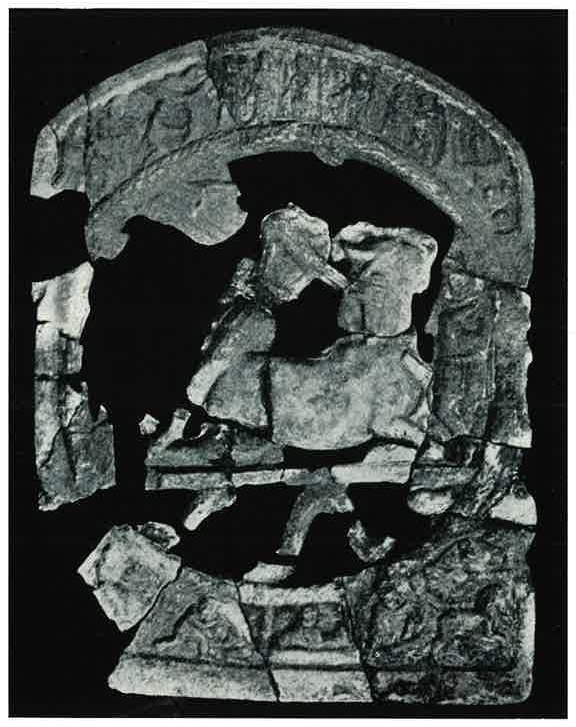
White marble tauroctony relief in several fragments from the Mithraeum at Biljanovac, Moesia Superior, depicting the standard bull-slaying with the full iconographic programme.
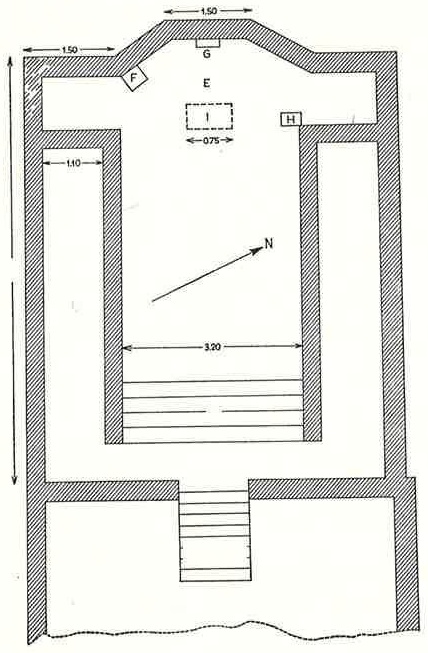
Mithraic sanctuary found at Biljanovac north-east of Kumanovo, Moesia Superior, with a pronaos and inner sanctuary, yielding marble reliefs, an altar, and associated cult objects.
