Your search Ay-Todor gave 1062 results.
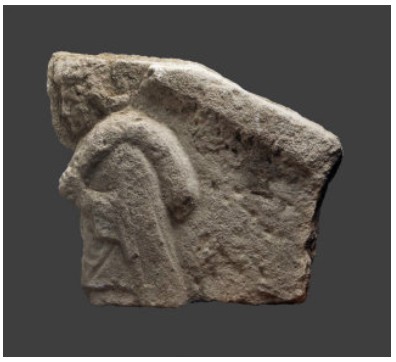
Fragment of a relief from Potz Neusiedl near Stix-Neusiedl, Pannonia Superior, brought to Eisenstadt in 1926, depicting part of a Mithraic bull-slaying scene.
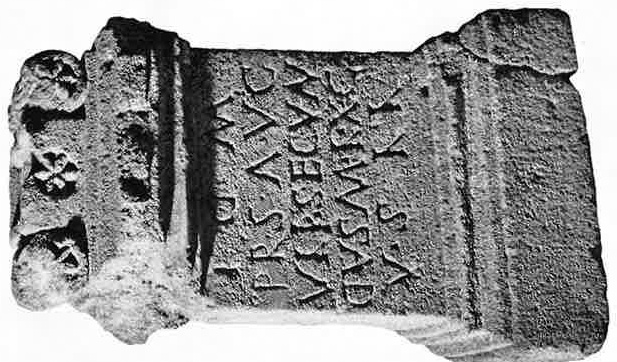
Limestone altar from Vienna, ancient Vindobona in Pannonia Superior, found in 1896 together with two terracotta lamps; the dedicant and full text are not known from the summary description.
Marble tauroctony relief from the Mithraeum at Sopron, ancient Scarabantia, depicting the standard bull-slaying scene with raven, dog, serpent, scorpion, and torchbearers.
Marble tauroctony relief from the Mithraeum at Sopron, ancient Scarabantia, depicting the standard bull-slaying with raven, dog, scorpion, and cross-legged torchbearers.

Large marble tauroctony relief from the Mithraeum at Sopron, ancient Scarabantia, depicting the standard bull-slaying with raven, dog, serpent, and scorpion, flanked by cross-legged torchbearers.
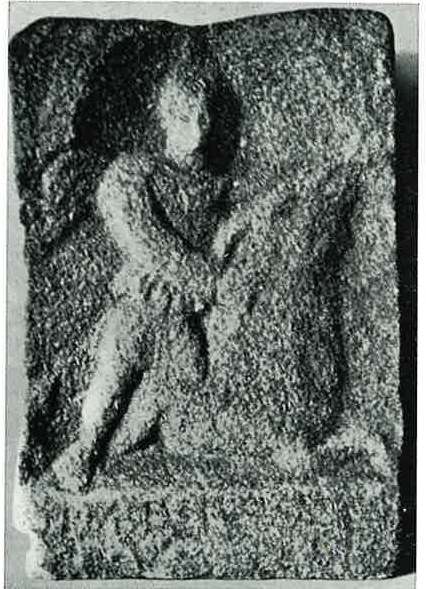
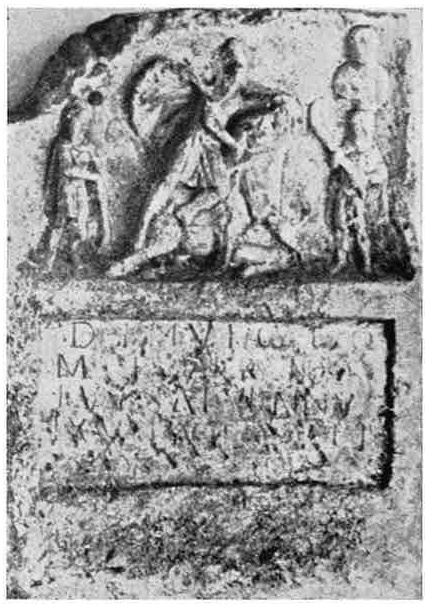
Marble tauroctony relief from the Mithraeum at Modrič, Pannonia Superior, with Cautopates and Cautes flanking the bull-slaying scene and a dedication inscribed in the lower border.
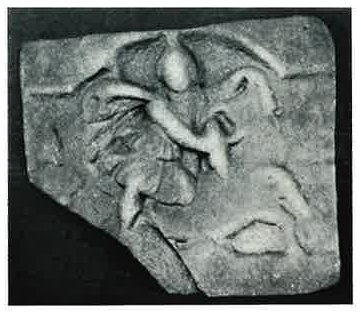
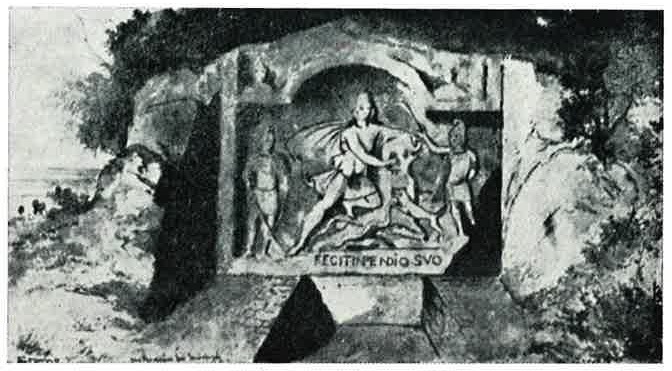
Marble tauroctony relief from the Mithraeum at Modrič, Pannonia Superior, depicting the standard bull-slaying with raven, dog, scorpion, and cross-legged torchbearers.
Small Mithraic sanctuary found in the slope of a ravine called Zlodjer (Devil's Ditch) at Ober-Pohanica near Zdole, Noricum; the finds are among the finest marble Mithraic sculpture from the eastern Alpine provinces.
Small marble head in Phrygian cap of unknown provenance, associated with the Waggendorf find-group, Noricum; may represent Attis or Mithras.
Several thin silver fragments from the Mithraeum at Linz, ancient Lentia, reconstructed as a votive object surmounted by a crescent or two horns; paralleled in sanctuaries of Jupiter Dolichenus.
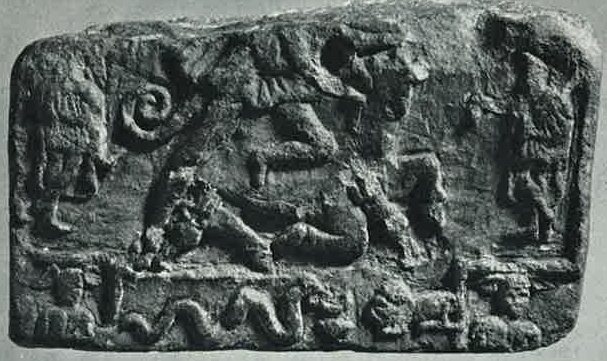
Small limestone tauroctony relief from Augst, ancient Augusta Rauricorum, depicting the bull-slaying with dog and scorpion, flanked by cross-legged torchbearers in Oriental dress; Cautes holds a pedum alongside the upraised torch.
Fragmentary limestone relief from Thun-Allmendingen of the same dimensions as the bull relief, depicting a swine; both may have formed part of the sanctuary's ritual décor.
Altar from the Mithraeum at Königshoffen, dedicated in honour of the Domus Divina to Deo invicto Mithrae by a dedicant whose name is partially preserved and may be read as Secundus or Secundinus.
Altar from the Mithraeum at Königshoffen, dedicated to Deo Cissonio — a Celtic god identified with Mercury — by Gittonius Pippausus; the dedicant's Celtic name may be etymologically connected to that of the deity.
Small sandstone relief fragment from the Mithraeum at Königshoffen preserving a naked male figure from the thighs to the head, possibly part of a rock-birth scene.

Large grey sandstone tauroctony relief from Fellbach near Cannstatt, depicting the bull-slaying in a vaulted grotto with torchbearers, Sol, Luna, and subsidiary Mithraic scenes along the border.
Small bronze statuette recovered from the river Saale near Burg Giebichenstein in 1900, depicting Mithras as bull-slayer without a Phrygian cap; the left leg is lost.
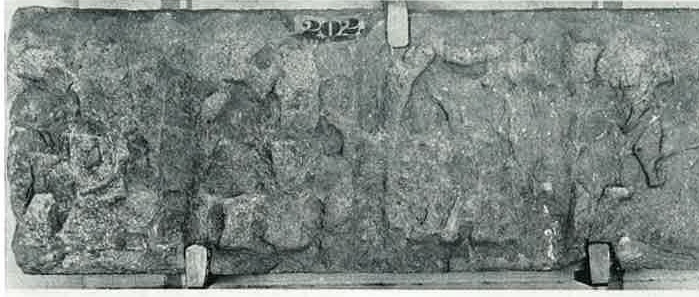
Badly damaged red sandstone relief from Hölzern, Germania Superior, depicting the standard bull-slaying scene; possibly forming part of the border zone of a larger composition.
Grey limestone relief fragment from Rockenhausen found at the Pfingstborn spring, preserving part of the bull-slaying scene
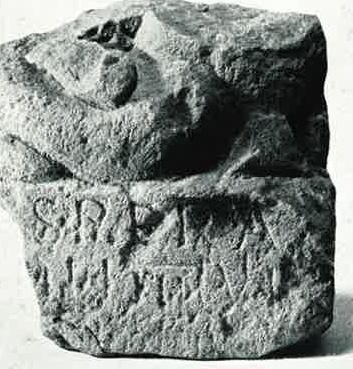
Fragment of a sandstone statue found during cellar excavations at Gross-Krotzenburg in 1848, possibly belonging to the Mithraeum
