Your search for Baden gave 24 results.

Aquae Helveticae developed around important thermal springs in the territory of modern Baden in Switzerland.

Lost stone altar from the thermal baths at Baden, ancient Aquae Helveticae, dedicated to Deo invicto by Tiberius Cassius Sanctus and Tiberius Sancteius Valens following a vision.

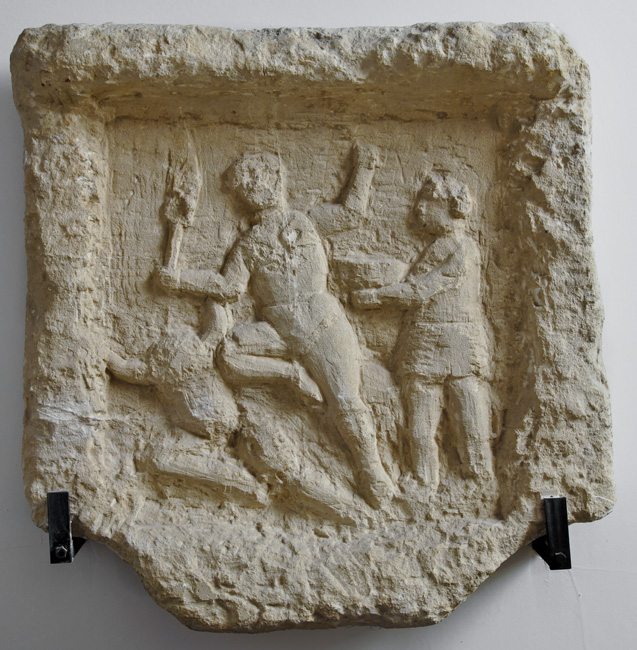
Possibly a Mithraic scene discovered in Mödling, Austria.
Ladenburg is a town in northwestern Baden-Württemberg, Germany. The town's history goes back to the Celtic and Roman Ages, when it was called Lopodunum.
Rottenburg am Neckar; until 10 July 1964 only Rottenburg; Swabian: Raodaburg is a medium-sized town in the administrative district of Tübingen in Baden-Württemberg, Germany. Rottenburg is the seat of a Roman Catholic bishop, being the official centr
Güglingen is a town in the district of Heilbronn in Baden-Württemberg in southern Germany.

Mithraeum I in Güglingen, Landkreis Heilbronn (Baden-Württemberg).
Wiesbaden is the capital of the German state of Hesse, and the second-largest Hessian city after Frankfurt am Main.
Small red sandstone statuette of a lying lion from Wiesbaden, ancient Aquae Mattiacae, with snout and hindquarters broken off
Sandstone relief from Wiesbaden, ancient Aquae Mattiacae, found in a subterranean room in 1858, depicting Cautopates in Oriental dress holding a downward torch
Sandstone votive altar with traces of red paint from Wiesbaden, ancient Aquae Mattiacae, erected during the reign of Macrinus with permission of Varonius Lupulus
Votive sandstone altar from Wiesbaden, ancient Aquae Mattiacae, dedicated to Deo Soli invicto by Caius Silvinius Maternus, in honour of the Domus Divina
Fragmentary inscription from Wiesbaden, ancient Aquae Mattiacae, dedicated to Deo invicto by a miles pius, closely parallel to no. 1232
Fragment of a limestone altar from Wiesbaden, ancient Aquae Mattiacae, preserving the crossed legs of a torchbearer
Yellow sandstone votive altar from Wiesbaden, ancient Aquae Mattiacae, published by Ritterling and preserved in the Städtisches Museum
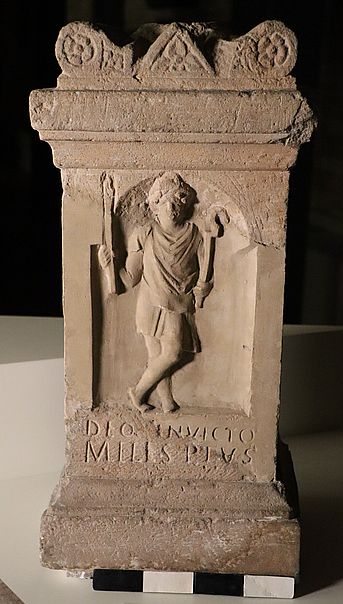
Small votive altar in white limestone from Aquae Mattiacae, dedicated to Deo Invicto by a miles pius. The top preserves the head of Cautes with his raised torch.
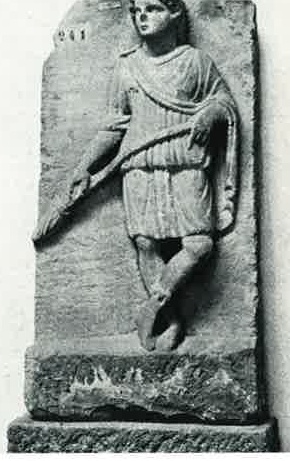
Relief in red sandstone originally standing on a base in Mithraeum I at Heddernheim, ancient Nida, featuring the bull-slaying scene.
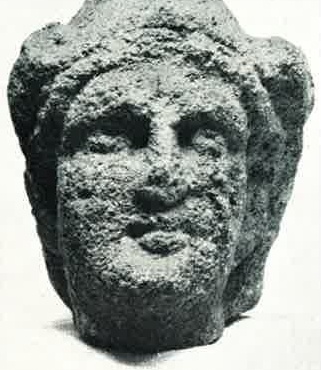
Sandstone fragment from Mithraeum I at Heddernheim, ancient Nida, probably the damaged head of a torchbearer, often misidentified as Mercury.
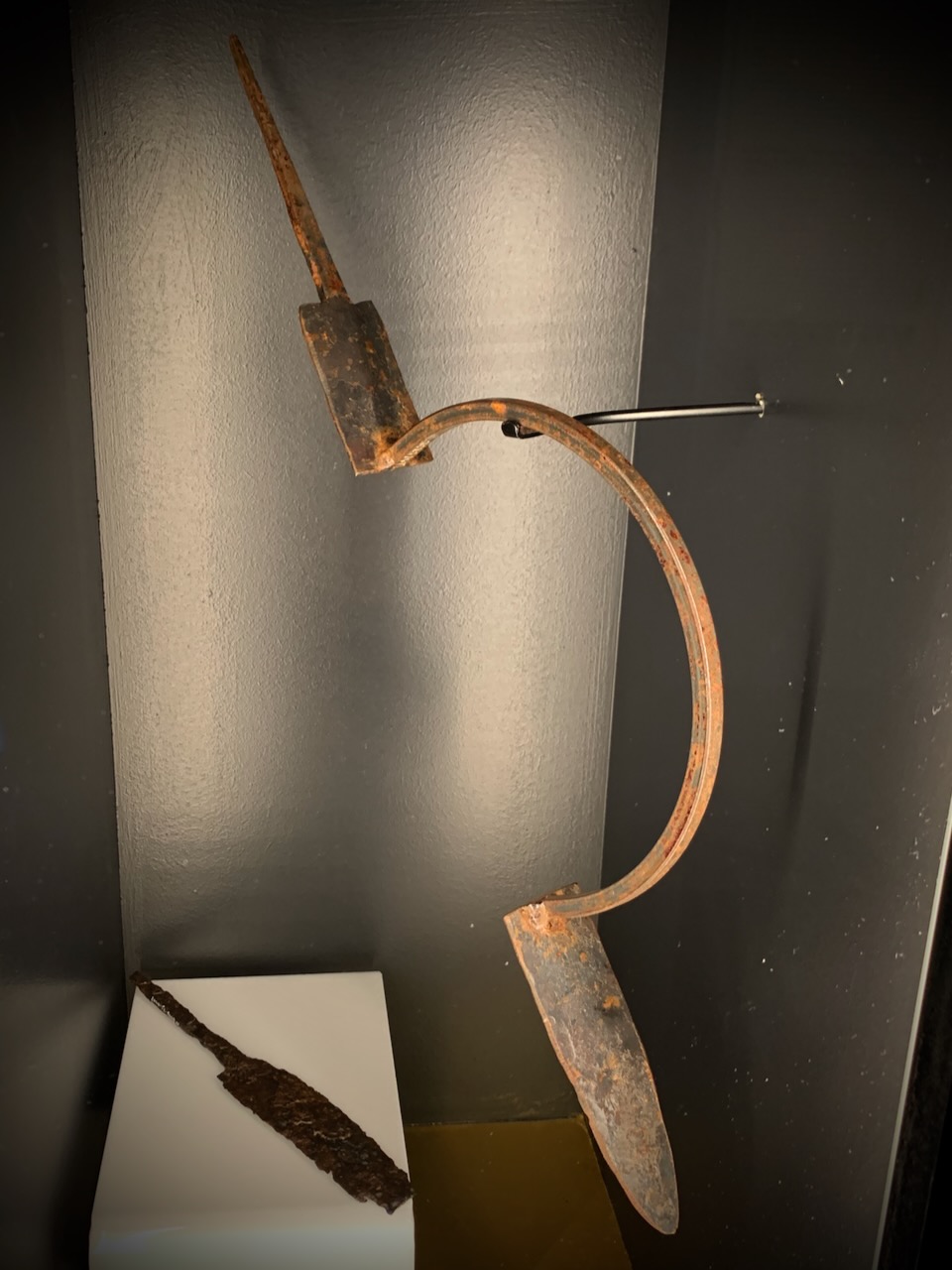
Several iron fragments found in the second mithraeum of Güglingen may have been used during mithraic ceremonies.
