Your search Bingen am Rhein gave 1055 results.

Prof. Parvaneh Pourshariati; 9th European Conference of Iranian Studies, Free University of Berlin, September 2019.
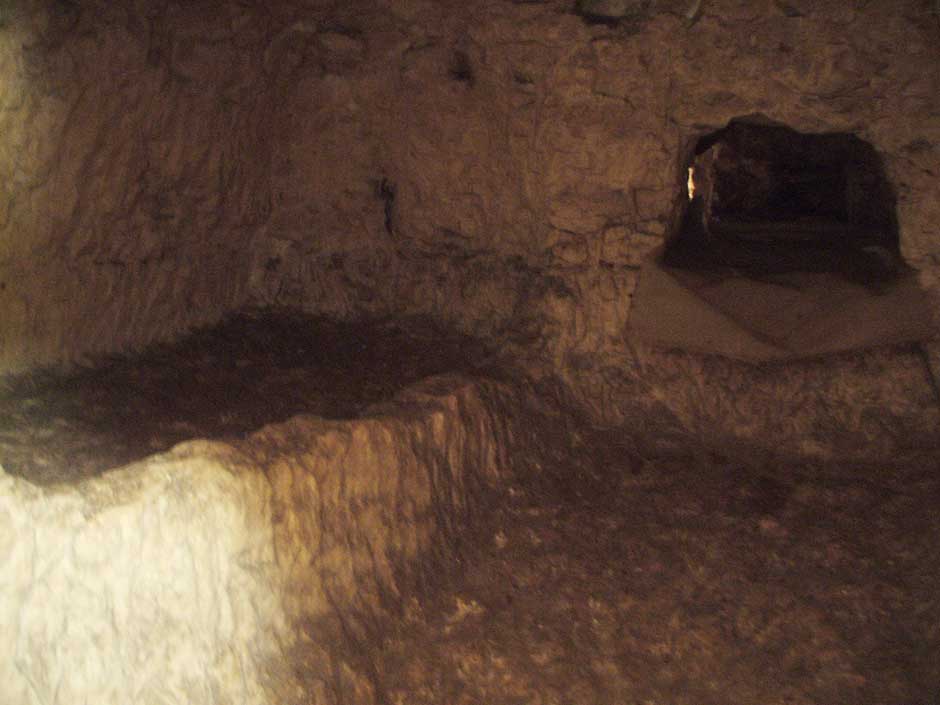
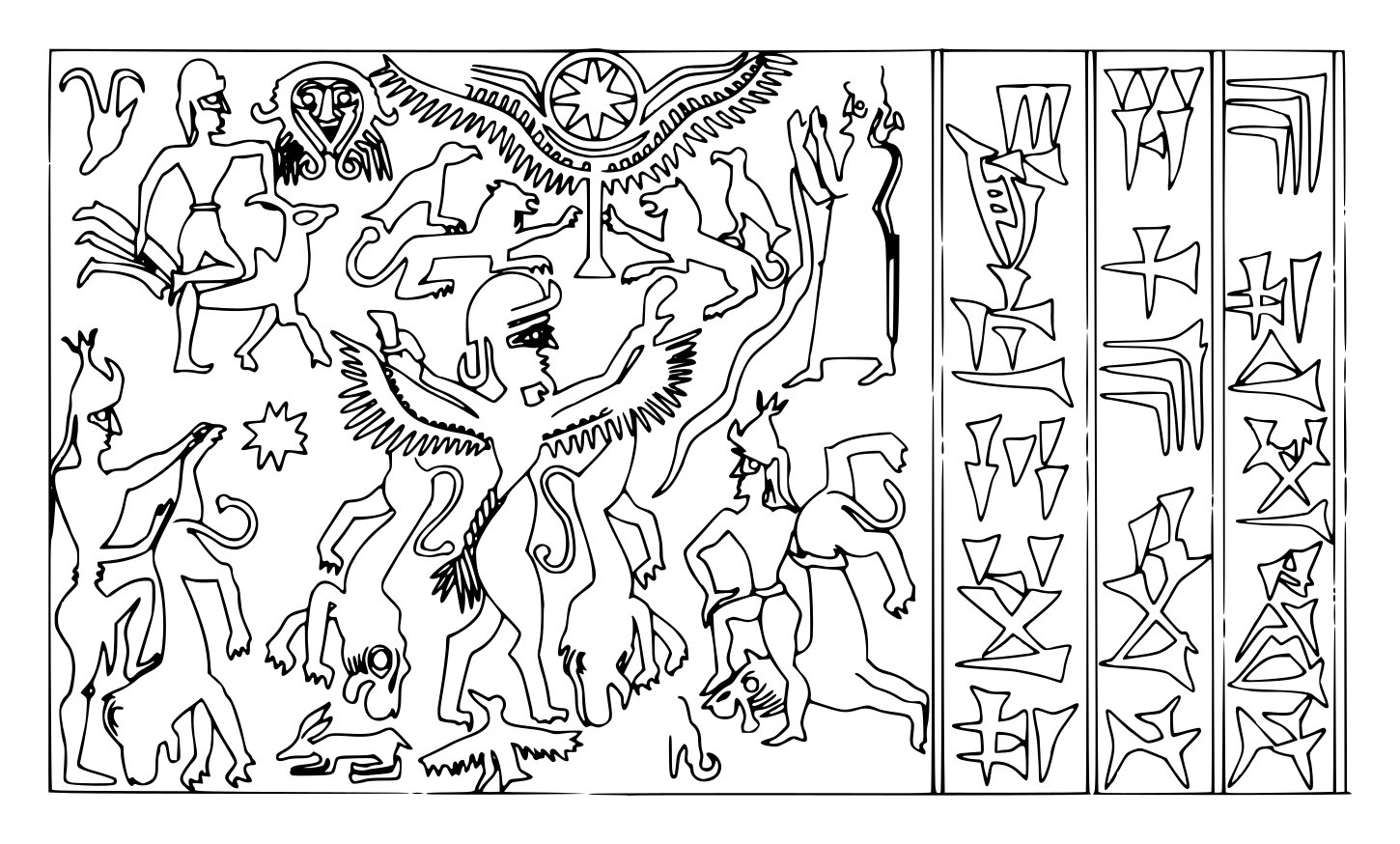
Royal Mitannian seal featuring a winged solar emblem and heroic combat scenes from the cultural milieu in which the earliest attestation of Mitra is found.
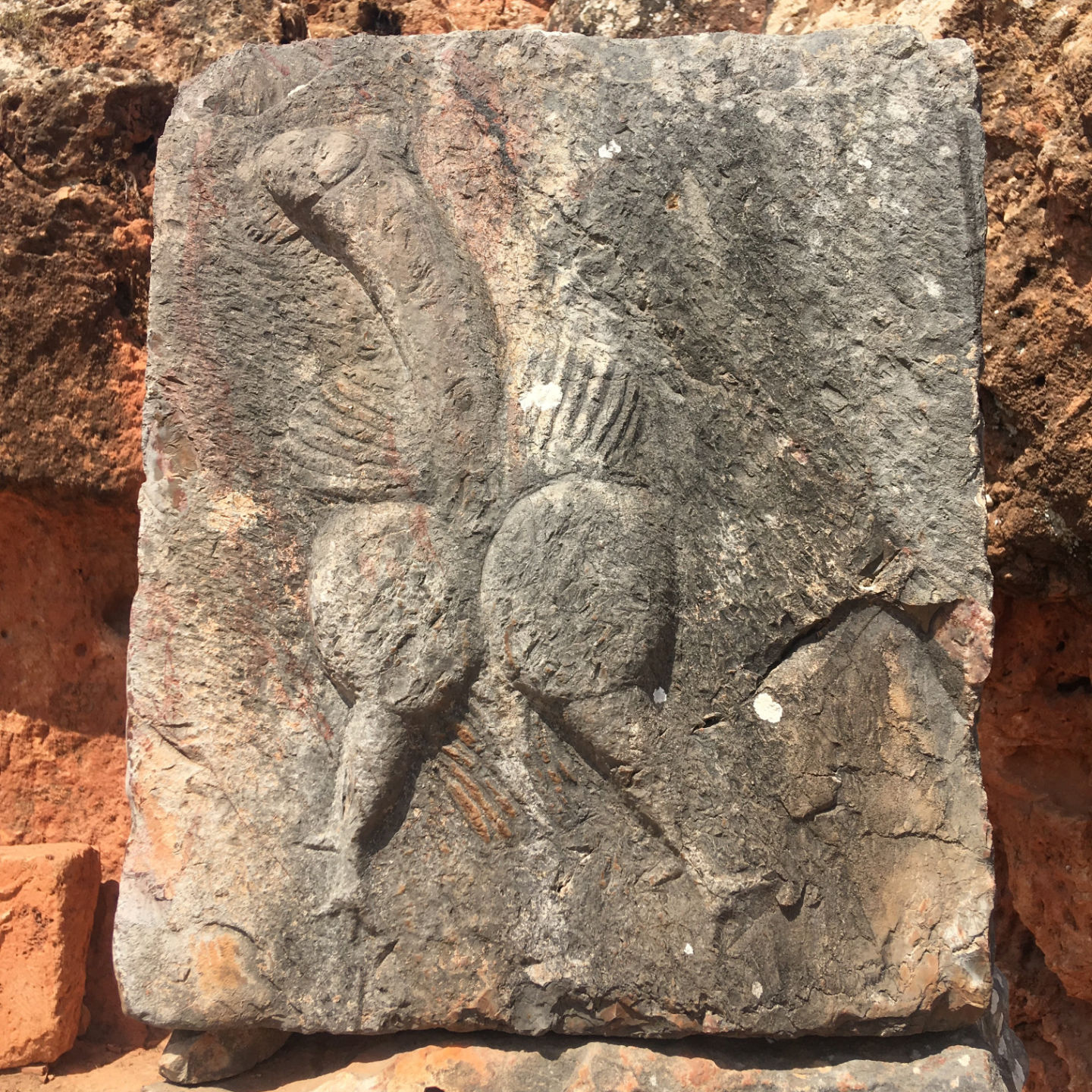
The phallus from Tiddis, Algeria, has been represented as a cock.
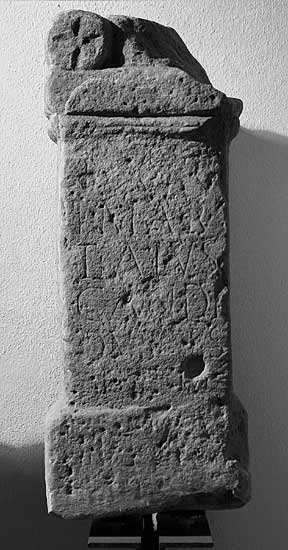
Bright red sandstone altar from Mithraeum II at Stockstadt dedicated to Deo Cauti by Titus Martialius Candidus, found near the north podium.

Fragment of a sandstone relief from Nida-Heddernheim depicting the torchbearer Cautopates.
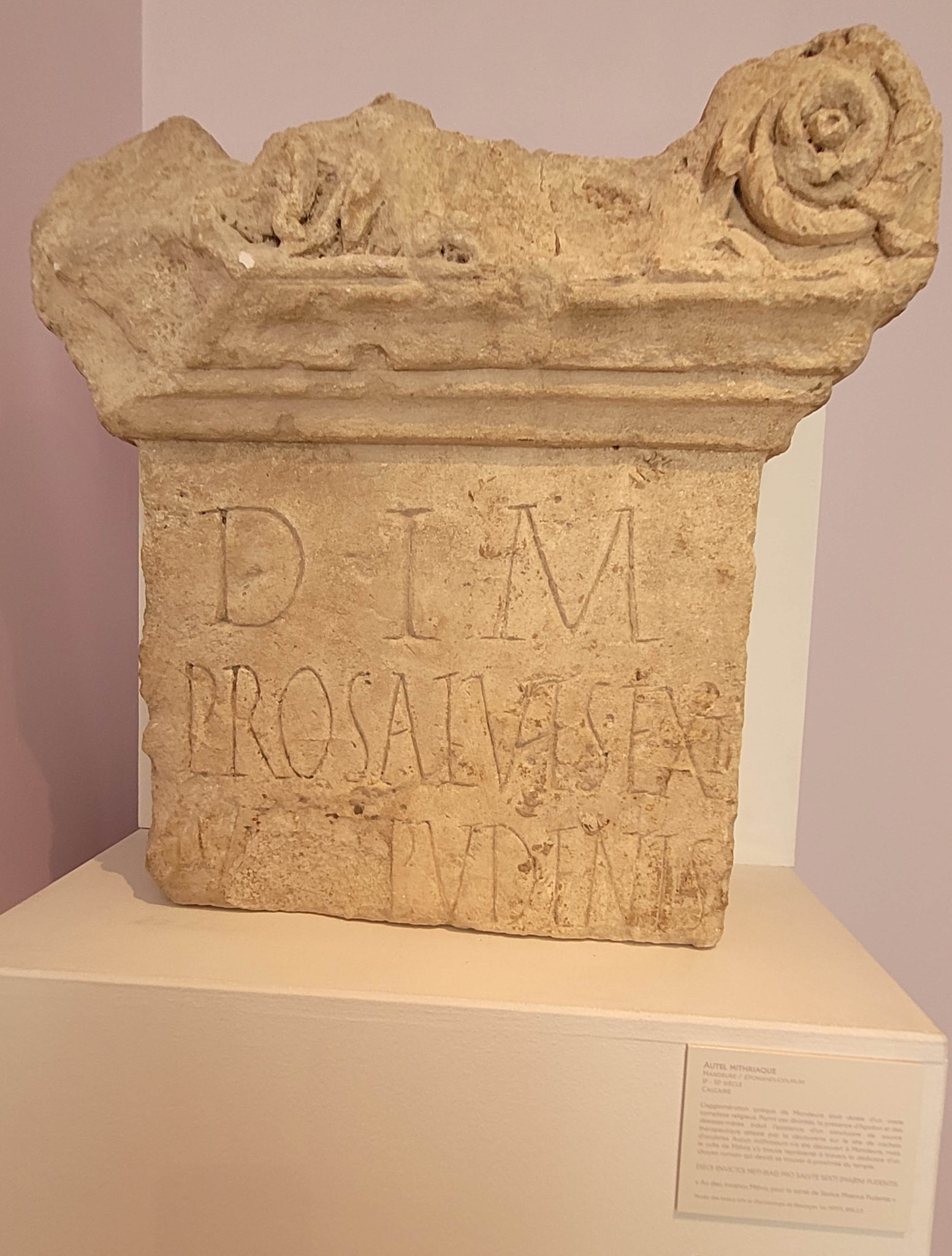
Stela dedicated to Mithras Invictus, found in 1895–1896 at Epamantodurum (modern Mandeure), in the territory of the civitas Sequanorum (Gallia Belgica). The inscription records a vow to Mithras Invictus made for the welfare of Sextus Maenius Pudens.
Altar from Kokardscha near Adam Klissi, ancient Tropaeum Traiani in Moesia Inferior, dedicated to Deo invicto for the welfare of Emperor Marcus Antoninus Verus by Annius Saturninus, centurion of Legio XI Claudia.
Fragment of an altar from Pócsmegyer, ancient Ulcisia Castra in Pannonia Inferior, dedicated to Invicto Soli Mithrae by a custos armorum of the Cohors milliaria nova Severiana.
Limestone relief from Schwadorf, ancient Aequinoctium in Pannonia Superior, depicting the naked Mithras being born from the rock with a serpent encircling it, flanked by torchbearers; one of the finest examples of this iconographic type from the Danubian region…
Finds discovered near the crossing of the criptoporticus of the Mithraeum at Capua, including marble plate fragments, a tuff base, red lamps, and animal bones.
Miscellaneous finds from the middle of the Mithraeum of Capua, including a terracotta antefix with centaurs, basins, marble bases, lamps with a Sol head, and coins of M. Aurelius and Constantine.
Badly damaged fresco fragment showing a person in red attire in a kneeling position, from the initiation sequence of the Mithraeum of Capua.
Head in Phrygian cap with a sorrowful expression, used as a protome in the Amphitheatre of Capua and interpreted as a head of Mithras.
Altar inscription dedicated to Sol Augustus by the decurion Valerius Carpus, from Timgad (ancient Thamugadi).
Great royal inscription of Antiochus I of Commagene carved on the thrones at Nemrud Dağı, invoking Apollo-Mithras-Helios among the guardian deities of the kingdom, 69–34 B.C.
Possible Mithras sanctuary at a grotto entrance in the Kavag-Dağ, Lycia; the identification remains purely hypothetical according to Cumont.
Similar red painted vase from Mithraeum II at Stockstadt, preserving only the serpent's body and tail
White painted clay vase from Mithraeum II at Stockstadt with seven holes in the border and a serpent creeping round one handle
Four small painted cups buried in a row under the niche floor at Mithraeum II, Stockstadt, one still containing a piece of sulphur; with coins of Augustus, Hadrian, and Antoninus Pius
