Your search Bingen am Rhein gave 1055 results.
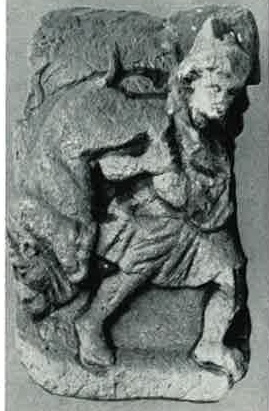
Grey sandstone relief from Mithraeum I at Stockstadt showing Mithras in Oriental dress walking to the right while carrying a bull on his shoulders

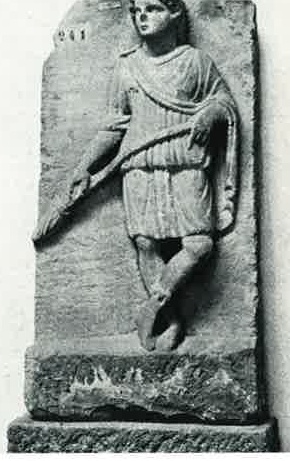
Sandstone stele from Mithraeum I at Stockstadt depicting Cautes cross-legged in Oriental dress, resting his left hand on a pedum
Sandstone stele from Mithraeum I at Stockstadt showing Cautopates in Oriental dress, cross-legged, holding a burning torch down and resting on a pedum
Lower portion of a red sandstone stele of Cautes from Mithraeum I at Stockstadt, cross-legged, with a dedicatory inscription on the base
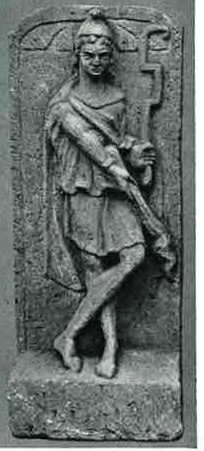
Red sandstone stele from Mithraeum I at Stockstadt depicting Cautopates in Oriental dress, cross-legged, holding a downward torch
Votive altar from Mithraeum I at Stockstadt, dedicated to Deo invicto Mithrae by Perpetuus, a haruspex, at his own expense
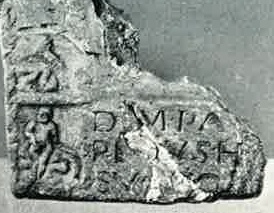
Double-sided white sandstone relief from Mithraeum I at Stockstadt, with Mithraic imagery on both faces
Fragment of a sandstone relief from Mithraeum I at Stockstadt depicting a beardless figure in a velum, identified as a wind or winter deity
Large red sandstone tauroctony relief from Mithraeum I at Stockstadt, mostly thrown into the river Main when the sanctuary was destroyed
Assemblage of lamps, keys, torches, an iron knife, pottery, glass fragments, and five coins from Mithraeum III at Heddernheim, ancient Nida
Damaged red sandstone altar from Mithraeum II at Heddernheim, ancient Nida, with the representation of an axe on its front face
Tall sandstone column base from Mithraeum I at Heddernheim, ancient Nida, with an inscription set between two columns, possibly naming Mithras
Assemblage of lamps, serpent-vases and painted ritual pottery from the sanctuary complex.
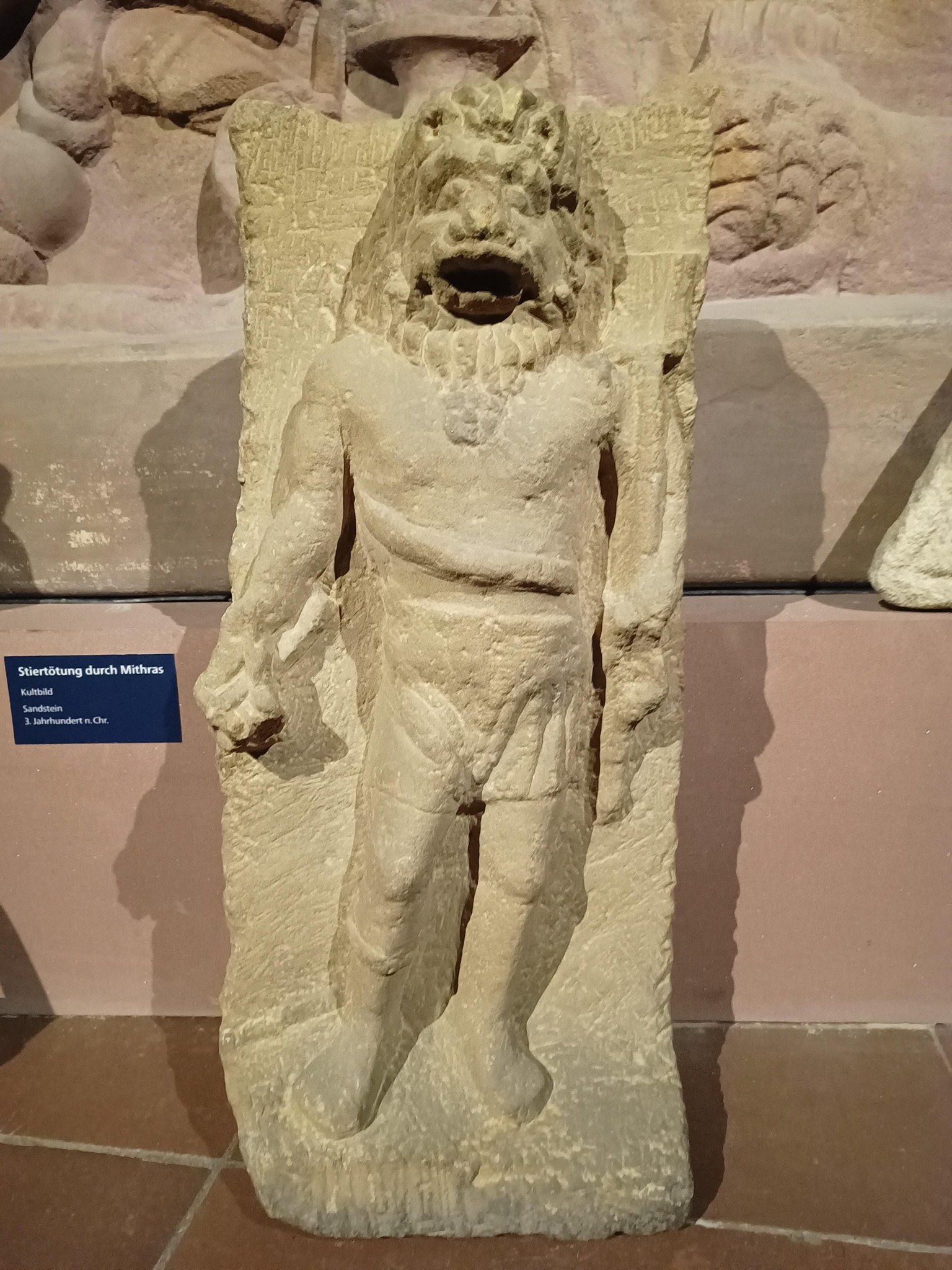
This lion-headed figure from Nida, present-day Frankfurt-Heddernheim, holds a key and a shovel in his hands.

The lion-headed statue of Hedderneheim is a reconstruction from fragments of two different sculptures.
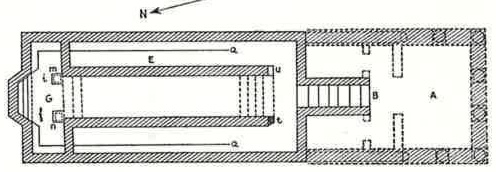
Second Mithraic sanctuary discovered in 1826 some 150 metres west of Mithraeum I at Heddernheim, ancient Nida, with finds in the Wiesbaden museum.
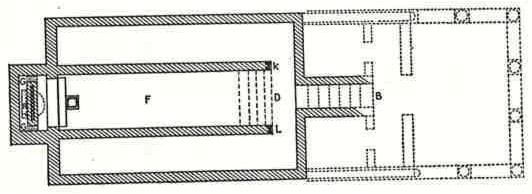
First Mithraic sanctuary discovered at Heddernheim (ancient Nida) in 1826, with finds preserved in the Städtisches Museum at Wiesbaden.
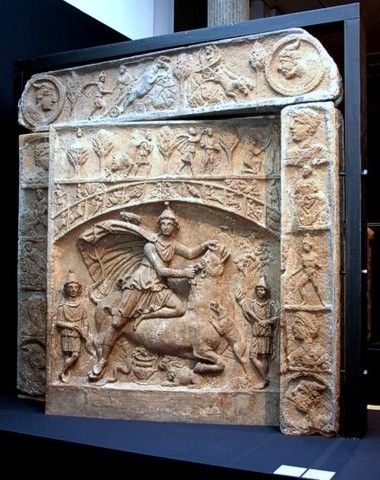
This relief is so well-known that it has been reproduced in nearly every handbook of archaeology and of history of religions.
Relief in red sandstone originally standing on a base in Mithraeum I at Heddernheim, ancient Nida, featuring the bull-slaying scene.