Your search Boulogne-sur-Mer gave 706 results.

White marble statue of the lion-headed Aion standing on a cone decorated with a crescent, entwined in seven coils of a serpent and pressing claw-like hands against his body, each grasping a key; formerly in the Museo Torlonia, Rome.
Fragment of a small white marble relief showing Mithras slaying the bull with the dog, serpent and scorpion, formerly walled in the inner court of the Palazzo Rondinini (now Palazzo Sanseverino), Corso No. 518.
Marble relief formerly in the Palazzo Giustiniani showing Mithras slaying the bull while grasping one of its horns, with the dog, serpent, scorpion and torchbearers, and a krater before the feet of Cautes.
Two inscriptions (a and b) from the Aventine Dolichenum sanctuary relating to Sol Invictus Mithras, one a fragmentary dedication and the other mentioning a signum and providentissimus.
Two Mithraic monuments discovered during the 1935 excavations of the Dolichenum on the Aventine, together with statues of Sol, Luna, Venus, Silvanus and Hercules, now in the Museo Capitolino; the only certain Mithraic finds from a Dolichenum.
Marble relief with the dressed busts of Sol with five rays, a long-bearded man, and Luna with crescent, found in the camp of the equites singulares near the Scala Santa, now in the Museo Nazionale delle Terme.
Well with a drainage pipe and two oblong brick-built tombs in the room to the left of the entrance of the Mithraeum of San Clemente, one tomb filled with refuse and a large number of animal bones, particularly swine.
Brief dedicatory inscription to Mithras the Just, found at Tyana (modern Kemerhisar), Cappadocia.

Sutri is an Ancient town, modern comune and former bishopric in the province of Viterbo, about 50 kilometres from Rome and about 30 kilometres south of Viterbo. The modern comune of Sutri has a few more than 5,000 inhabitants.
Fragmentary inscription from the base of a statue at Mithraeum I, Stockstadt, found in context but formerly misattributed to the praetorium
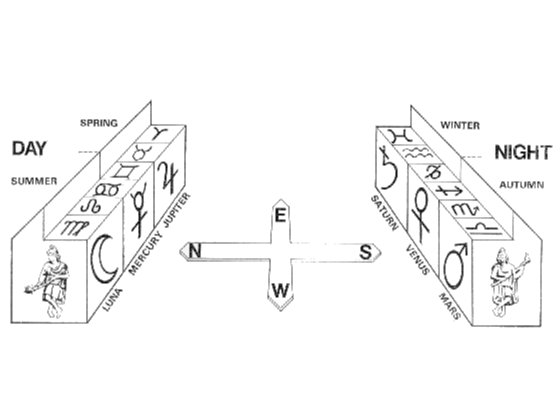
The rich mosaics of the Mithraeum of the Seven Spheres include the the signs of the Zodiac.
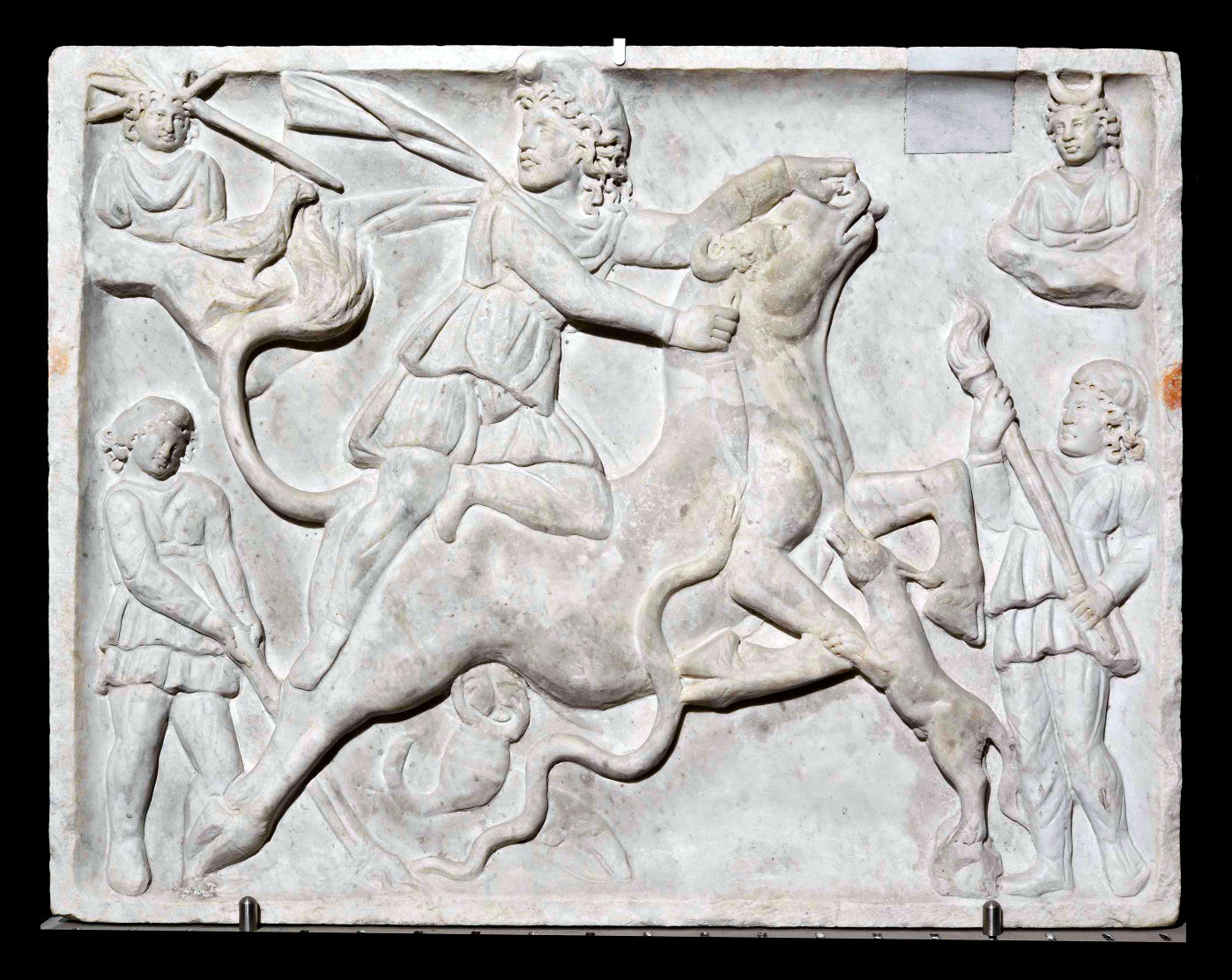
It is not certain that the marble relief of Mithras killing the bull was found on Capri, in the cave of Matromania, where a Mithraeum could have been established.
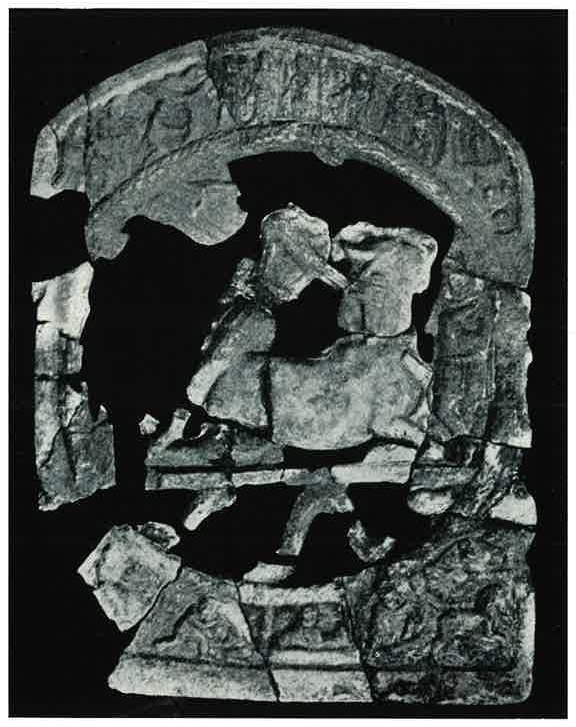
White marble tauroctony relief in several fragments from the Mithraeum at Biljanovac, Moesia Superior, depicting the standard bull-slaying with the full iconographic programme.
Monumental inscription honouring the senator and Mithraic pater Kamenius together with his numerous priestly offices and initiatory roles.
Relief featuring an enigmatic agricultural implement interpreted either as a scythe or an early type of plough.
Right portion of a limestone Cautes relief from Kostolac, ancient Viminacium in Moesia Superior, depicting Cautes standing on an elevation in Oriental dress — not cross-legged — with a semicircle above him, probably Sol's nimbus.
Sandstone altar from Romula, Dacia, dedicated to Deo invicto Mithrae by Aurelius Rufus ex voto, with the busts of Sol and Luna flanking the text.
Bluish marble tauroctony fragment from the Mithraeum at Sarmizegetusa, Dacia, formerly in the collection of Count Géza Kuun at Mintia, preserving Mithras killing the bull.
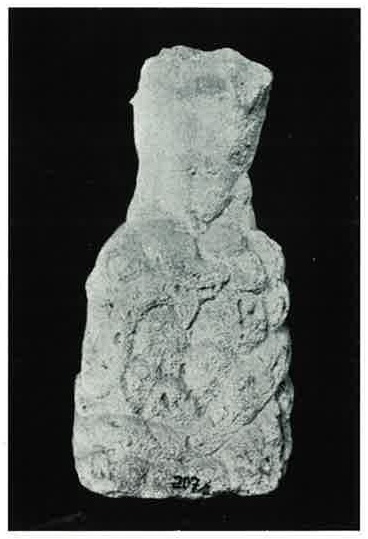
Sandstone rock-birth statue from Apulum, Dacia, depicting the naked Mithras emerging from a rock encircled by a snake; head and arms are lost.
Lost limestone altar from Apulum, Dacia, decorated on the sides with a rose and serpent, on the reverse with a bull's head; the front bears a Mithraic inscription.
