Your search Carl A. P. Ruck gave 86 results.

Bedaium occupied a position near the Chiemsee lake region within the northern Alpine frontier zone.
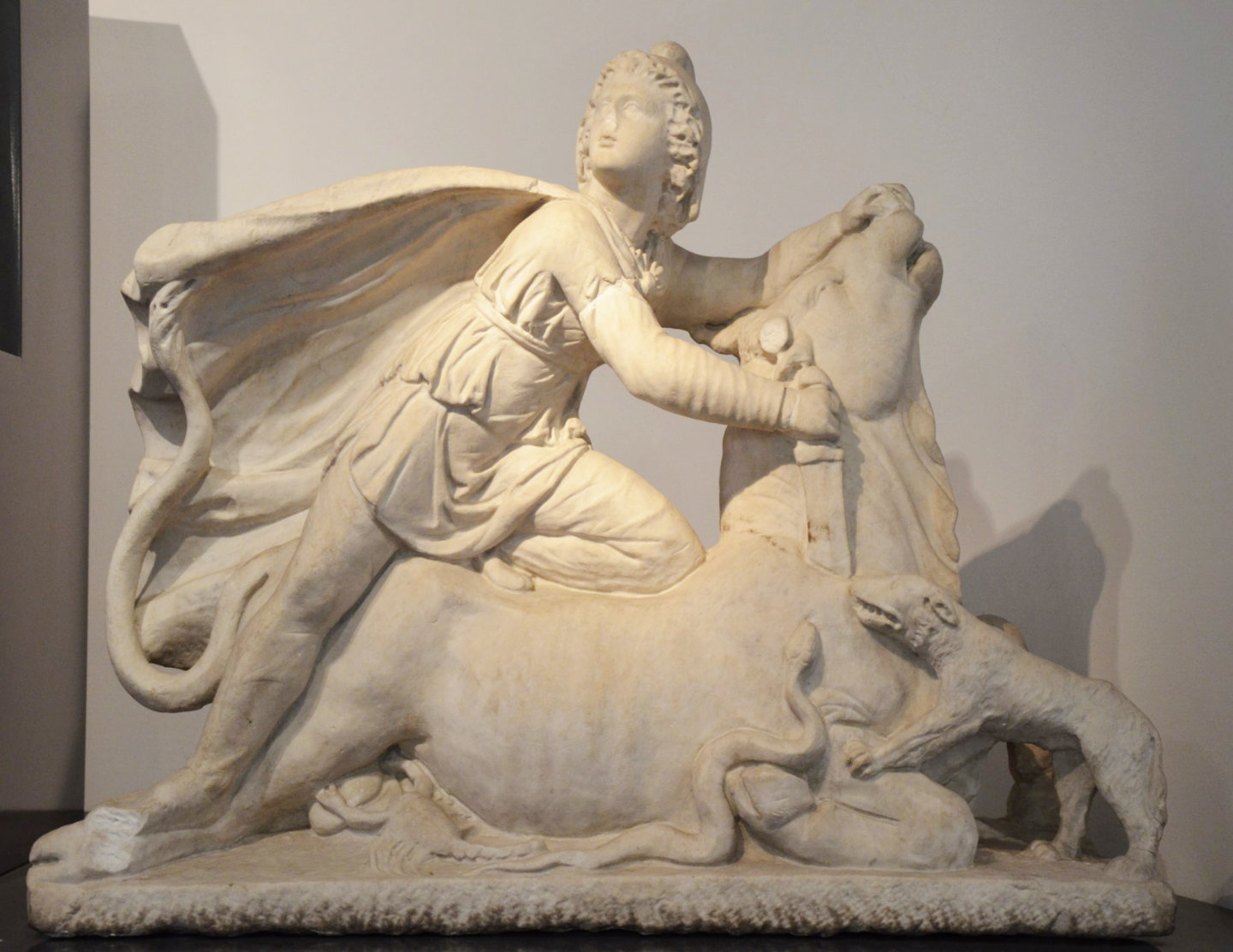
This statue of Mithras as a bullkiller was bought at Rome where it might be found.
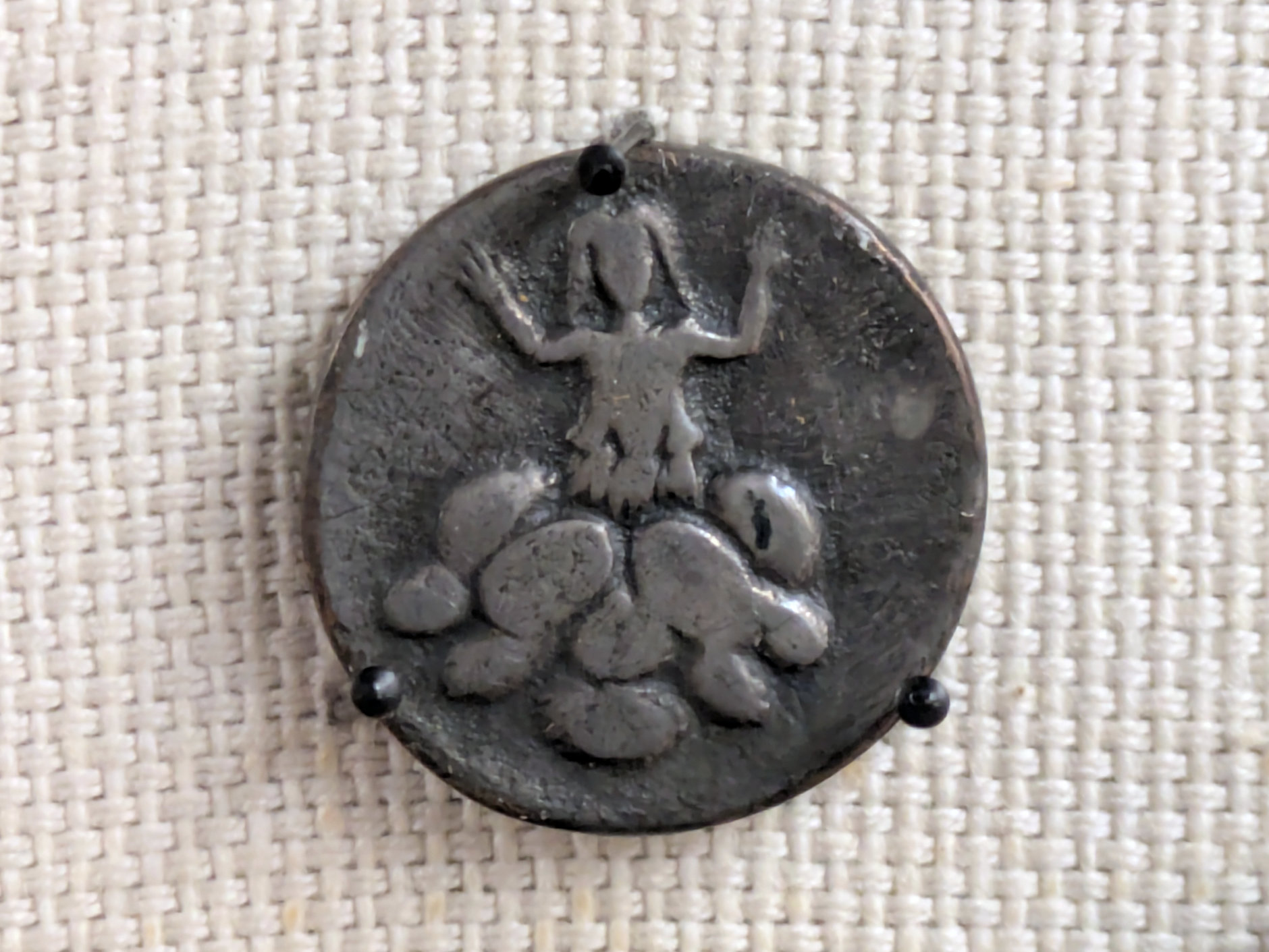
The mithraic denarius of St. Albans dates from the 2nd century.
Petrianae was a Roman fort on Hadrian’s Wall, generally associated with Stanwix near Carlisle.

Two marble busts of youthful figures with Phrygian caps, probably representing the torchbearers Cautes and Cautopates, from the Villa Borghese collection, found at Formiae.
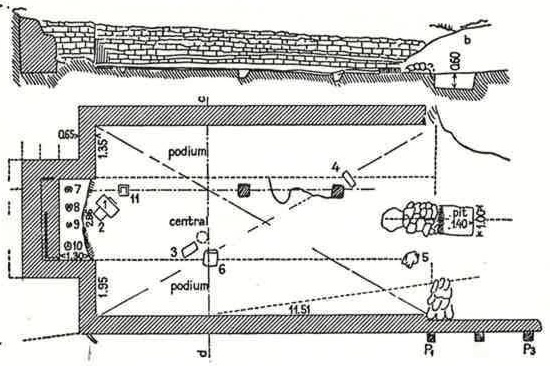
Second Mithraic sanctuary discovered at Stockstadt between 1909 and 1913, situated on a slope near the river Main, with finds at Aschaffenburg
Group of Mithraic finds distributed across different localities named San Zeno along the Verona–Brenner route.
Limestone altar from Apulum, Dacia, decorated on one side with Medusa, on another with a vase, flowers, a bull's head, and a serpent; the front bears an inscription.
Limestone altar from Mureș Port near Apulum, Dacia, dedicated to Invicto Mithrae; the dedicant is identified only as Augustalis (coloniae?).
Elongated cult building near the Saalburg fort traditionally interpreted as a Mithraeum but later reconsidered as a possible funerary enclosure.
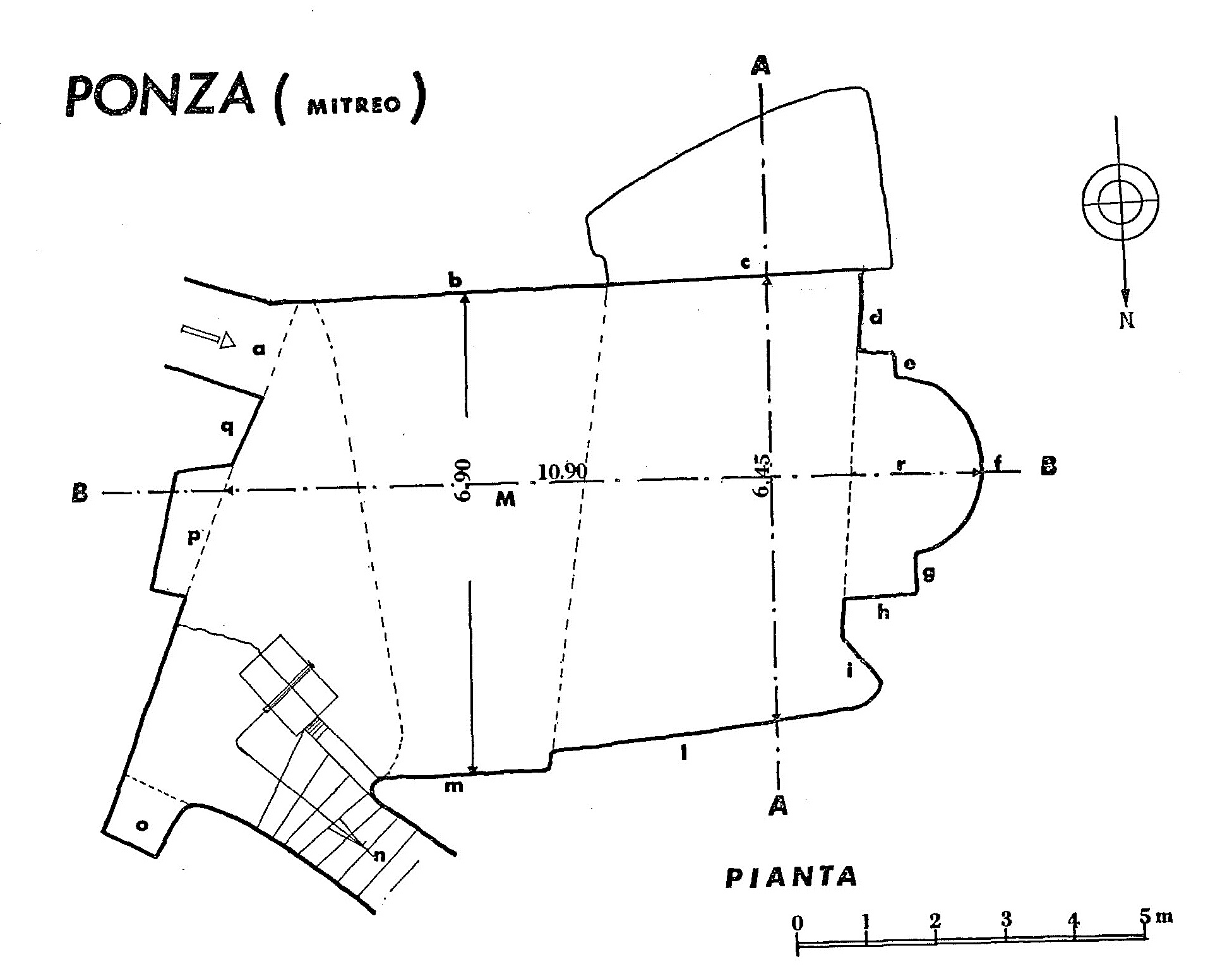
This Mithraic shrine on the island of Ponza is renowned for its exceptional stucco zodiac and astral symbolism linked to Roman Mithaism.
This fragment of pottery depicting Mithras may have come from Gallia.
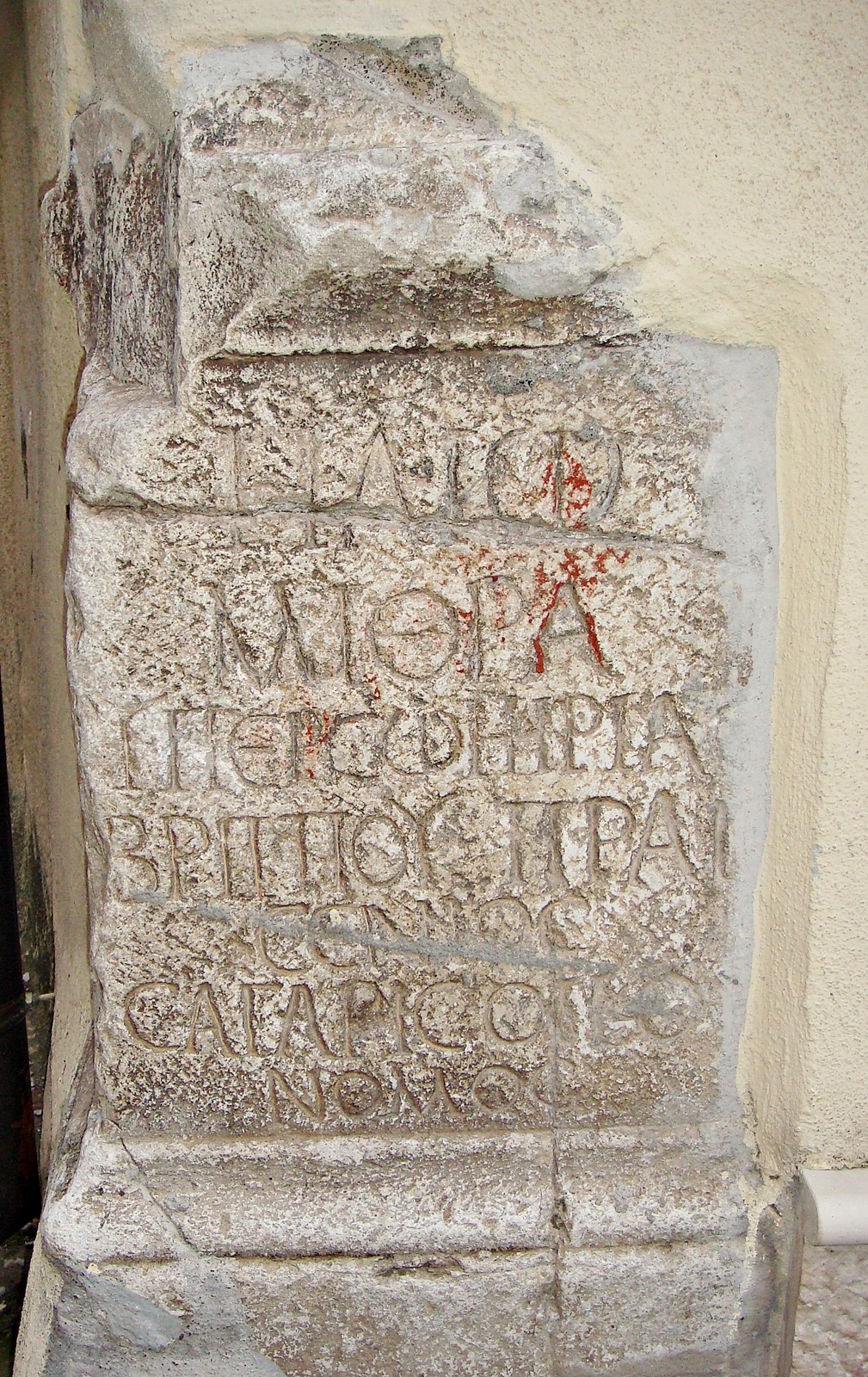
This altar dedicated to Helios Mithras by a certain Sagaris was repurposed in the masonry of Palazzo Bagnoli, Venosa, Italy.
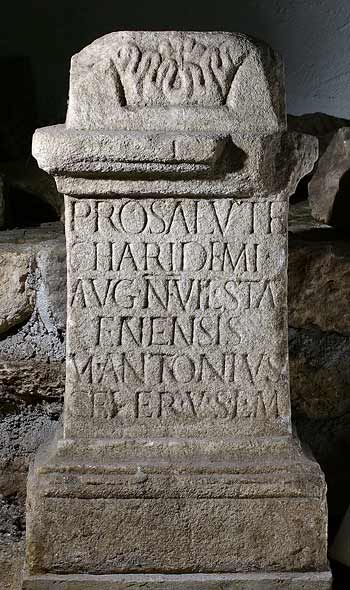
Marble votive altar with inscription to Mithras, featuring coiled, fan-like motifs above the text and associated with the statio Enensis.
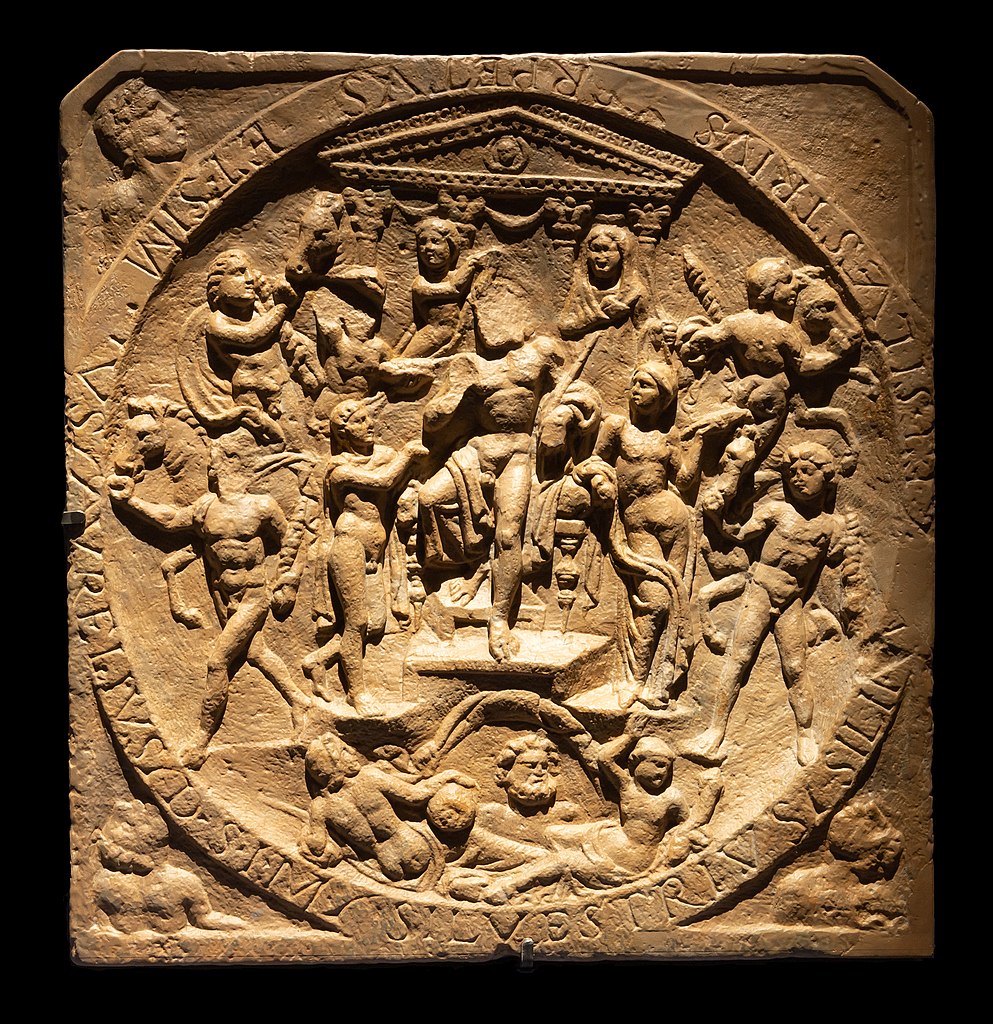
The relief of Dieburg shows Mithras riding a horse as main figure, surrounded by several scenes of the myth.
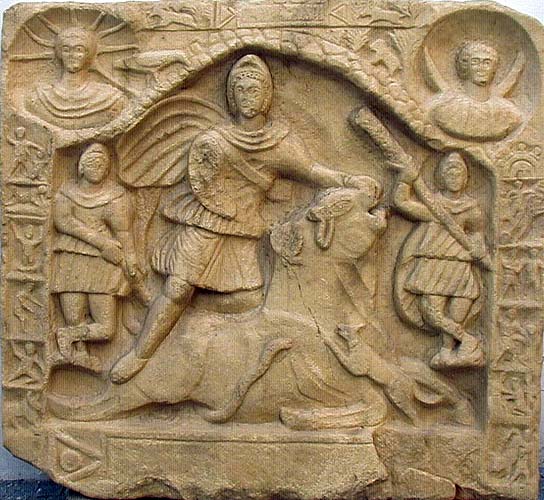
The relief of Mithras slaying the bull at Mauls in Gallia cisalpina is a paradigmatic example of the so-called Rhine-type Tauroctony.
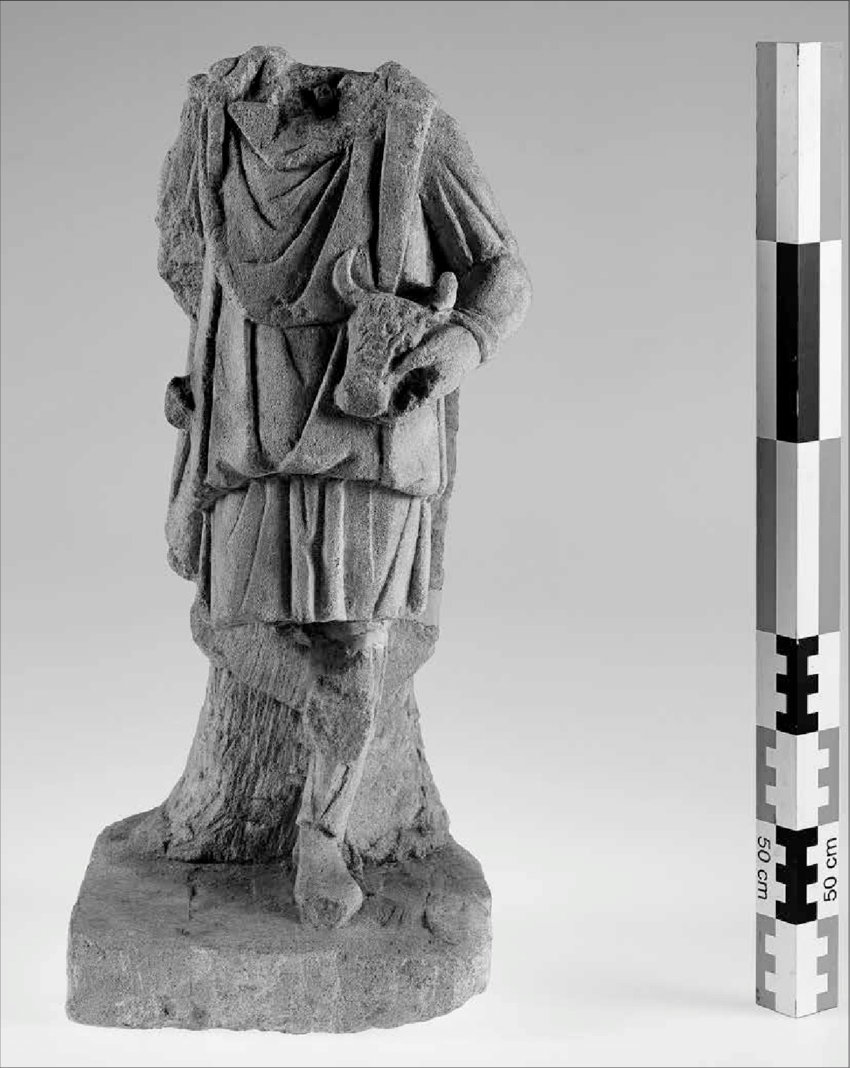
Statue of Cautes from Bodobrica, discovered around 1940, depicting the torchbearer standing before a tree or rock and associated with a bucranium.
This collective volume explores the ways ancient peoples interacted with divine powers through prayer, magic, and the interpretation of the stars. Drawing on evidence from Mesopotamia to Late Antiquity, it situates these practices within broader religious and cosmological systems…

Keiner der zahlreichen heidnischen Kulte und keine antike Religion hat das Christentum in einer Weise herausgefordert und geprägt, wie der römische Mysterienkult des Sonnen- und Erlösergottes Mithras.

Der römische Gott Mithras aus der Perspektive der vergleichenden Religionsgeschichte.
