Your search Cemetery of the church of St. Michael gave 3410 results.
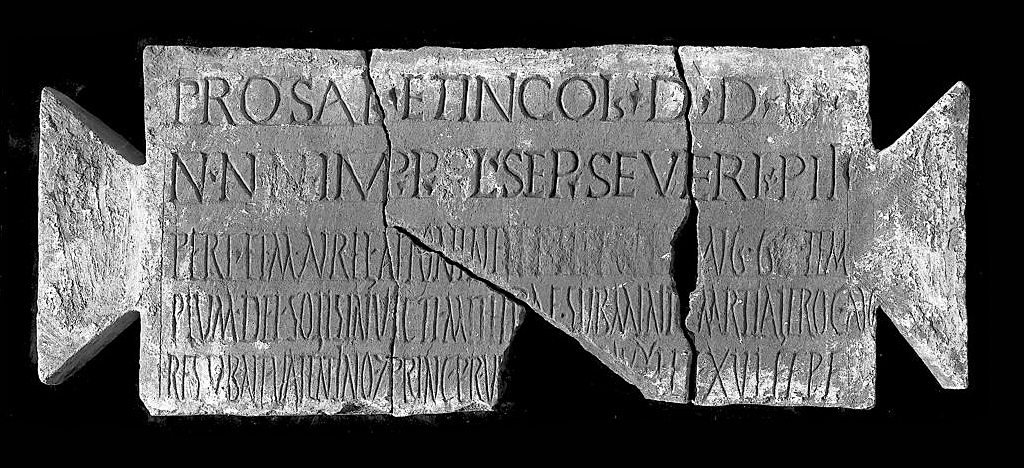
Antonius Valentinus, centurio, made this plaque for the salut des empereurs Septimus Severus and Marcus Aurelius.

This altar, now lost, mentions that the Pater Patrum passed on the attributes of the sacred Corax to his son.
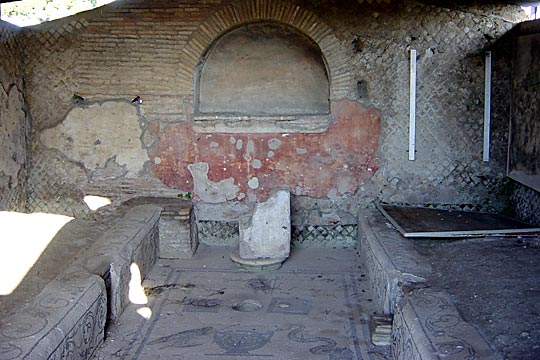
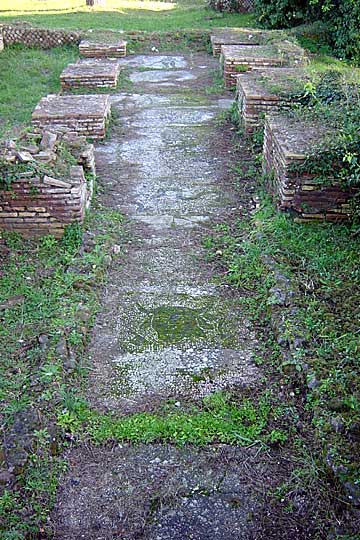
The name of the Mithraeum of the Seven Gates refers to the doors depicted in the mosaic that decorates the floor, symbolising the seven planets through which the souls of the initiates have to pass.
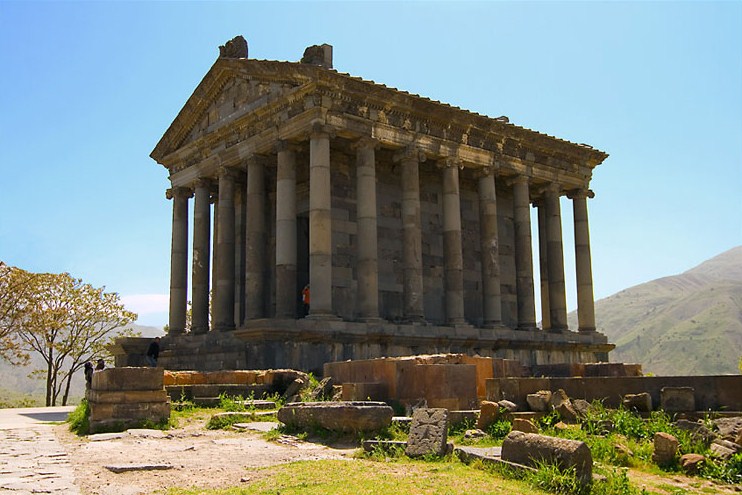
After Christianity was adopted, most pagan monuments were destroyed or abandoned. Garni, however, was preserved at the request of the sister of King Tiridates II and used as a summer residence for Armenian royalty.
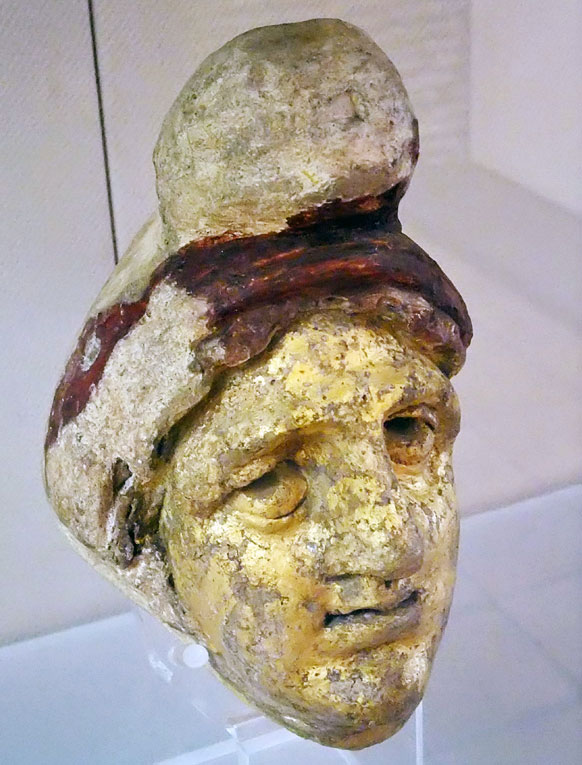
The head was part of a stucco relief of the Tauroctony found under the church of Santo Stefano Rotondo in Rome
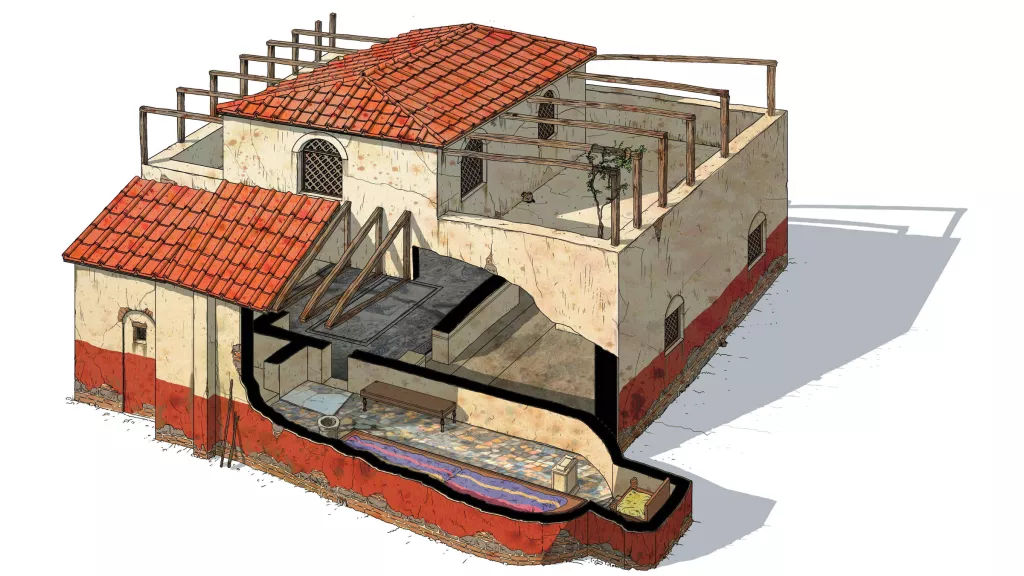
The Mitreo dei Marmi Colorati takes its name after the discovery of a black-and-white mosaic of Pan fighting with Eros.
The Mithraeum of the Animals was decorated with a mosaic depicting a naked man, a cock, a raven, an scorpion, a snake and the head of the bull.
This sandstone altar from the Mithraeum of Vindobala (modern Rudchester) preserves a dedication to the Invincible Mithras by P. Aelius Titullus, prefect of a cohort.
The inscription on the decorated altar No. 839 from the Mithraeum at Vindobala (modern Rudchester), recording a gift to the Deity by L. Sentius Castus, a soldier of the Sixth Legion.
A decorated altar from the Mithraeum at Vindobala (modern Rudchester), with the letters DEO crowned with vittae on the shaft, surrounded by palm-branches, a representation of Mithras' rock-birth on the capital, and on the front of the die a naked figure grasping a bull's horns…
A marble statuette found at Augusta Emerita (modern Mérida) in 1902, representing a seated deity whose head, arms and feet are lost, tentatively identified as Jupiter-Serapis.

Stein am Rhein occupied a strategic position near the western limits of the Danubian frontier system.
Rohr im Kremstal belongs to the Alpine hinterland associated with Roman Noricum.
Kadine-Most lies within the central Balkan region historically connected with Roman Moesia.
Histria was one of the earliest Greek colonies established on the western shores of the Black Sea.
Eisenstadt belongs to the western Pannonian region historically connected with the Roman frontier zone.
Jiu valley site associated with the defensive system linking Dacia to the southern Danubian regions.
The locality of Botoșești-Paia has yielded material connected with the Danubian provincial landscape.
