Your search Deva gave 11 results.

Deva was a major Roman legionary fortress in northern Britannia, today Chester.

A marble relief found in 1851 built into the adjoining hall of White Friars at Chester (ancient Deva), now in the Grosvenor Museum, depicting a standing dressed figure with a sheep-hook in his left hand and possibly a downward-pointing torch in his right…
A stone relief from Chester (ancient Deva), now in the Grosvenor Museum, depicting a cross-legged torchbearer in Eastern attire pointing his torch downwards with his right hand.
A small stone statue found at Chester (ancient Deva) in 1853 built into a cellar wall in White Friars, still seen by Stukeley in 1725 but now lost, depicting a standing torchbearer in Eastern attire and cross-legged, holding a torch downwards with both hands…
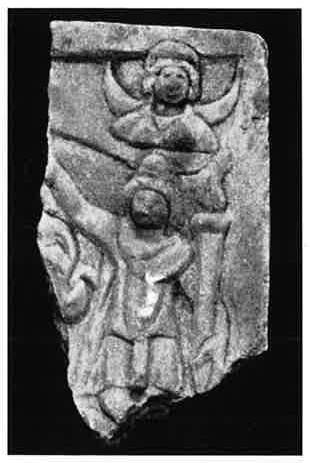
White marble tauroctony fragment from Turda, Dacia, preserved in the Deva Museum, showing only the forepart of Mithras killing the bull with the god's snout.
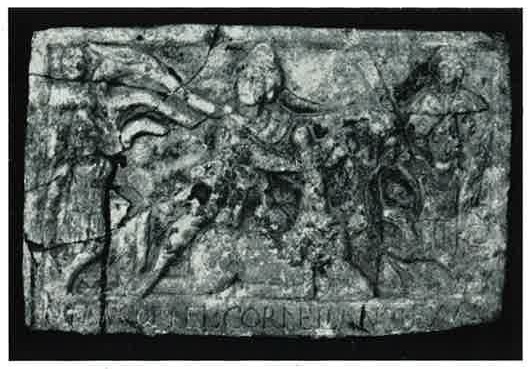
Marble tauroctony relief from Sarmizegetusa, Dacia, in the Deva Museum, depicting Mithras killing the bull; one of several reliefs attributed to the Sarmizegetusa sanctuary that were found elsewhere.

This relief of Mithras slaying the bull incorporates the scene of the god carrying the bull and its birth from a rock.
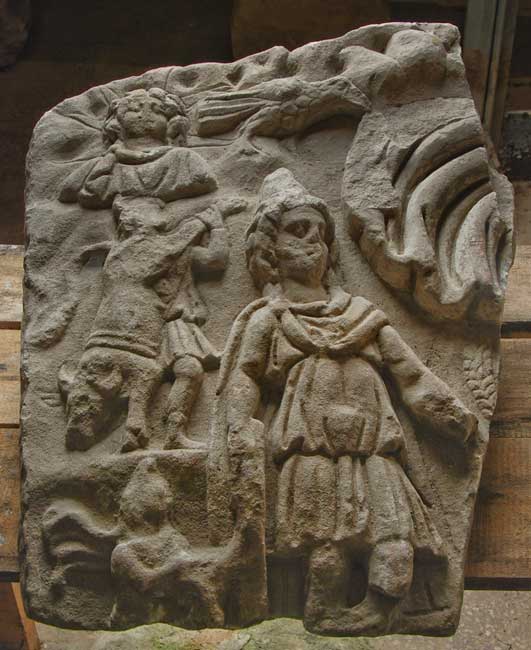
This marble fragment from Roman Dacia preserves part of a tauroctony with Sol, the raven, and Mithras dragging the bull.
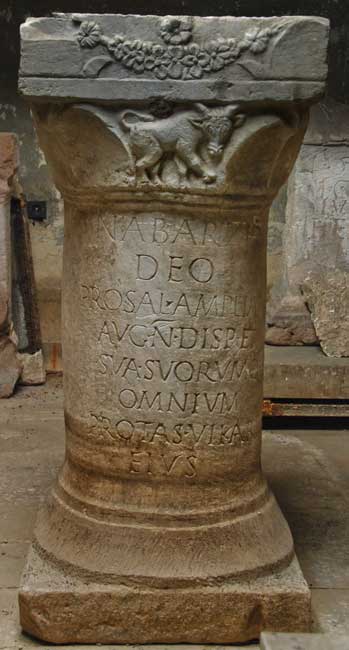
This column found in the Mithraeum of Sarmizegetusa bears an inscription to Nabarze instead of Mithras.
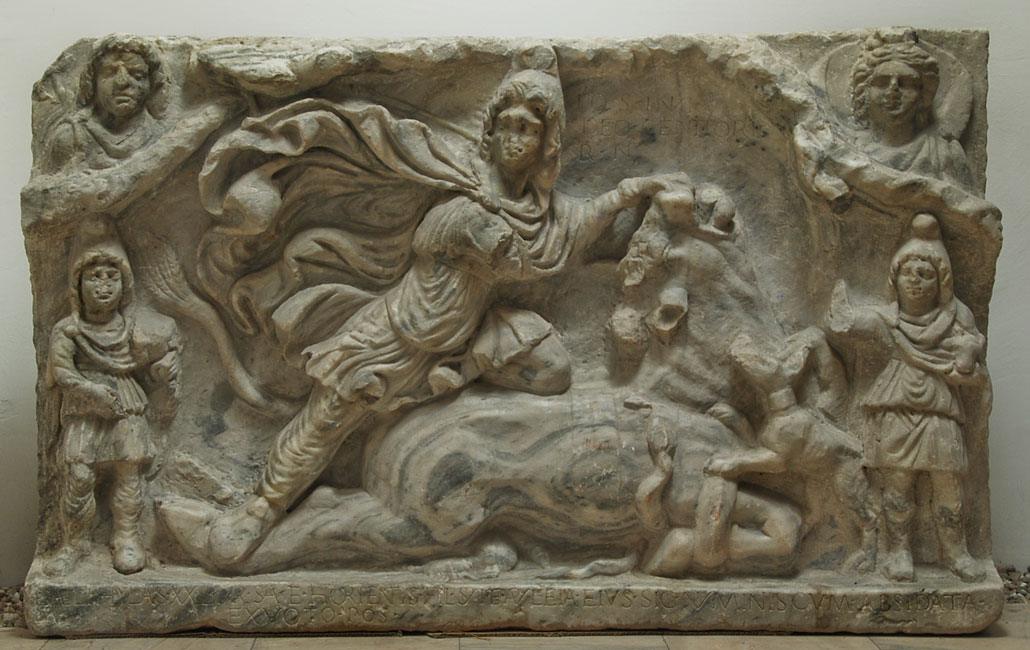
This monument bears an inscription by a certain Lucius Aelius Hylas, in which he associates Sol Invictus with Jupiter.
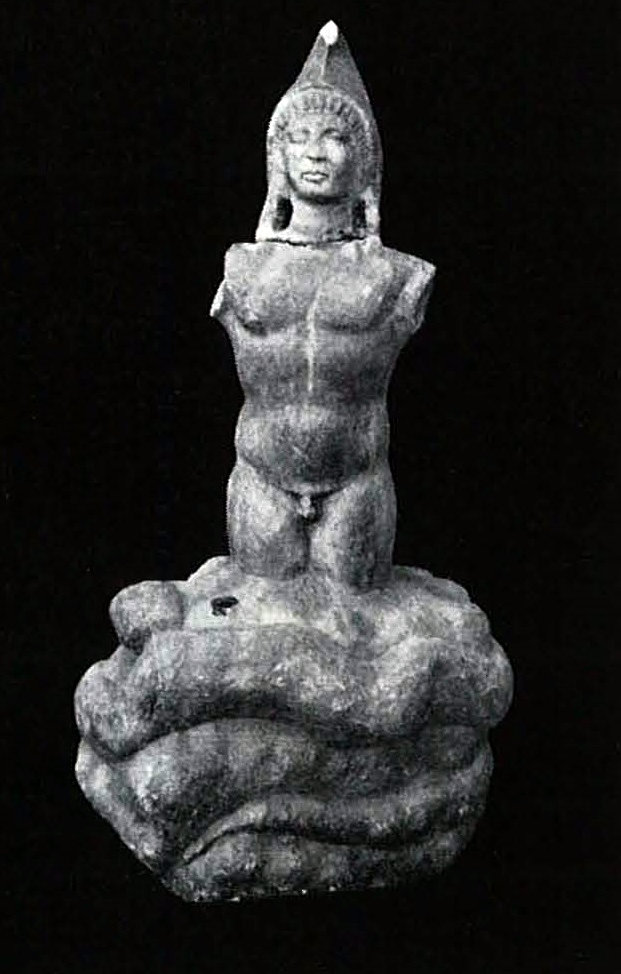
The rock of Mithra's birth in the Petrogenia of Sarmizegetusa is surrounded by a snake.
