Your search Mark Alwin Hoffman gave 170 results.
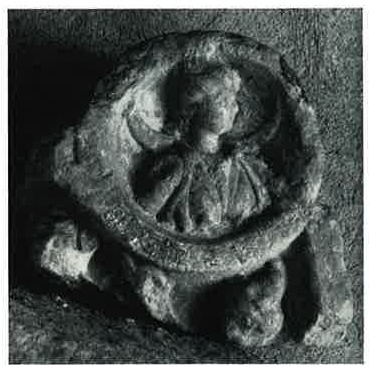
White marble relief fragment from near Klein-Wagna, ancient Flavia Solva in Noricum, preserving part of a tauroctony scene including the bull, Mithras's dagger, and the torchbearers.

Limestone relief fragment showing Cautopates beside traces of a tauroctony scene.
Gold coin of the Scythian king Hooerkes, reverse showing Mithras (MIIPO) in tunic with lance and sword, north-west India, c. 87–129 A.D.
Yellow sandstone altar from Mithraeum I at Stockstadt dedicated to Iovi optimo maximo et Iunoni reginae, with inscription largely obliterated
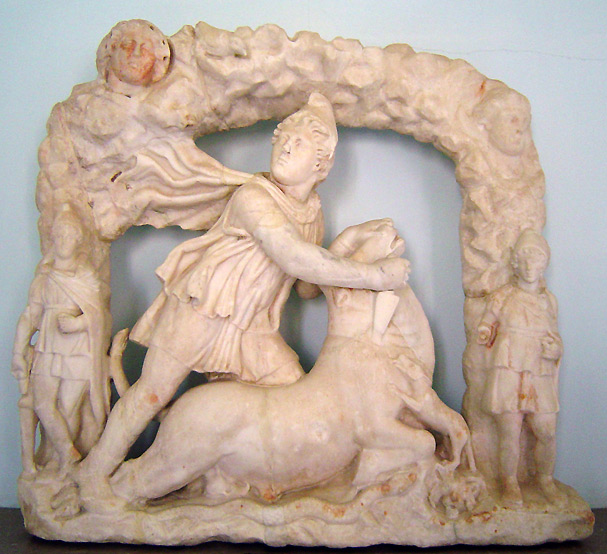
The assumed find-place of the Mithras Tauroctonus of Palermo is uncertain.
Group of Mithraic and other cult remains possibly originating from several neighbouring sanctuaries destroyed or abandoned in Late Antiquity.
Two sandstone fragments from Mithraeum III at Carnuntum, Pannonia Superior, comprising a base with one leg and a downward torch, and a Phrygian-capped head of Cautopates; probably stood at the beginning of the benches alongside the Cautes statue.
Sandstone altar from the centre of the sanctuary dedicated to the goddesses Quadrubiae near a crossroads shrine.
Imported limestone relief fragments showing the Mithraic torchbearers beside the podia of the sanctuary.
Subterranean sanctuary at ancient Atchana tentatively interpreted by Woolley as an early precursor to later Mithraic temples.
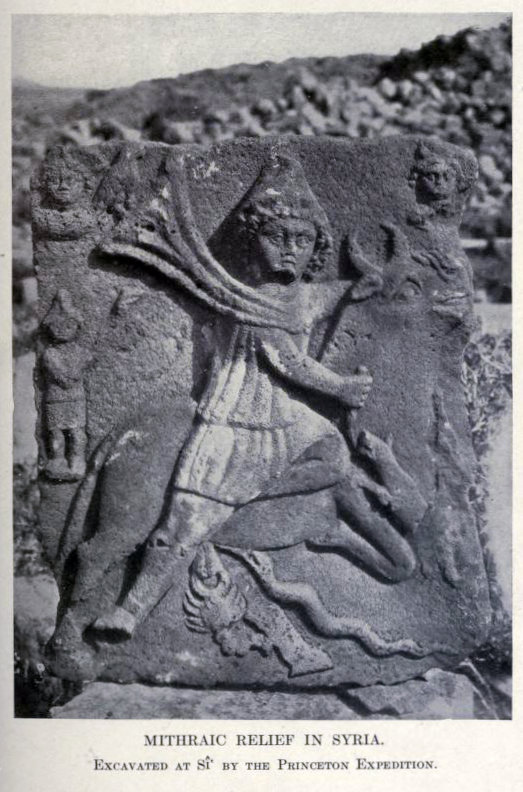
In the tauroctony of Jabal al-Druze in Syria, the snake appears to be licking the head of the bull's penis.
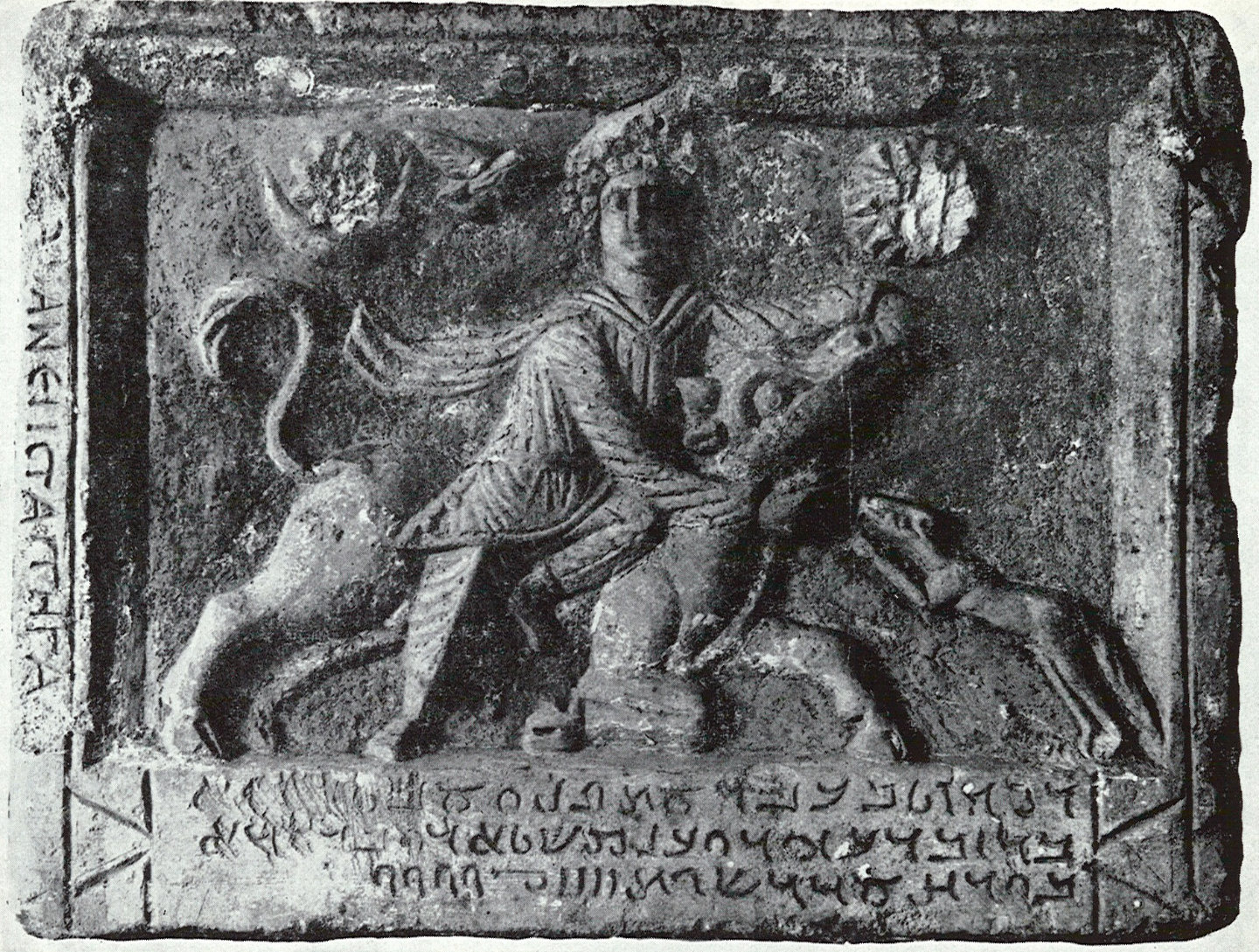
One of the reliefs of the Dura Europos tauroctonies includes several characters with their respective names.

In this relief of Mithras as bull slayer, recorded in 1562 in the collection of A. Magarozzi, Cautes and Cautopates have been replaced by trees still bearing the torches.
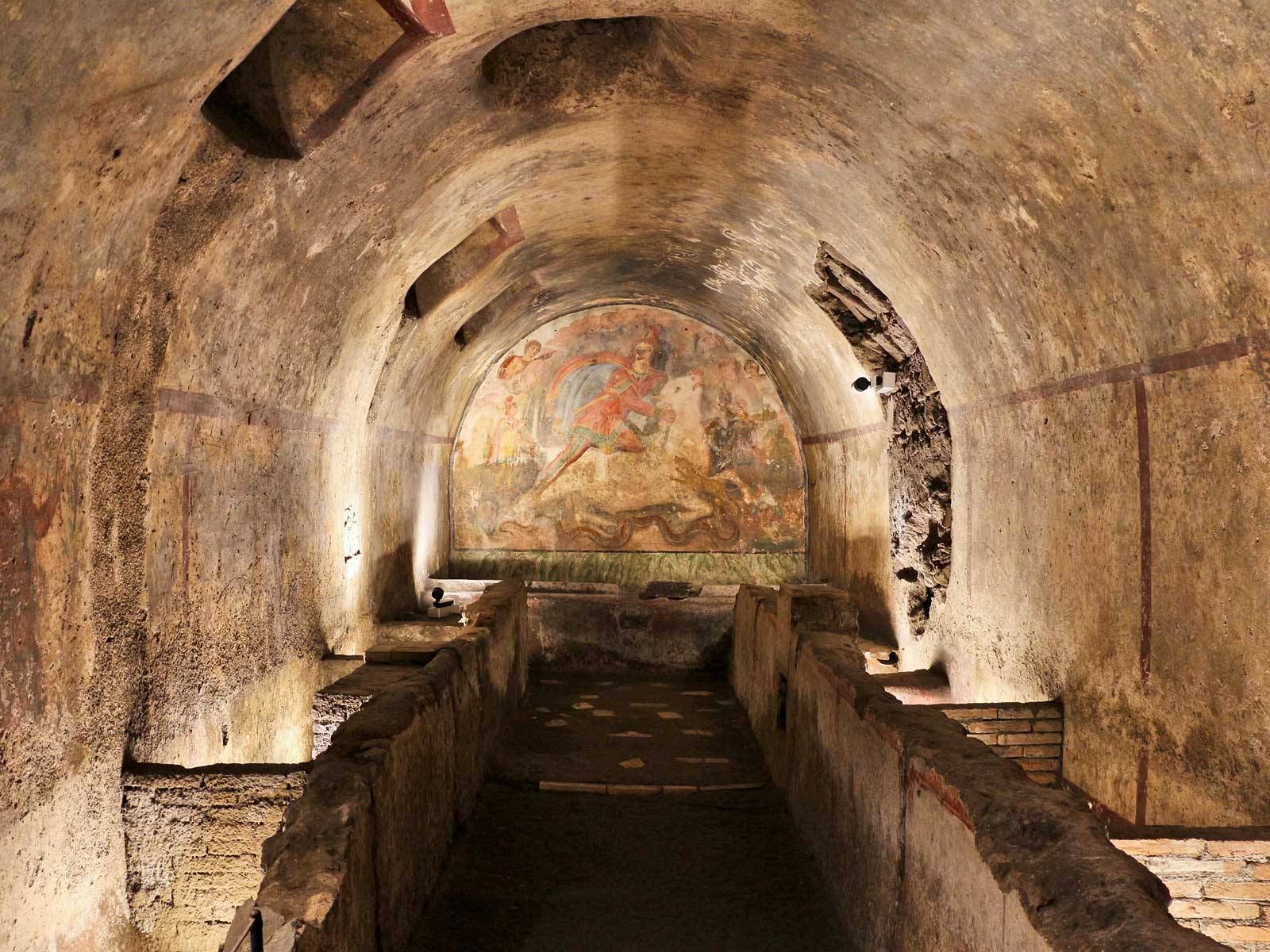
One of Roman Italy’s most important Mithraic sanctuaries, the Mithraeum at S. Maria Capua Vetere preserves a remarkable painted cycle of initiation scenes, offering rare visual evidence for the ritual life of Roman Mithaism.

The Pontiae islands, including modern Ponza, formed part of the Roman maritime landscape of Latium and preserve one of the most remarkable Mithraic sanctuaries of Roman Italy, renowned for its rare stucco zodiac and astral symbolism.
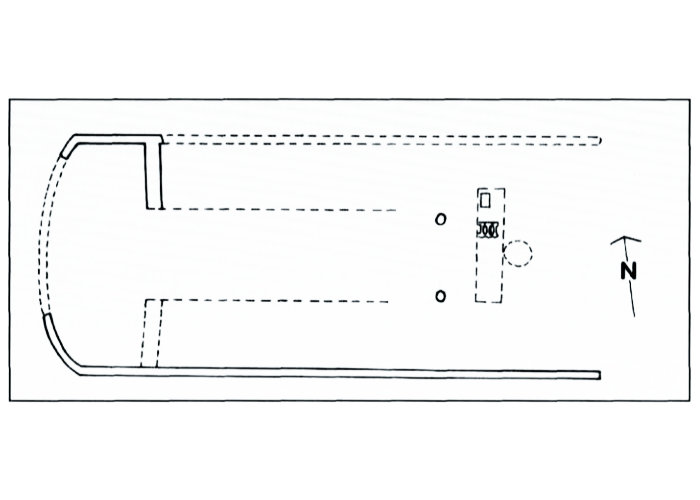
One of the largest known Mithraea in Pannonia, the sanctuary of Sárkeszi stood near the Roman road linking Herculia and Aquincum.
Stockstadt am Main is a market municipality in the Aschaffenburg district in the Regierungsbezirk of Lower Franconia in Bavaria, Germany.
Founded on the site of ancient Byzantium and refounded in 330 CE, Constantinopolis became an imperial residence in the eastern Roman Empire. In the 4th century, it was a key setting for interaction between traditional cults and Christian authority.
Illmitz is a market town in the district of Neusiedl am See in Burgenland in Austria.
Under Roman rule from the 1st century CE, Histria was incorporated into the province of Moesia. The city is noted on the Tabula Peutingeriana, which places it 11 miles from Tomis and 9 miles from Ad Stoma.
