Your search Mit Rahina gave 2643 results.

Gold coin from Bactria depicting ΜΙΙΡΟ (Mithras) with radiate crown and military attributes.
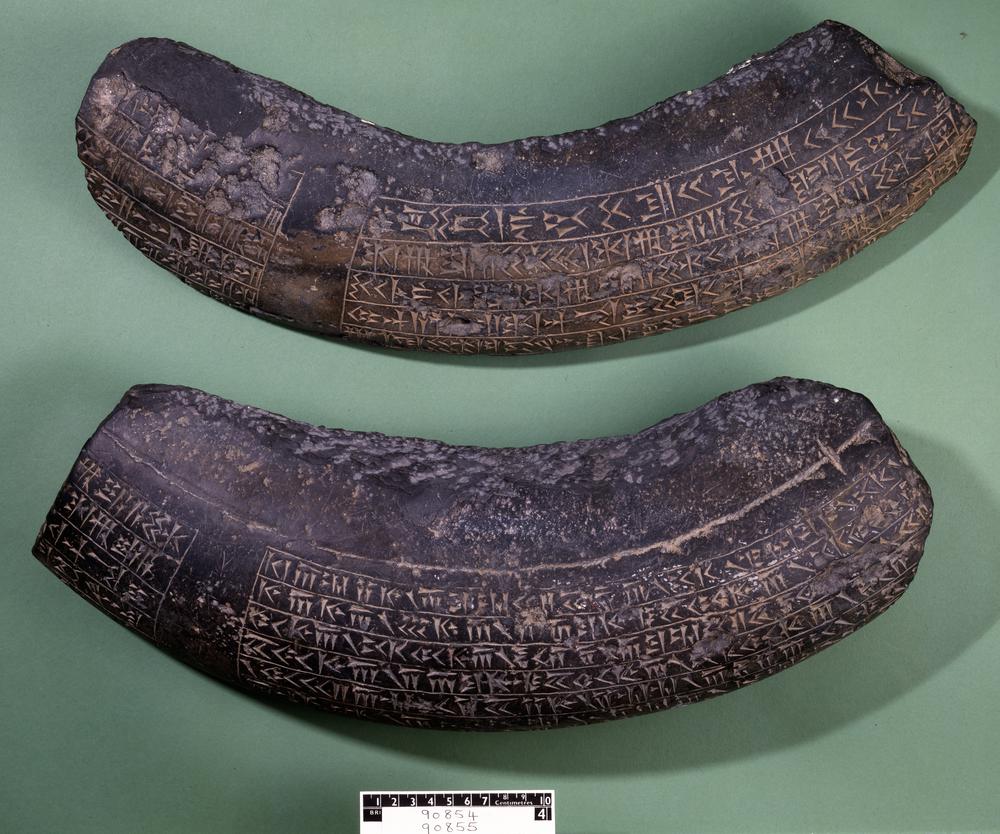
The base of the column bears an inscription that records the rebuilding of a palace at Ectabana ’by the favour of Ahuramaza, Anahita and Mithra’.

This votive silver plaque depicting Mithras was found at the site of Pessinus, Ballıhisar, in Turkey.
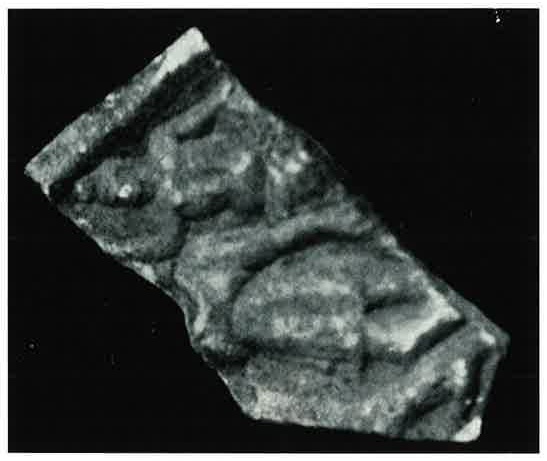
Tauroctony relief fragment with torchbearer and scene of Mithras’ rockbirth from Romula, Romania.

Administrator, probably a slave of Pater Alfius Severus, who dedicated the main altar of the Mitreo di Marino.

In this relief of Mithras as bull slayer, recorded in 1562 in the collection of A. Magarozzi, Cautes and Cautopates have been replaced by trees still bearing the torches.
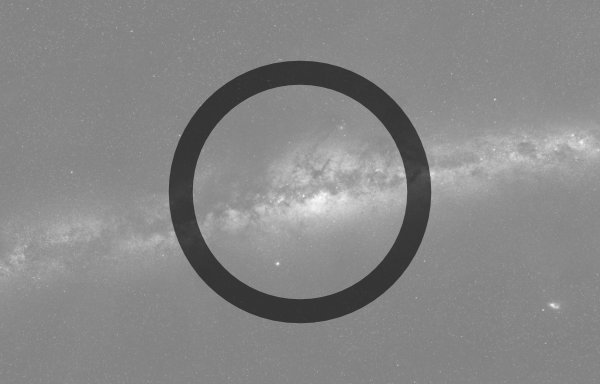
The Pontiae islands, including modern Ponza, formed part of the Roman maritime landscape of Latium and preserve one of the most remarkable Mithraic sanctuaries of Roman Italy, renowned for its rare stucco zodiac and astral symbolism.

Emperor Caracalla ordered one of Rome’s largest temples to the god Mithras to be built in the baths bearing his name.
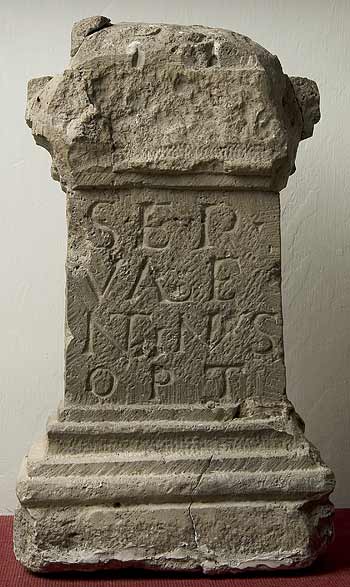
Limestone altar dedicated to Cautes by the Roman optio Septimius Valentinus, discovered in the Mithraeum of Sárkeszi in Pannonia Inferior.
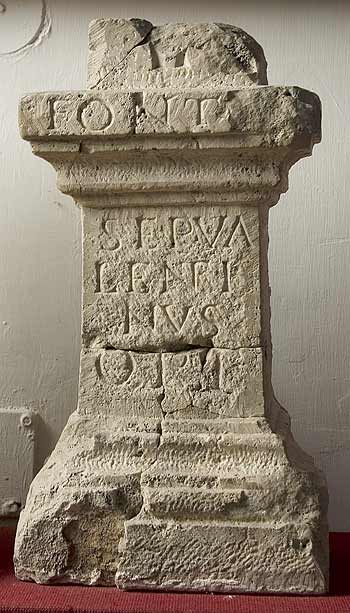
Fragmentary limestone altar dedicated by Septimius Valentinus, an optio, probably discovered in Mithraeum IV at Aquincum.
Arabia connected the Roman Near East to caravan routes, desert frontiers and the commercial networks of the southern Levant.
Septeuil has been known in Mithriacism since 1984, when a sanctuary dedicated to Mithras was discovered in the 4th century. It was located in a spring sanctuary (nymphaeum) of the 1st century.
Dijon is the prefecture of the Côte-d'Or department and of the Bourgogne-Franche-Comté region in eastern France. The earliest archaeological finds within the city limits of Dijon date to the Neolithic period.
Puteoli, the great commercial harbour of Roman Italy, preserves evidence of the cosmopolitan maritime environments through which Mithraic cults circulated across the Mediterranean world.
Little is known about Jajce in Roman times, apart from the accidental discovery of a 4th-century mithraeum in 1931.
Mount Nemrut or Nemrud is a 2,134-metre-high mountain in southeastern Turkey, notable for the summit where a number of large statues are erected around what is assumed to be a royal tomb from the 1st century BC.
Sarrebourg is a commune of northeastern France. In 1895 a Mithraeum was discovered at Sarrebourg at the mouth of the pass leading from the Vosges Mountains.
Juliomagus, modern Angers, preserves evidence of Mithraic activity within the urban and administrative landscape of Roman northwestern Gaul.
Tripolitania connected the southern Mediterranean coast to caravan routes and maritime exchange networks of Roman North Africa.
Within the southern sectors of Roman Dacia, Dacia Malvensis preserves evidence linked to military mobility and provincial urbanisation.
