Your search Mit Rahina gave 2641 results.

Stone altar fragment from Danilo Gornje near Šibenik, Dalmatia, bearing a dedication to Deo invicto by Comitius.
Upper part of an epistylium or building fragment from near the church of S. Marco at Prozor, Dalmatia, bearing the dedication to Deo invicto Mithrae.
Natural rock enclosure at a quarter-hour's walk from Veliki Vitalj near Prozor, Dalmatia, used as a Mithraic sanctuary, with a tauroctony carved directly into the rock.
Mithraic sanctuary found at Sárkeszi near Székesfehérvár, Pannonia Inferior, in a place called Ságvölgyi; yielding altars, tauroctony reliefs, and cult objects.
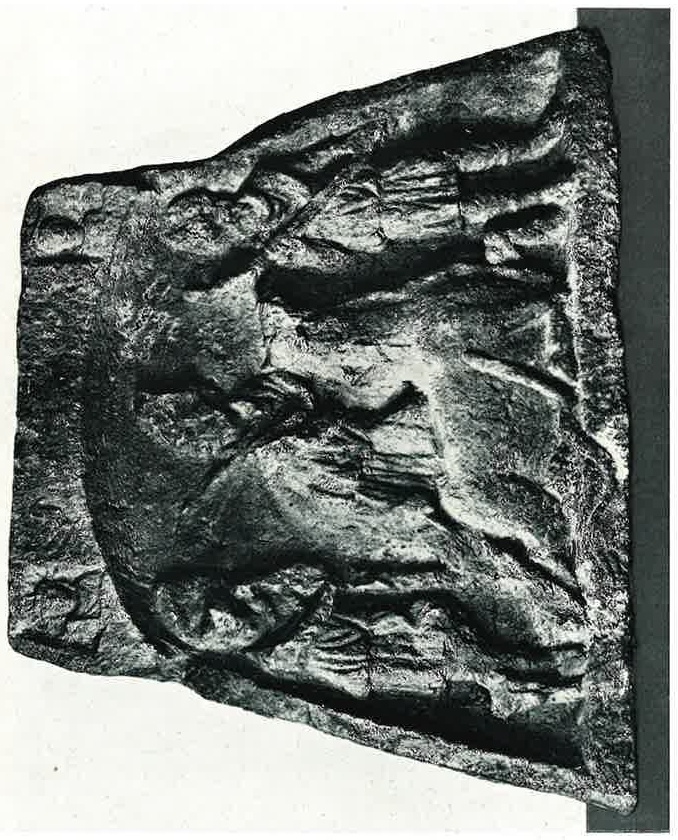
Mithraic sanctuary found in the district of Campona near Nagytétény, Pannonia Inferior, in 1934, yielding three inscribed altars, statue fragments, and other cult objects.

First Mithraic sanctuary in the potter's quarter of Aquincum, Pannonia Inferior; destroyed during the Marcoman wars; the rectangular building is known only from the four altars found side by side.
Small Mithraic sanctuary (9.28 × 4.52 m) found at Modrič near Našice in Slavonia, Pannonia Superior, in 1911; the sanctuary has the standard corridor and bench division with a water-basin in the pronaos, and yielded a rich assemblage of marble reliefs…
Small Mithraic sanctuary found in the slope of a ravine called Zlodjer (Devil's Ditch) at Ober-Pohanica near Zdole, Noricum; the finds are among the finest marble Mithraic sculpture from the eastern Alpine provinces.
Small marble head in Phrygian cap of unknown provenance, associated with the Waggendorf find-group, Noricum; may represent Attis or Mithras.
Natural grotto called the Bichl on the south slope above the Glanegg lake near St. Urban, Noricum, adapted as a Mithraic sanctuary; part of the grotto floor was paved and remnants of water installations survive.
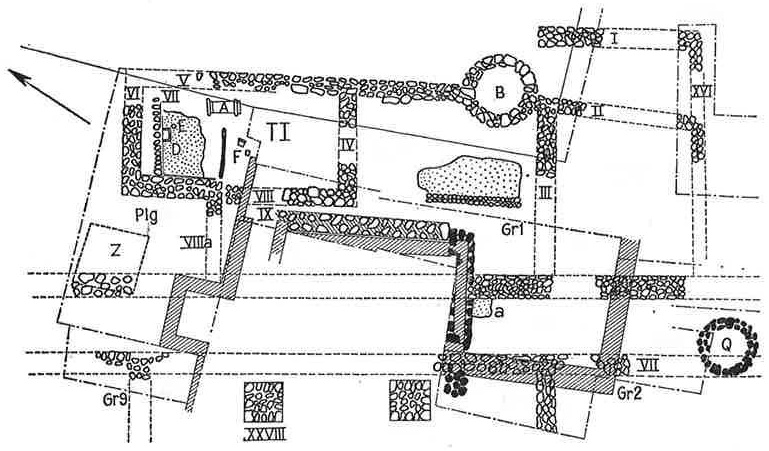
Mithraic sanctuary found in the Tummelplatz at Linz, ancient Lentia in Noricum, constructed within an existing building; the sanctuary yielded marble reliefs, an altar, cult pottery, and a silver votive object.
Small Phrygian-capped head of Mithras from the Mithraeum at Moosham, Noricum, probably belonging to the cult relief.
Small Mithraic sanctuary (8 × 8 m) excavated in 1950–52 on a slope west of Schloss Moosham, Noricum, on the left bank of the river Mur; the finds include a marble epistylium, a Mithras head, and fragmentary altars.
Underground oblong room at Nyon, ancient Colonia Iulia Equestris, situated on the edge of a second Forum dating to the second half of the first century AD, with a series of pillars along the side walls consistent with Mithraic architecture; its interpretation as a Mithraeum remains tentative…
Site excavated by C. F. L. Lohner in 1824–25 at the Renzenbühl near Thun-Allmendingen, Germania Superior, where the outline of five rooms was identified, one or more of which may have served as a Mithraic sanctuary.
Small fragmentary inscription from the Mithraeum at Dieburg preserving only the abbreviated dedication D(eo) i(nvicto) M(ithrae)
Red sandstone altar from the Mithraeum at Dieburg that had been reused, its original inscription obliterated and replaced with a dedication to Deo invicto Mithrae
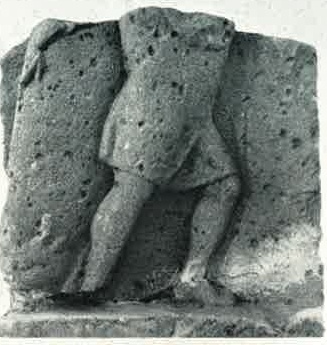
Red sandstone relief from the Mithraeum at Dieburg showing Mithras in Oriental dress carrying the bull on his shoulders
Red sandstone statue of Mithras naked being born from the rock, found in a pit near the entrance of the Mithraeum at Dieburg
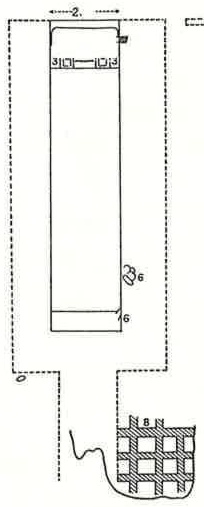
Mithraic sanctuary discovered behind the west part of a Roman cemetery near the camp at Gross-Krotzenburg in 1881, finds destroyed in World War II
