Your search Monte Compatri gave 58 results.

Labici or Labicum or Lavicum was an ancient city of Latium, in what is now central Italy, lying in the territory of the modern Monte Compatri, about 20 km SE from Rome, on the northern slopes of the Alban Hills.

A decorated inscription with egg-and-dart moulding found in the castle of La Fratta near Montefalco in Umbria, bearing a brief dedication to Sol Invictus.

The Mithraeum of Visentium, near Capodimonte in Viterbo, was carved grotto-style into a tuff cliff overlooking the waters of Lake Bolsena, just a few dozen metres away.
Fragment of a bull-killing relief showing Mithras, the torchbearer Cautes with upraised torch, and the bust of Luna, found at Labicum in the ruins of a Roman villa.
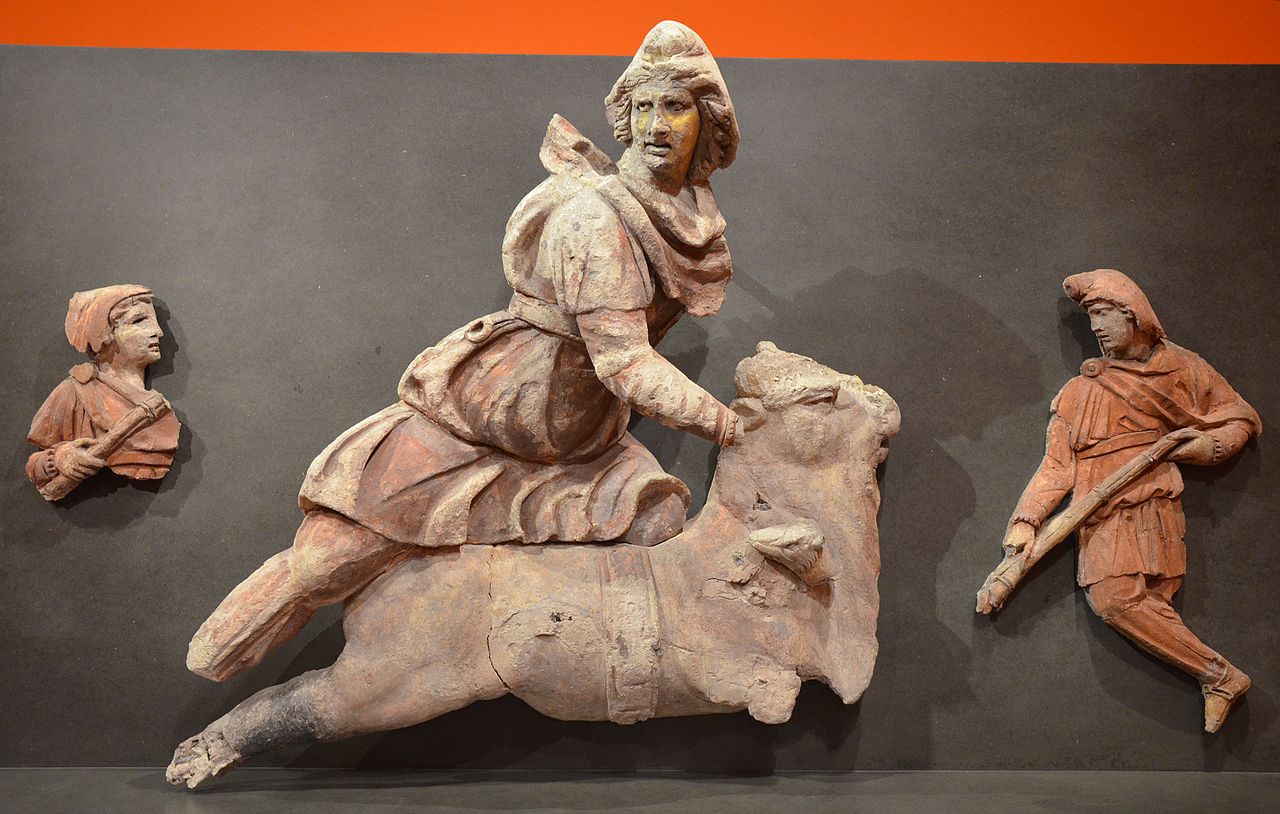
This relief was found under the Palazzo Montecitorio, in Rome, and bought by the Liebighaus at Frankfort.
Industria was a Roman settlement in northern Italy, today associated with Monteu da Po.
An altar found in 1830 at the ancient site of Industria near Monteu da Po in Liguria, bearing a dedication to the Invincible Mithras by C. Industrius Verus.

Small semi-round base found on the Monte Quirinale in Via Mazzarini, from a small Mithraeum, with a dedication to Mithras by T. Camurenus Philadelfus through Nonius Firmus pater.
Limestone altar found on the summit of Monte Vitalj near Prozor, Dalmatia, in 1900, dedicated to Soli invicto deo by Lucius Lucceius; the epithet rupe nato may be present in line one.
Marble base found in the church of S. Thomas on the Monte Caelio in Rome, with a brief dedication to Sol Invictus by L. Arrius Rufinus.
Small square marble altar found in the house of Volterra on the Monte Pincio in Rome, with a dedication to Sol Invictus in fulfilment of a vow by Q. Codius Philo.
Fragment of a large marble tablet with large letters of poor 5th-century workmanship, found on the Monte Quirinale near the Via Nazionale, bearing poetic Mithraic references to the mystes of Ceres and the Invincible Mithras.

Saul cutting the oxen to pieces poses as Mithras Tauroctonos in this painting, which adorns the mantelpiece of Henry II’s bedroom at the Château d’Écouen near Paris.
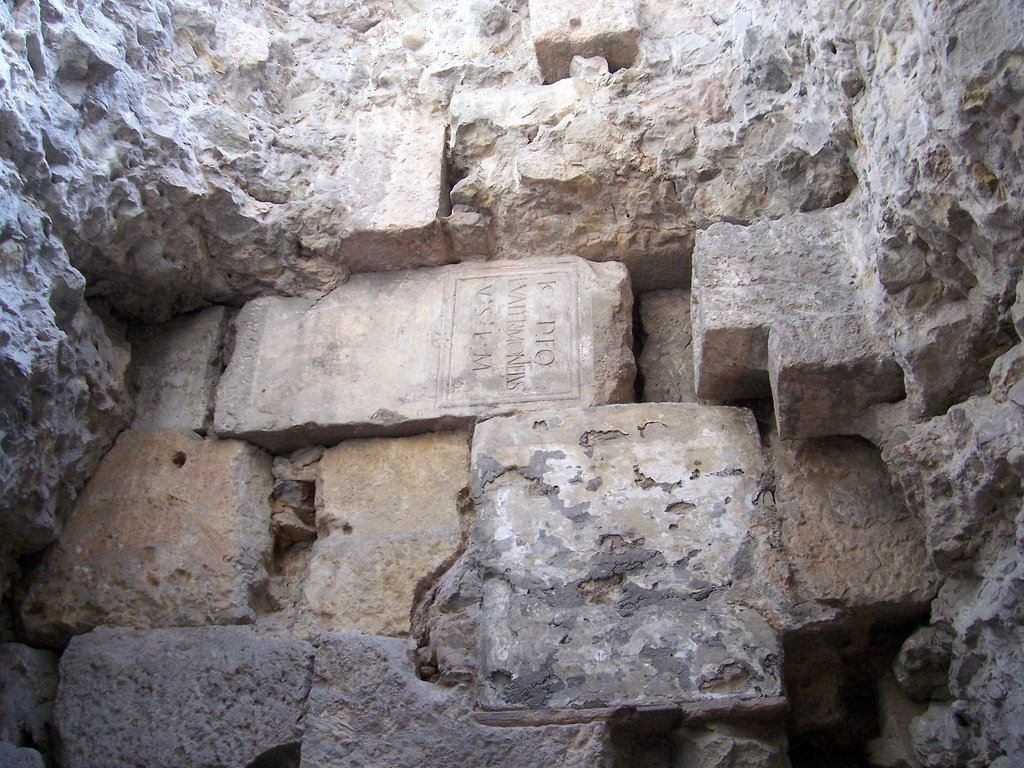
This altar was dedicated to Cautes by a certain Lucius in Baetulo (Badalona), near Barcino (Barcelona).
Corniculum was an ancient Latin settlement associated with the early historical landscape of Latium.
Marble relief showing Mithras slaying the bull inside a vaulted cave accompanied by Sol, Luna and the torchbearers.
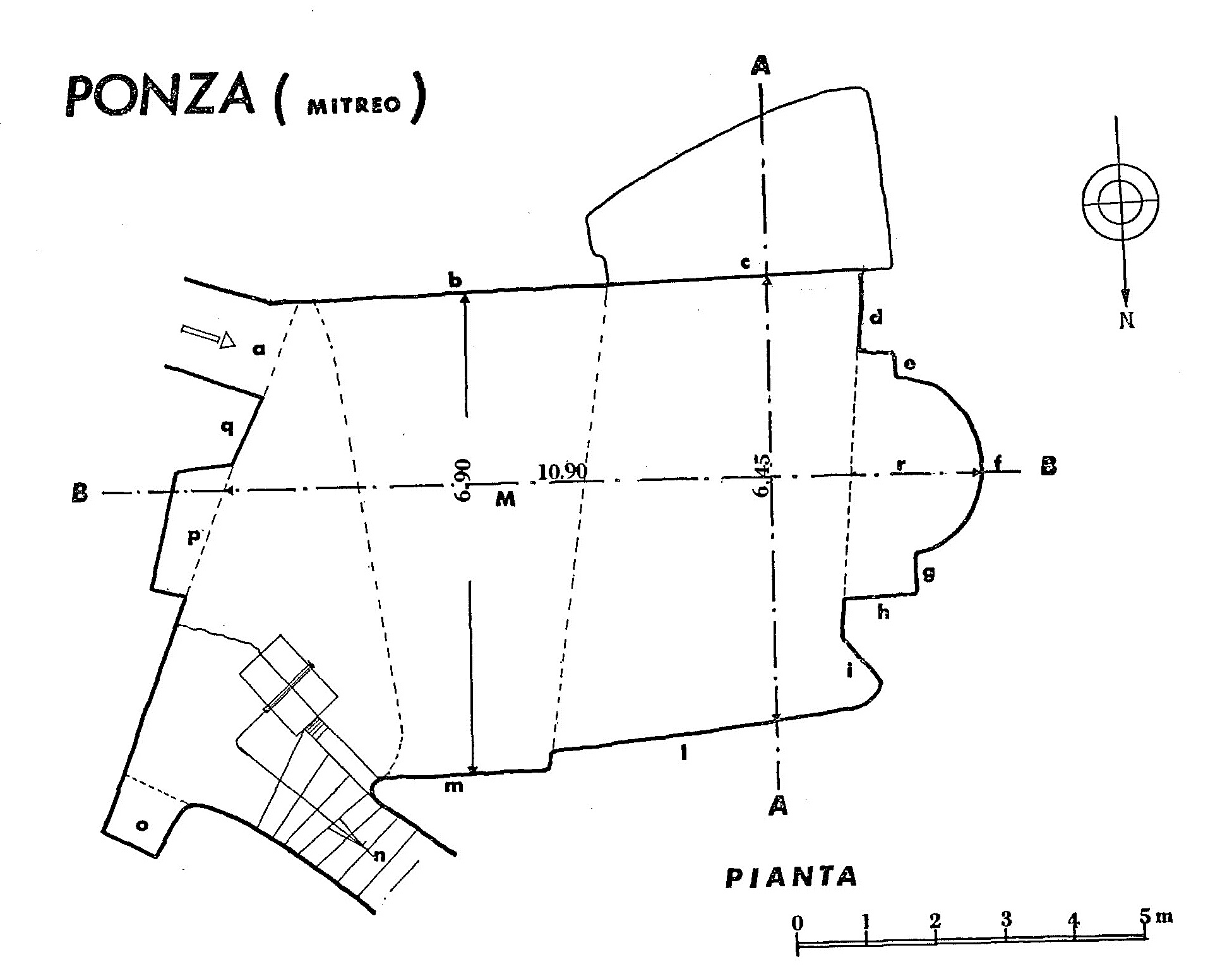
This Mithraic shrine on the island of Ponza is renowned for its exceptional stucco zodiac and astral symbolism linked to Roman Mithaism.
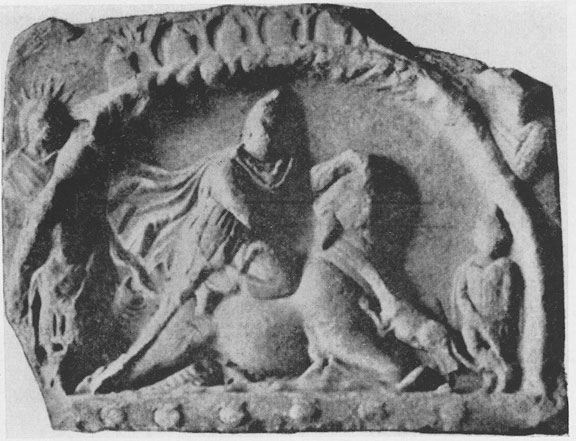
This finely carved marble tauroctony from Interamna features an unusual series of altars and ritual vases surrounding the scene.
