Your search Mount Caelius gave 46 results.
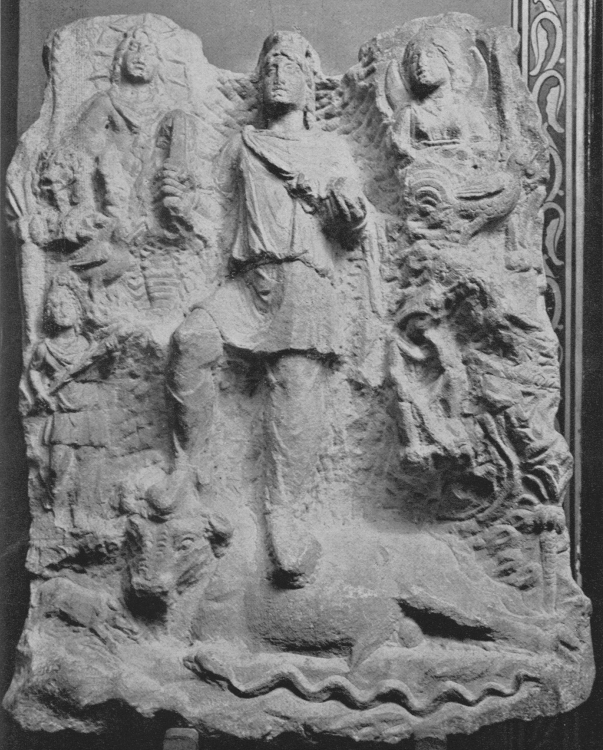
This unusual representation of Mithras standing on a bull was kept in the Casino di Villa Altieri sul Monte Esquilino until the 19th century.

Altar and a relief of a figure tearing a lion to pieces, found along the Otočac–Gospić road near the mountains Veliki and Mali Vitalj, Dalmatia; the tauroctony interpretation of the lion-tearing relief was subsequently disputed.
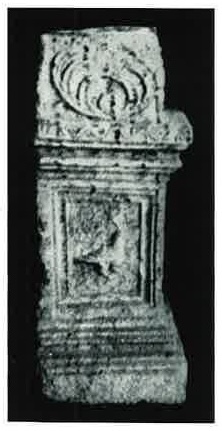
Inscription from Aquincum, Pannonia Inferior, dedicated to Deo invicto Mithrae by Caelius Anicetus with his son.
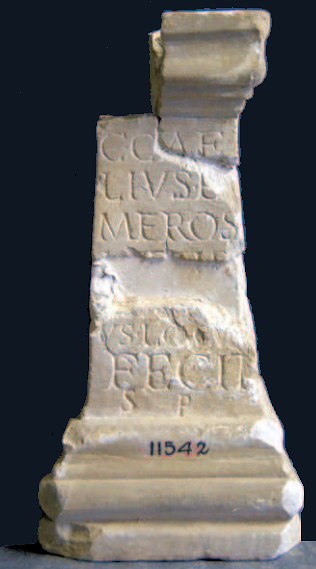
This small monument bears the inscriptions of a certain Caelius Ermeros, antistes at the Mithraeum of the Painted Walls.
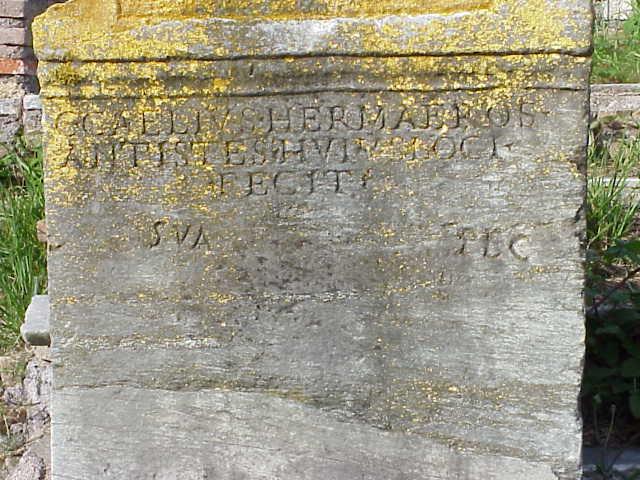
This is one of several marble inscriptions made by a certain Caelius Ermeros, who was the antistes of the Mithraeum of the Imperial Palace.
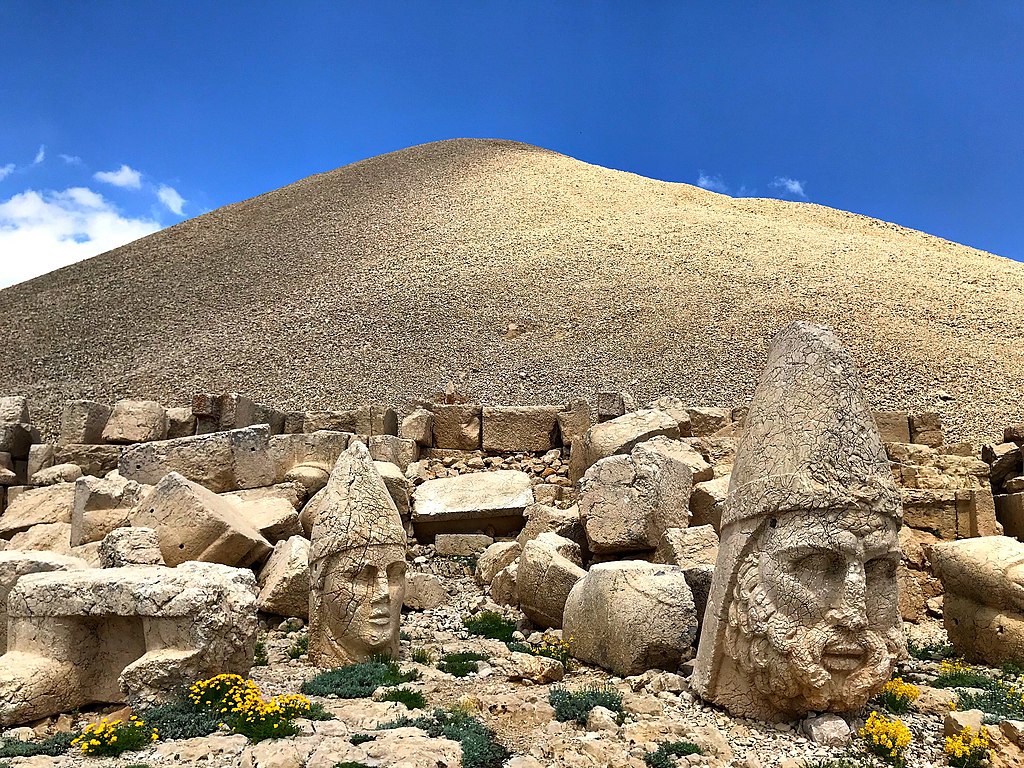
Mount Nemrut or Nemrud is one of the highest peaks in the eastern Taurus Mountains, southeastern Turkey. On its summit large statues stand around what is supposed to be a royal tomb from the 1st century BC.
Altar inscription from Sahin invoking the most high heavenly god and Mithras in the Alawite Mountains.

Antistes and patron of the Mithraea of the Painted Walls and the Imperial Palace at Ostia.
White carnelian with red stripes, reportedly acquired at Epidaurum, depicting what may be Mithras as bull-slayer before a burning altar surmounted by a crescent and a nine-rayed star.

Sinać lies in the mountainous region of inland Croatia historically connected with the Dalmatian sphere.
The locality of Radeša belongs to the mountainous hinterland of the central Balkans.
The locality known as Kral-Marko belongs to the mountainous interior of the central Balkans.
The locality of Han Potoci lies within the mountainous hinterland of ancient Dalmatia.
The locality of Debeli-Lak belongs to the mountainous settlement landscape of ancient Thrace.
Catina occupied a strategic position on the eastern coast of Sicily beneath Mount Etna.
Settlement in inland Numidia associated with the mountainous region south of Cirta and the wider network of North Africa.
The settlement of Arupium formed part of the mountainous inland communications network of Roman Dalmatia.
San Valentino in Abruzzo Citeriore is a mountain hill town in the province of Pescara, part of the Abruzzo region in central Italy.
Ritual vessels and iron objects from the Mithraeum at Procolitia (modern Carrawburgh), including containers for votive offerings, cups, cooking-pots, platters, mortaria and jars, and iron implements comprising an altar-shovel, thatch-hook, mounting and candlestick…
